Why it matters for coaches
Coaching is bought on trust, often by someone who found you through one post or one podcast. Your site, your email and your bio are what convince them you’re real, qualified and easy to work with.
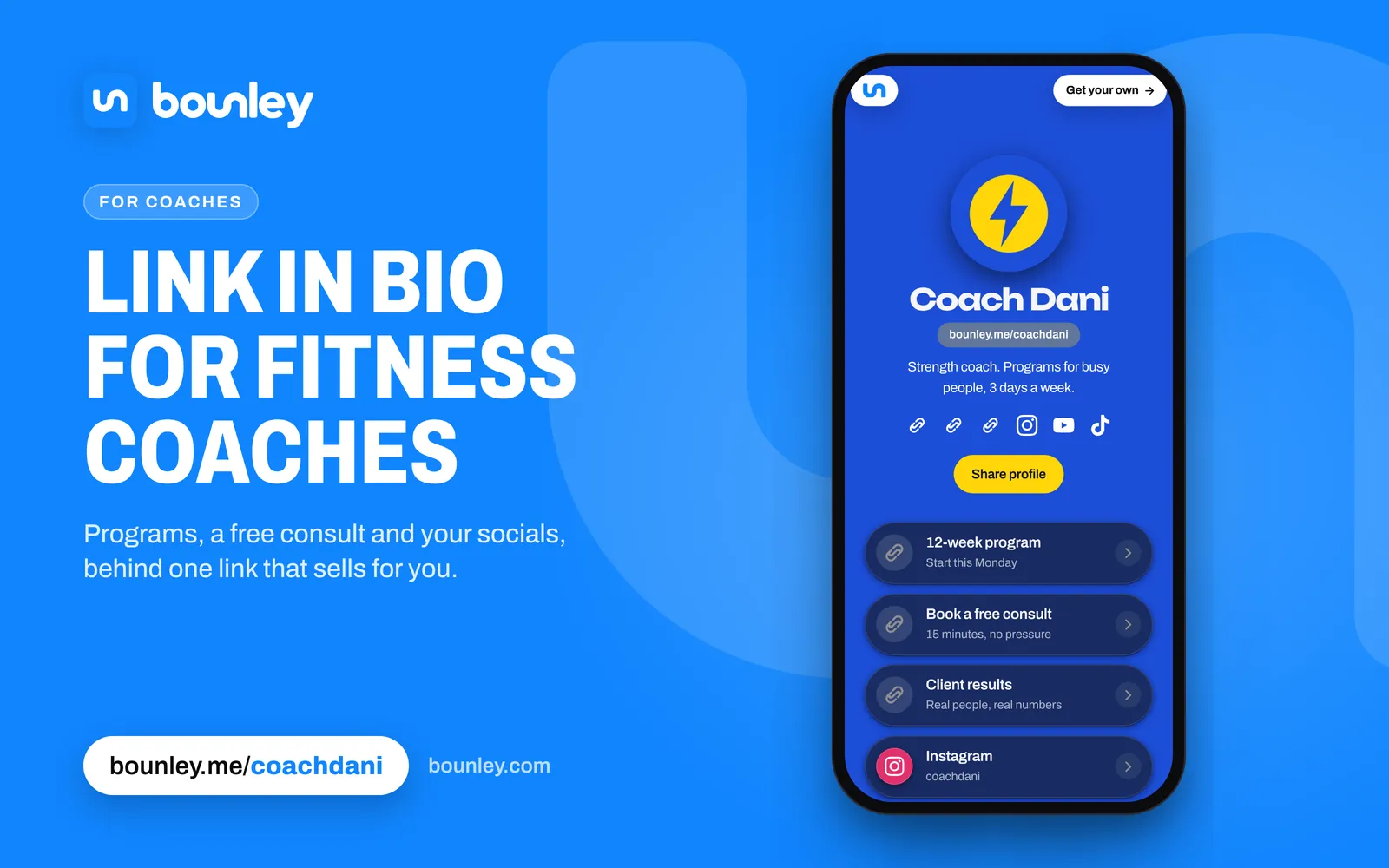
What a coach’s site needs
- Who you help and with what, in one sentence (“Strength training for beginners over 40”).
- A booking link or form for a first call, near the top.
- Testimonials or short client stories, used with permission.
- Your background and any qualifications that matter to your clients.
- A sign-up form for your email list, with something useful in return.
- Your podcast, videos or posts, so people can hear how you think.
A professional email address
Clients send you personal things; an address at your own domain (you@yourname.com) feels more trustworthy than a free one. How to get a professional email address.
Content that brings clients
- Answer the questions clients ask you in the first session, publicly.
- Share client results (with permission) and what changed for them.
- End posts with one clear next step: book a call, or join the list.
Keep claims honest
Avoid promising results you can’t guarantee, especially about health or money, and follow any rules your profession or platform sets for testimonials and advertising.
How Bounley fits
Bounley is the platform built for personal brands. Your site holds every account and your videos or podcast, with forms you make yourself (a booking request, a sign-up list, a contact form) right on the page, and a business card, QR code and email signature to match. With Premium it runs on your own domain, with your email there too.
Questions
Do coaches need a website?
Yes, if you want people to book you without a long back-and-forth. A simple site with who you help, testimonials and a booking link does most of the selling.
How specific should a coach’s personal brand be?
Specific enough that the right person thinks “that’s me”: a group of people and a result. You can widen it once you’re known for something.