Every name on this page is a sample made up for these examples, not a real person or business.
1. The creator
Rico Vega, streetwear on a budget. Promise: new fits every Friday. Shows: TikTok and Instagram first, then YouTube and his playlists. Why it works: one clear topic, a weekly rhythm people expect, and every app pointing at one page with all of it.
2. The musician
Nova Lane, singer-songwriter. Promise: the new single, first. Shows: the latest release at the top, then Spotify, Apple Music and tour dates. Why it works: the page changes with each release, so the one link in her bio is always the right one.
3. The streamer
PixelKai, variety streams. Promise: live Monday, Wednesday and Friday at 7pm. Shows: Twitch and Kick, Discord, merch. Why it works: the schedule is the brand, and a Live badge shows on the page while the Twitch stream is on.
4. The artist
Iris Moreau, painter and illustrator. Promise: commissions open for spring. Shows: commissions, signed prints, Instagram and Behance. Why it works: a look as distinctive as the work, and the two things that pay at the top.
5. The photographer
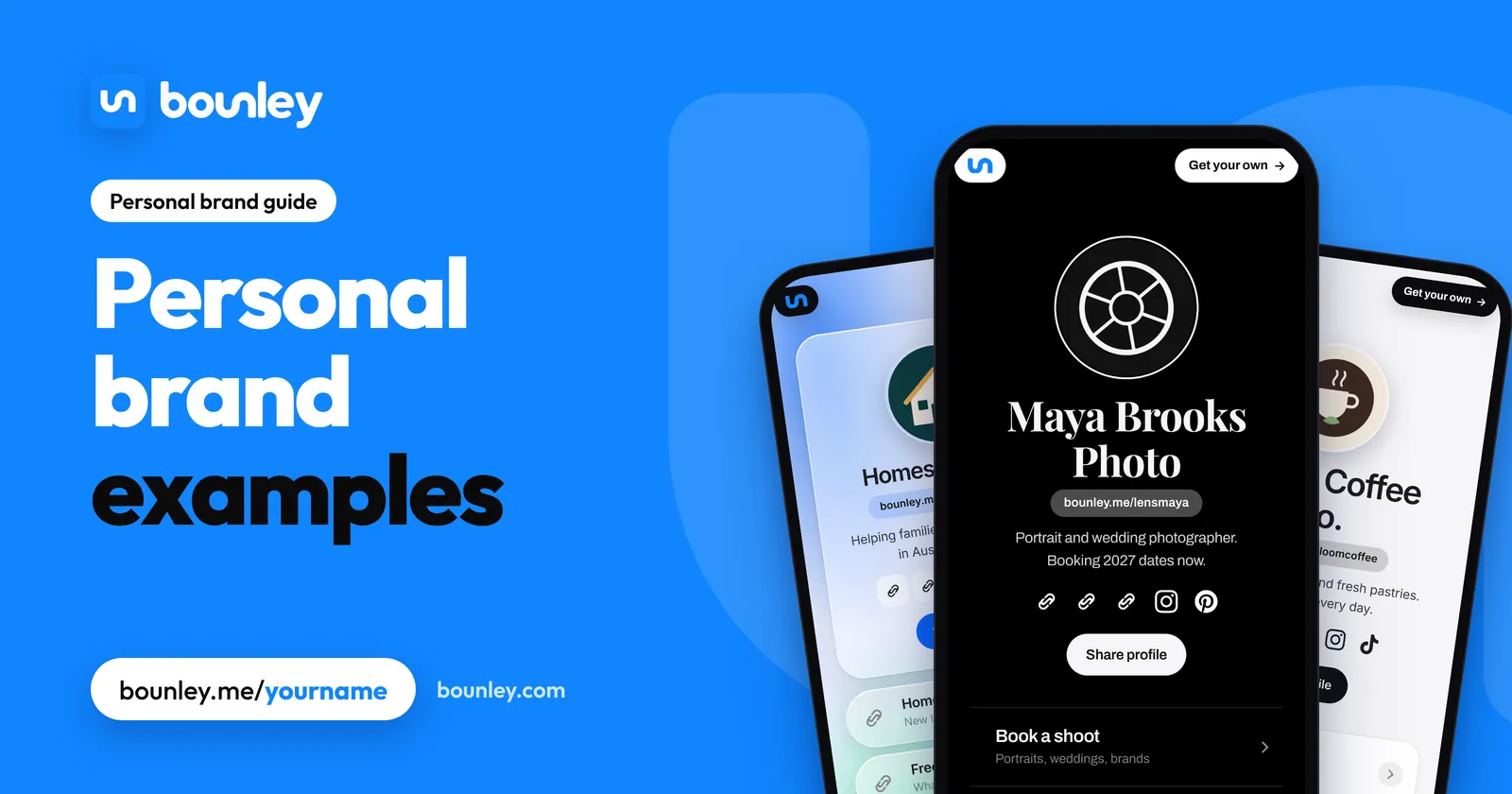
Maya Brooks Photo, portraits and weddings. Promise: booking 2027 dates. Shows: book a shoot, recent galleries, prints. Why it works: a quiet black-and-white page that lets the photos do the talking.
6. The coach
Coach Dani, strength for busy people. Promise: three days a week, real results. Shows: a 12-week program, a free consult, client results. Why it works: one offer, one free next step, and proof right underneath.
7. The real estate agent
Homes with Sam, Austin since 2014. Promise: helping families buy and sell. Shows: homes for sale, a free valuation, reviews. Why it works: local, specific and trustworthy, with a free valuation that starts conversations.
8. The podcaster
The Late Shift, a weekly show about jobs nobody sees. Promise: new episodes every Tuesday. Shows: the newest episode, every app, “be a guest”. Why it works: the newest episode is always first, and listeners can become guests.
9. The small business owner
Bloom Coffee Co., small-batch coffee. Promise: open 7 to 3, every day. Shows: order ahead, today’s menu, find us. Why it works: the three things customers need, in the order they need them.
10. The job seeker
A data analyst looking for a role. Promise: SQL, Python and dashboards that get used. Shows: LinkedIn, a résumé, a portfolio of projects and an email at their own domain. Why it works: a recruiter who searches the name finds one professional page with everything. A personal brand for job seekers.
The pattern behind all ten
| Part | What they all do |
|---|---|
| Promise | One line: who they help or what they make |
| Consistency | Same name, photo and colours on every app |
| Proof | Work, results or reviews where people can see them |
| Home base | One site at their own address, holding everything |
| Next step | Book, buy, listen or follow, at the top |
| Contact | An email at their own domain |
Make yours
Every sample above is a Bounley site: made from the person’s accounts in about two minutes, with a look built from their photo, at bounley.me/yourname, free during the beta. With Premium it runs on their own domain with an email at it. See them as pictures on link in bio examples, then claim your name.
Questions
What makes a good personal brand?
Clarity, consistency and proof: people can say what you do in one sentence, you look the same everywhere, and they can see your work.
Should I copy famous personal brands?
Study the pattern, not the person. Famous brands had years and teams; the parts that matter (a clear promise, one home base, steady proof) work at any size.
Should my brand be my name or a business name?
Your name if you are the product (a creator, coach or freelancer); a business name if you plan to hire or sell the business one day. Many people use both: their name for the domain, the business for the shop.
Can I have a personal brand with a small following?
Yes. A clear, professional brand matters most when you’re small, because it’s what makes the few people who find you trust you.