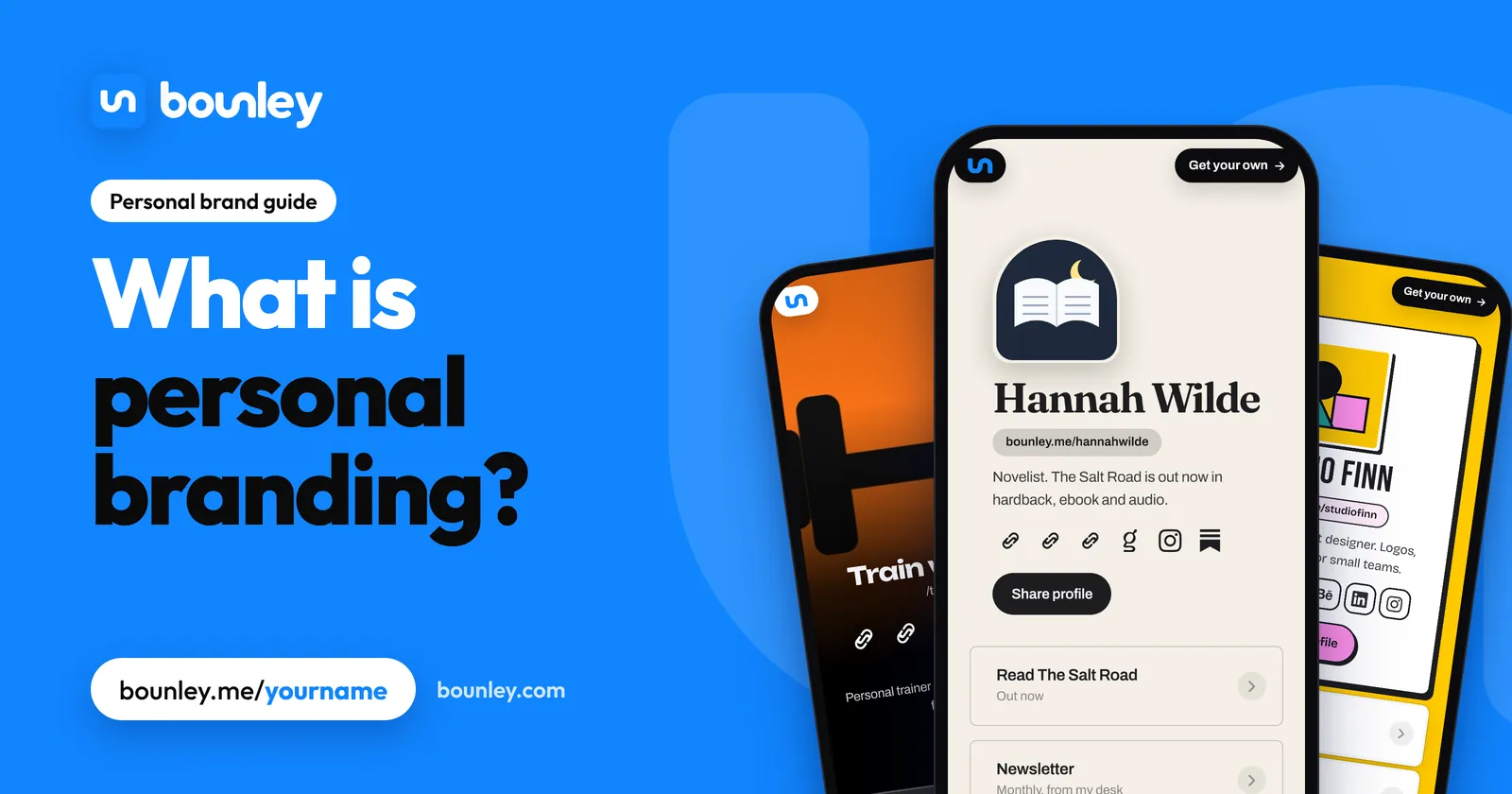
What personal branding means
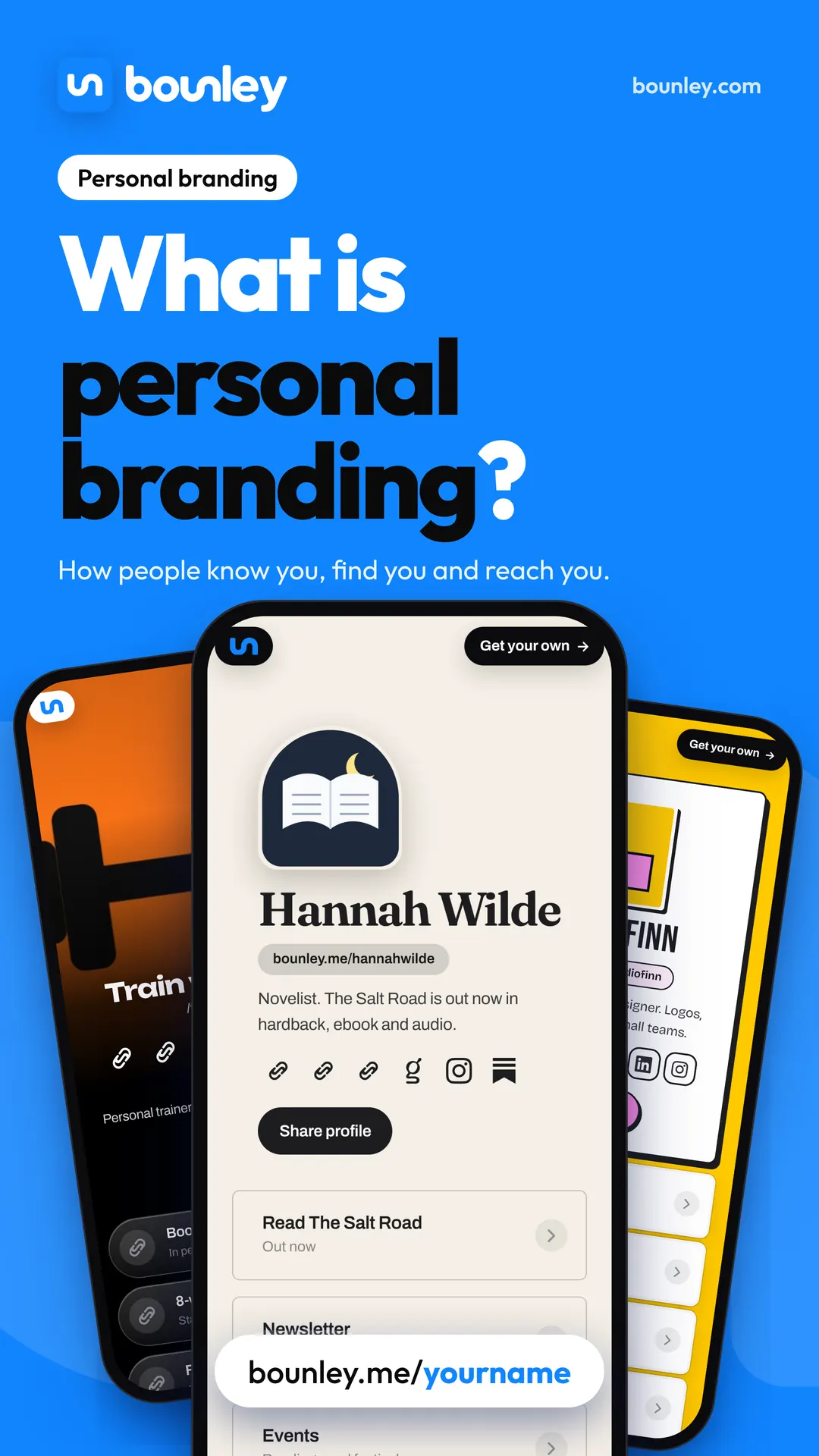
A company’s brand is what people think and feel when they see its name. A personal brand is the same thing for a person. You already have one, made of whatever people find when they search you and whatever they remember after meeting you. Personal branding is choosing what that should be, then making it easy to see.
The parts of a personal brand
- What you’re known for. One clear focus, in a sentence: who you help and how. (Your personal brand statement.)
- Your name and look. The same name, photo and colours everywhere, so people recognise you. (Personal brand identity.)
- Proof. Your work, your results, what others say about you.
- Presence. Content on the platforms where your audience already is.
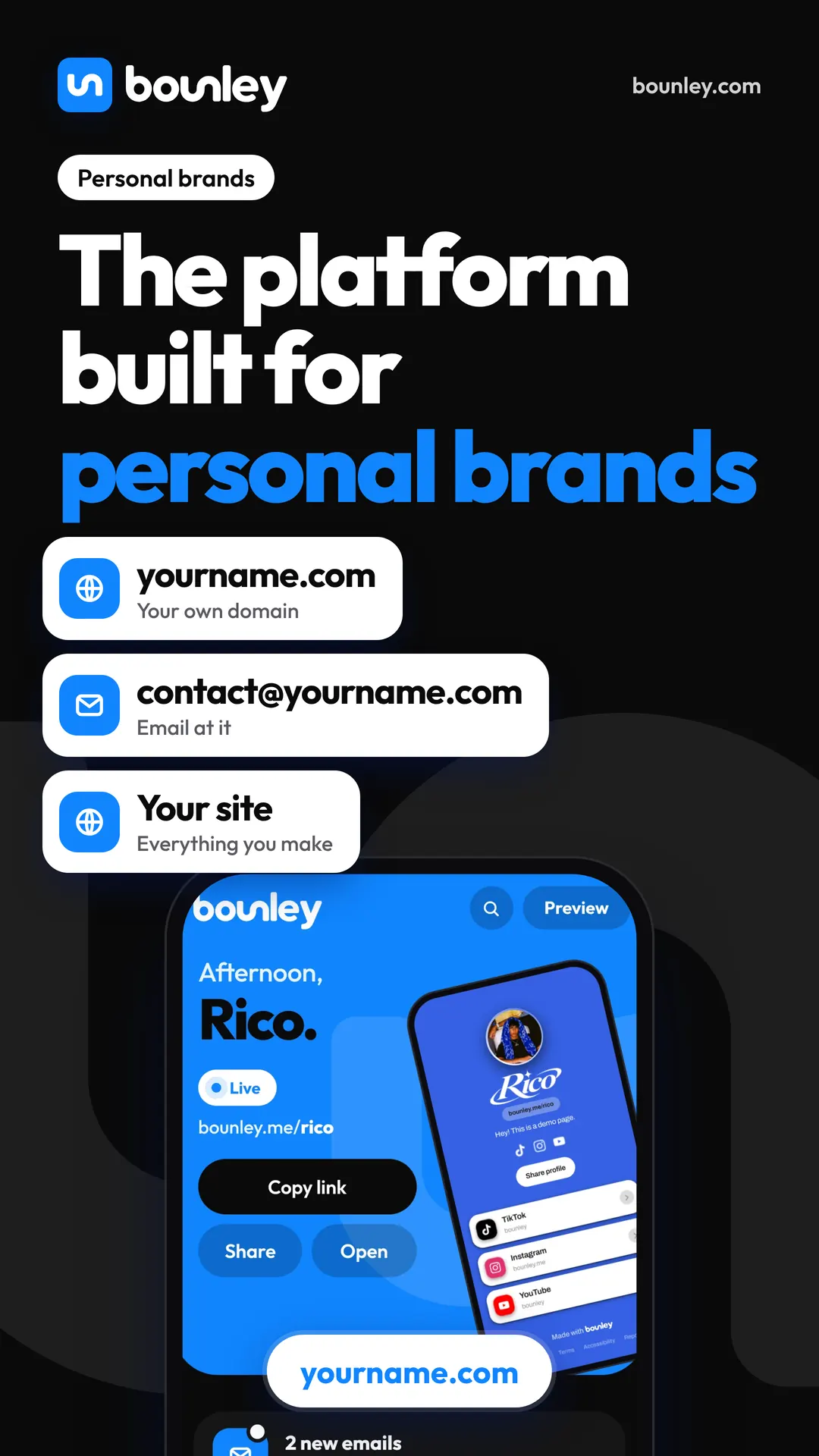
- A home base. A site on your own domain that brings it all together, and a professional email at it so people can reach you.
Why it matters
- People buy from people. Clients, employers and fans choose someone they feel they know.
- It compounds. Every post, project and introduction adds to the same name instead of starting over.
- It’s portable. A brand built on your name moves with you between jobs, companies and platforms.
- It brings opportunities to you. Brand deals, clients, speaking, job offers: people can only offer them if they can find and reach you.
What it looks like in practice
- A personal trainer posting form tips, with a site on their name that books sessions.
- A designer sharing case studies, with a portfolio at their name and an email clients trust.
- A novelist writing a monthly newsletter, with an author site that sells the book.
- A founder writing about building in public, with a personal site separate from the company’s.
More in personal brand examples, and by job on the personal brand guide.
What personal branding isn’t
- Not pretending. The strongest brands are a clear version of who you really are.
- Not only for influencers. Freelancers, job seekers, coaches, academics and tradespeople all benefit.
- Not follower counts. A small audience that knows exactly what you do beats a large one that doesn’t.
How to start today
- Write one sentence: who you help and how.
- Use the same name and photo on every account.
- Claim your name as a website address and put it in every bio.
- Get an email address at your own domain for anyone who wants to work with you.
- Post one useful thing a week, on one platform, for three months.
Step by step: how to build a personal brand from scratch.
Where Bounley fits
Bounley is the platform built for personal brands. It sets up the home base: your website, made from your accounts in about two minutes (free at bounley.me/yourname while in beta), and with Premium your own domain and an email address at it, plus a business card, QR code and email signature that all match.
Questions
What is personal branding in simple words?
Making sure people know what you do, can find you, and know how to reach you, on purpose rather than by accident.
Does everyone need a personal brand?
Everyone has one already. If your name is part of how you earn a living, it’s worth shaping it.
What’s the difference between a personal brand and personal branding?
Your personal brand is the reputation; personal branding is the work you do to shape and show it.