Why it matters for models and actors
Agencies list you among hundreds. Your own page shows the range you want to be cast for, keeps working between agencies, and gives brands a professional way to reach you or your agent.
What a model’s or actor’s site needs
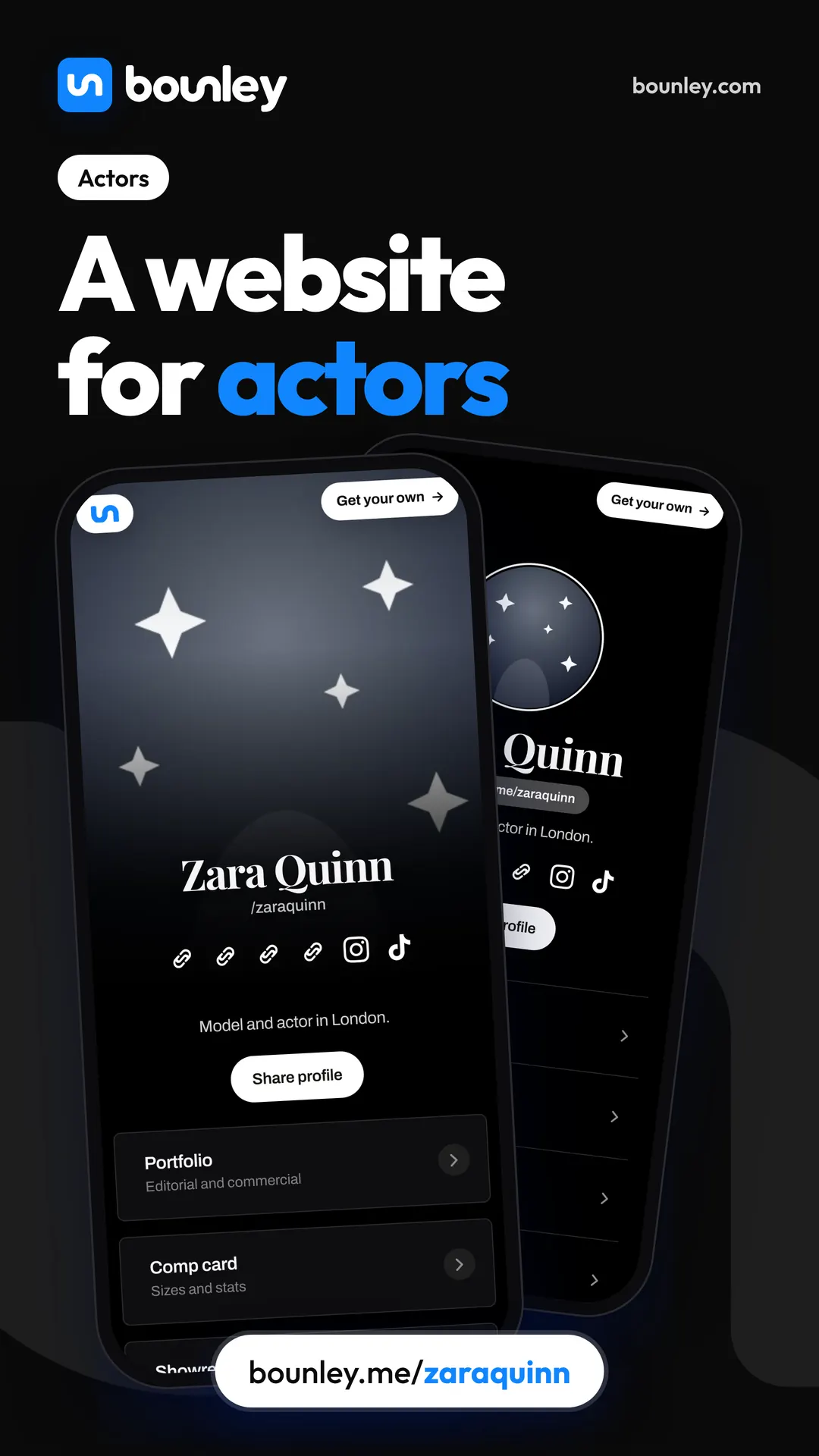
- Your name, where you’re based and what you do (editorial, commercial, screen).
- Your book: your strongest images, not every shoot.
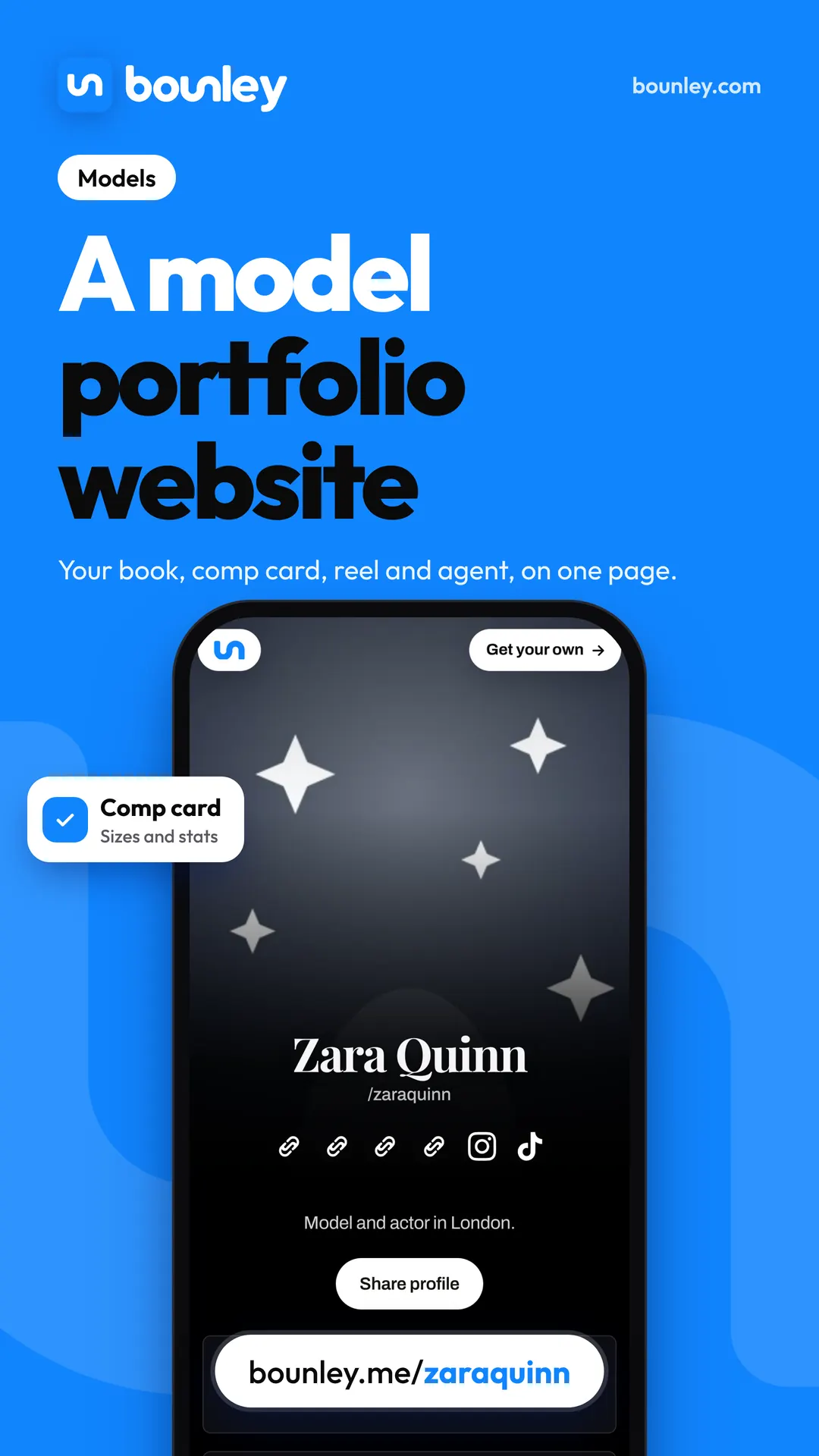
- A comp card: measurements or sizes, height, hair and eye colour.
- A showreel or self-tapes, for actors.
- Credits and notable clients.
- Representation: your agent’s name and contact first.
Bio examples
- “Model and actor in London. Represented by North Studio.”
- “Commercial and fitness model. Based in Miami, available to travel.”
- “Actor. Recent: Night Shift (BBC). Self-tapes within 24 hours.”
Your domain and email
Your full professional name is the domain to get, since it’s what casting searches. If you have an agent, list their contact first and keep your own address for brands and direct work.
Safety
Keep your home address and personal phone off your page. Don’t list exact availability or locations in public. If you’re under 18, a parent or guardian should manage bookings and contact.
Image rights
Check you’re allowed to use each photo (the photographer and client may hold rights), and credit photographers where you can.
How Bounley fits
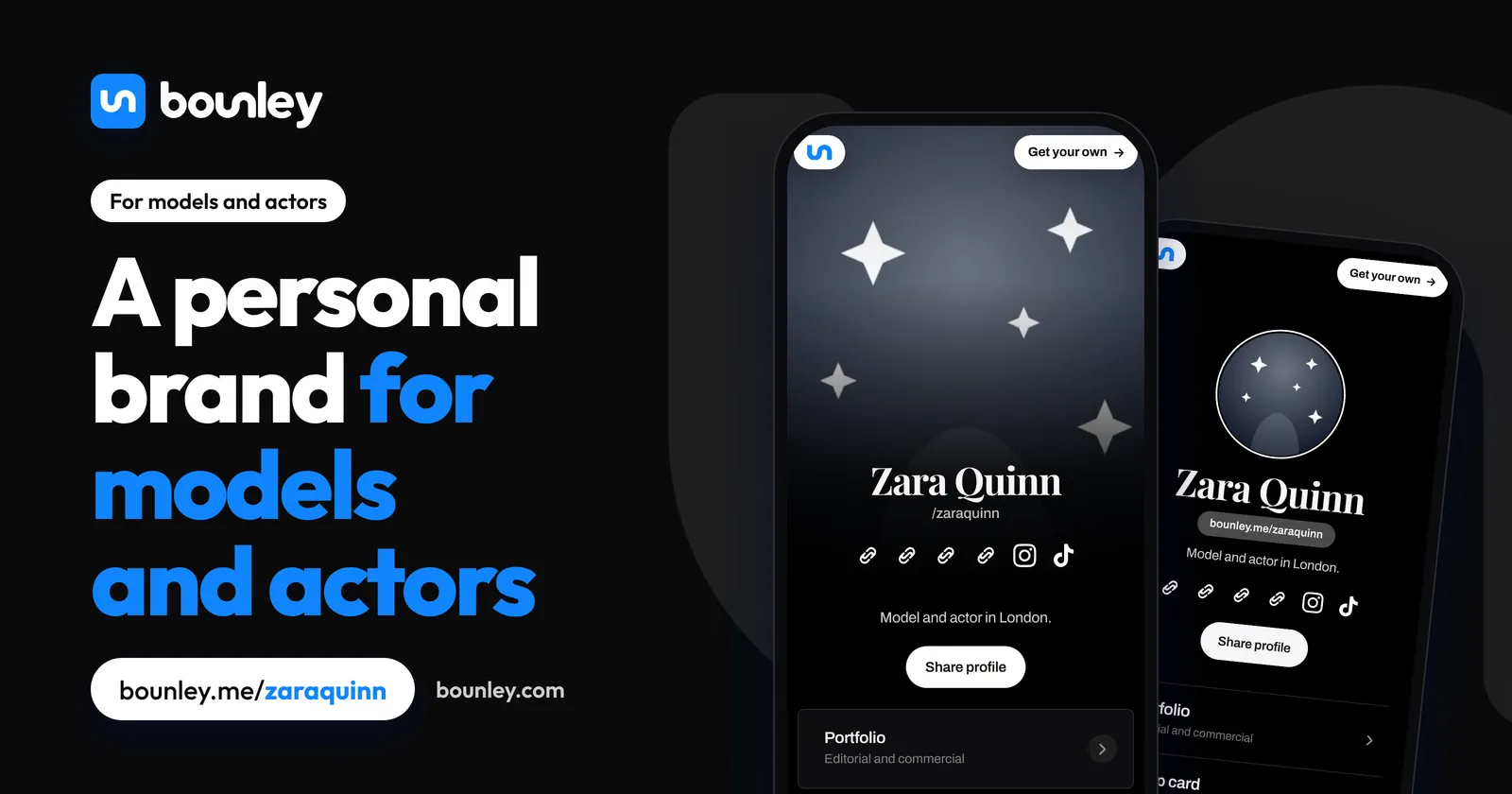
Bounley is the platform built for personal brands. Your site is made from your accounts in about two minutes, with your reel playing on the page, your comp card as a PDF, and your agent’s contact first. With Premium it runs on your own domain, with your email there too.
Questions
Do I need a website if I have an agency?
It helps: your agency page lists you among many, and your own page shows your full range and stays with you if you change agencies.
What is a comp card?
A one-page sheet with a few of your best photos, your name, your sizes and your agency’s contact. Casting directors use it to shortlist.