Why it matters for consultants
Most consulting work comes from referrals, and every referral searches your name. A site with your focus, proof and an easy next step turns that search into a call. Without one, you’re a LinkedIn profile among many.
What a consultant’s site needs
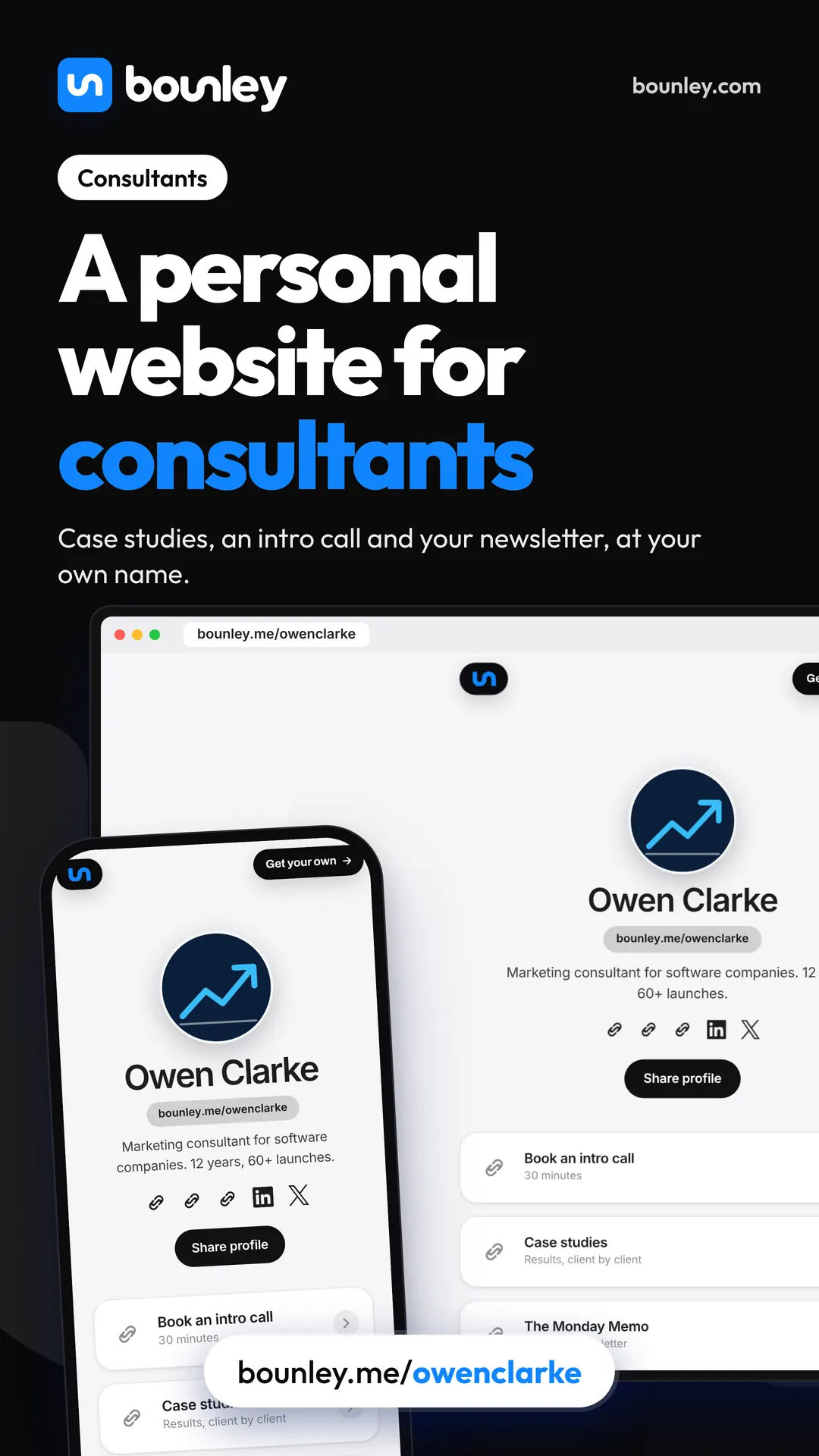
- One line on who you help and the problem you solve: “Marketing for software companies launching their first product.”
- Three to five case studies: the problem, what you did, the result.
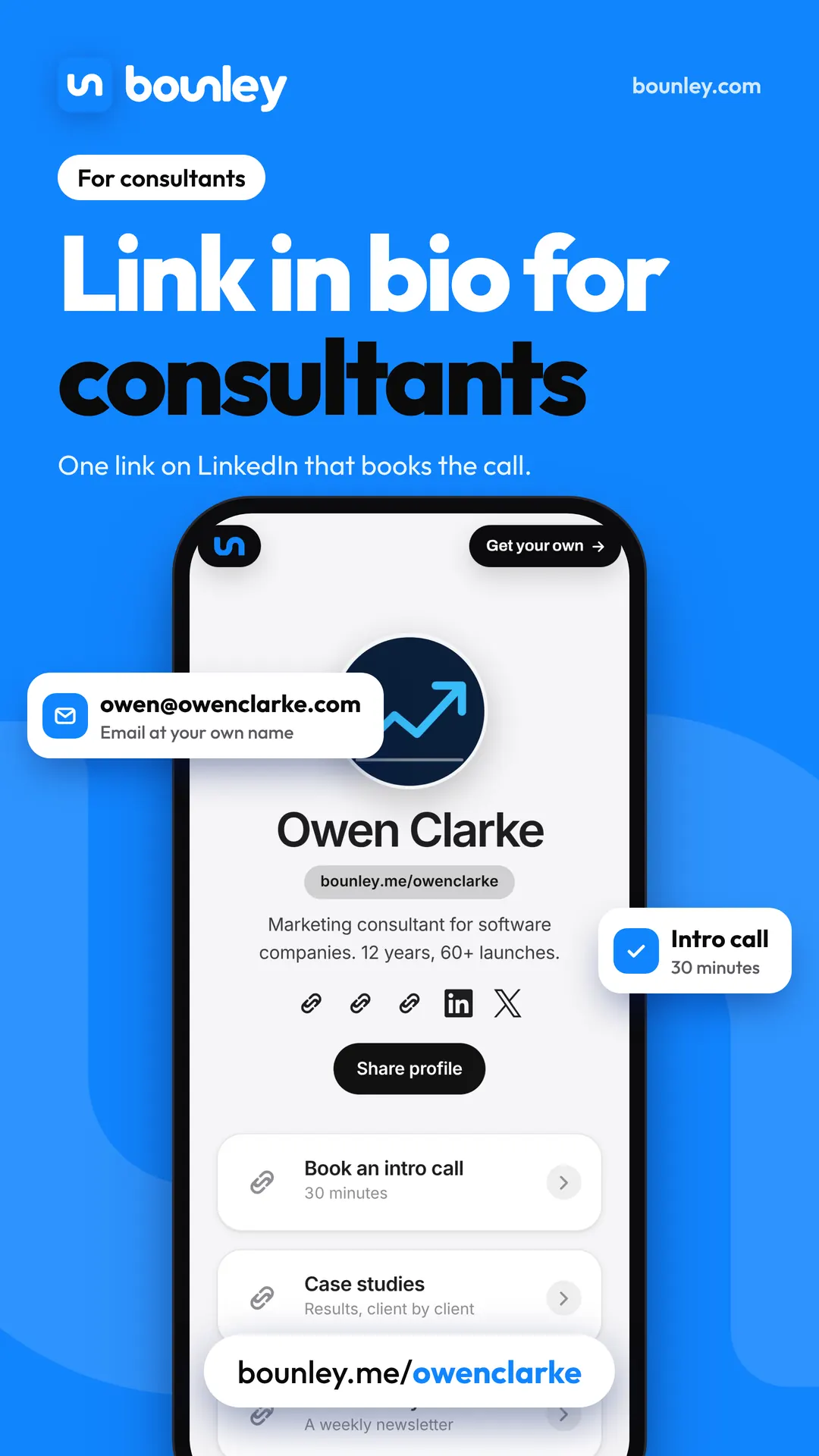
- A way to book an intro call, with how long it takes.
- How you work: projects, retainers or workshops.
- Your background and the companies you’ve worked with, if you can name them.
- A newsletter or articles that show how you think.
Bio examples for consultants
- “Marketing consultant for software companies. 12 years, 60+ launches.”
- “I help family businesses hand over to the next generation.”
- “Operations consultant for clinics that have outgrown their spreadsheets.”
Your domain and email
A consultant’s email is on every proposal and invoice. firstname@yourname.com looks like a firm; a free address looks like a side project. Your full name as the domain works best, since that’s what referrals search. How to get yourname.com.
LinkedIn and your site
Use LinkedIn to be found and to post, and your site to close: put your site’s address in your LinkedIn contact info and Featured section, and link your case studies from your posts. Building a personal brand on LinkedIn.
Keep proof honest
Only name clients who have agreed to it, and keep figures accurate. If a contract keeps the work confidential, describe the kind of company and the result instead.
How Bounley fits
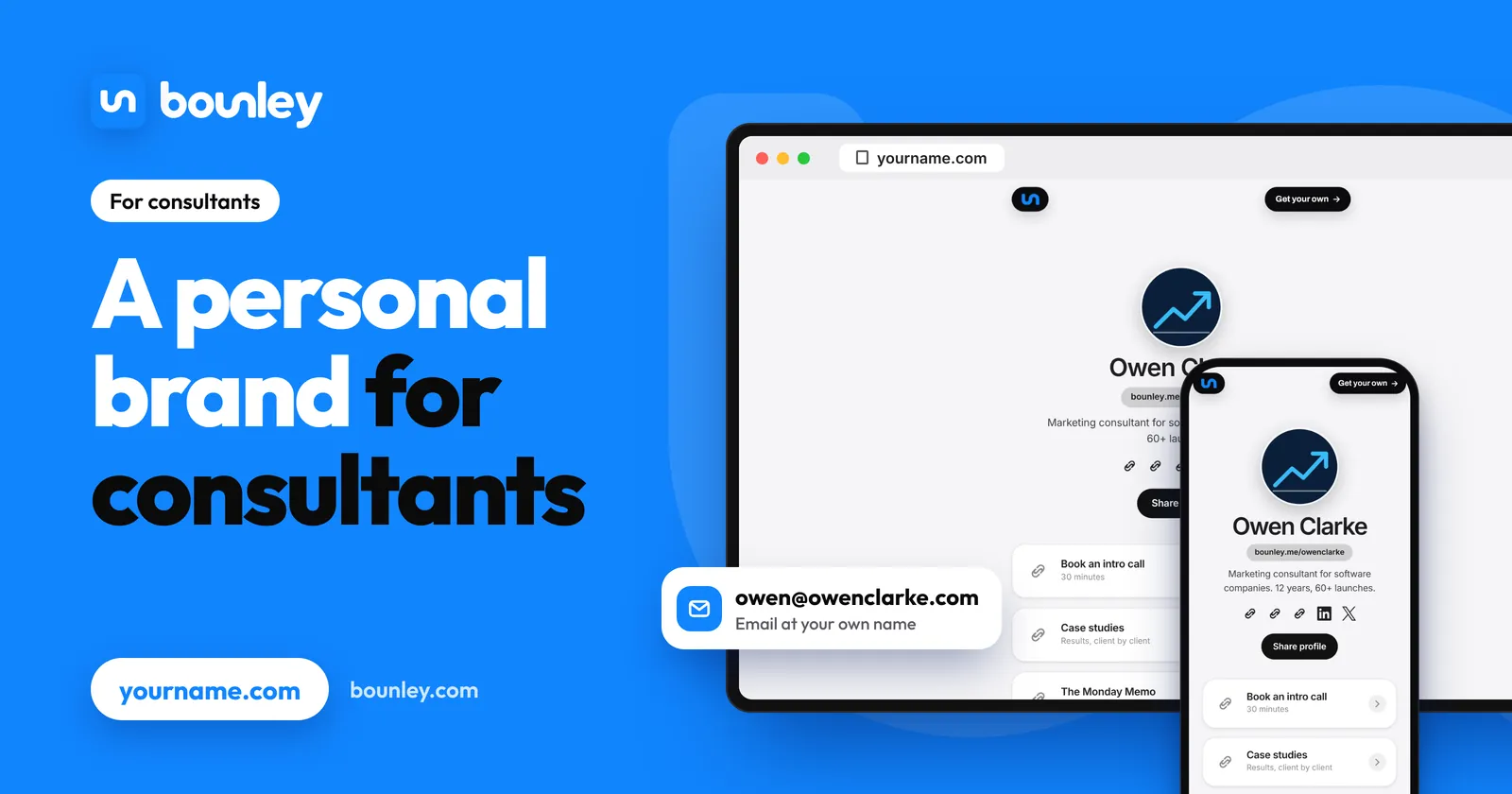
Bounley is the platform built for personal brands. Your site is made from your accounts in about two minutes, with your booking calendar, your newsletter sign-up and forms you make yourself on the page, plus a business card and email signature for proposals. With Premium it runs on your own domain, with your email in the same place.
Questions
Does a consultant need a website?
Yes. Prospects check you before they reply, and a site with case studies and a clear offer does more for you than a profile on someone else’s platform.
Should I use my name or a firm name?
Your name, if you’re the one doing the work: that’s what clients remember and refer. You can add a firm name later and keep your name pointing to it.