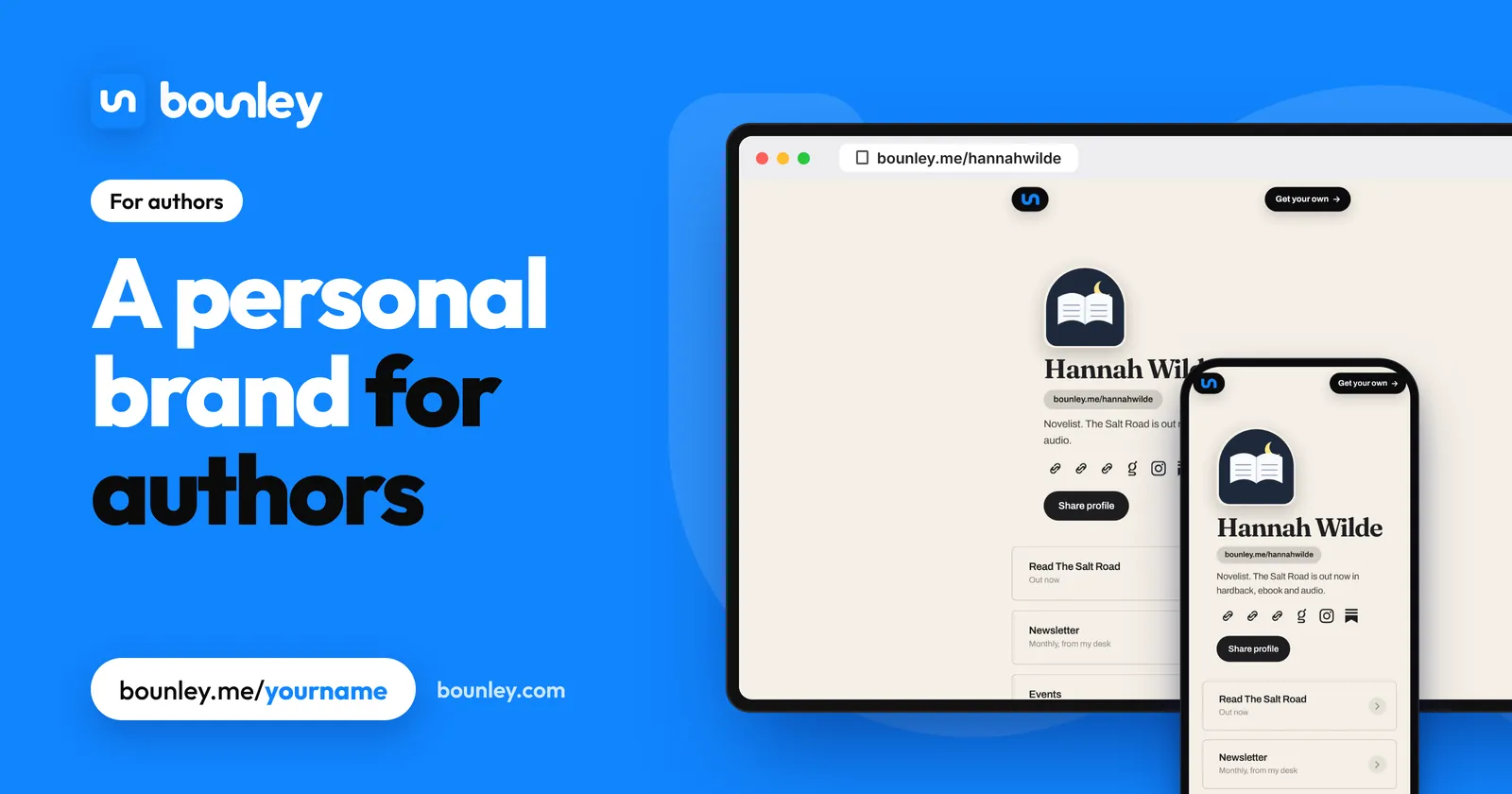
Why it matters for authors
Publishers, agents and festivals look for an author’s own site, and readers use it to find the next book. Your newsletter list is the one audience no platform can take away, and your site is where it grows.
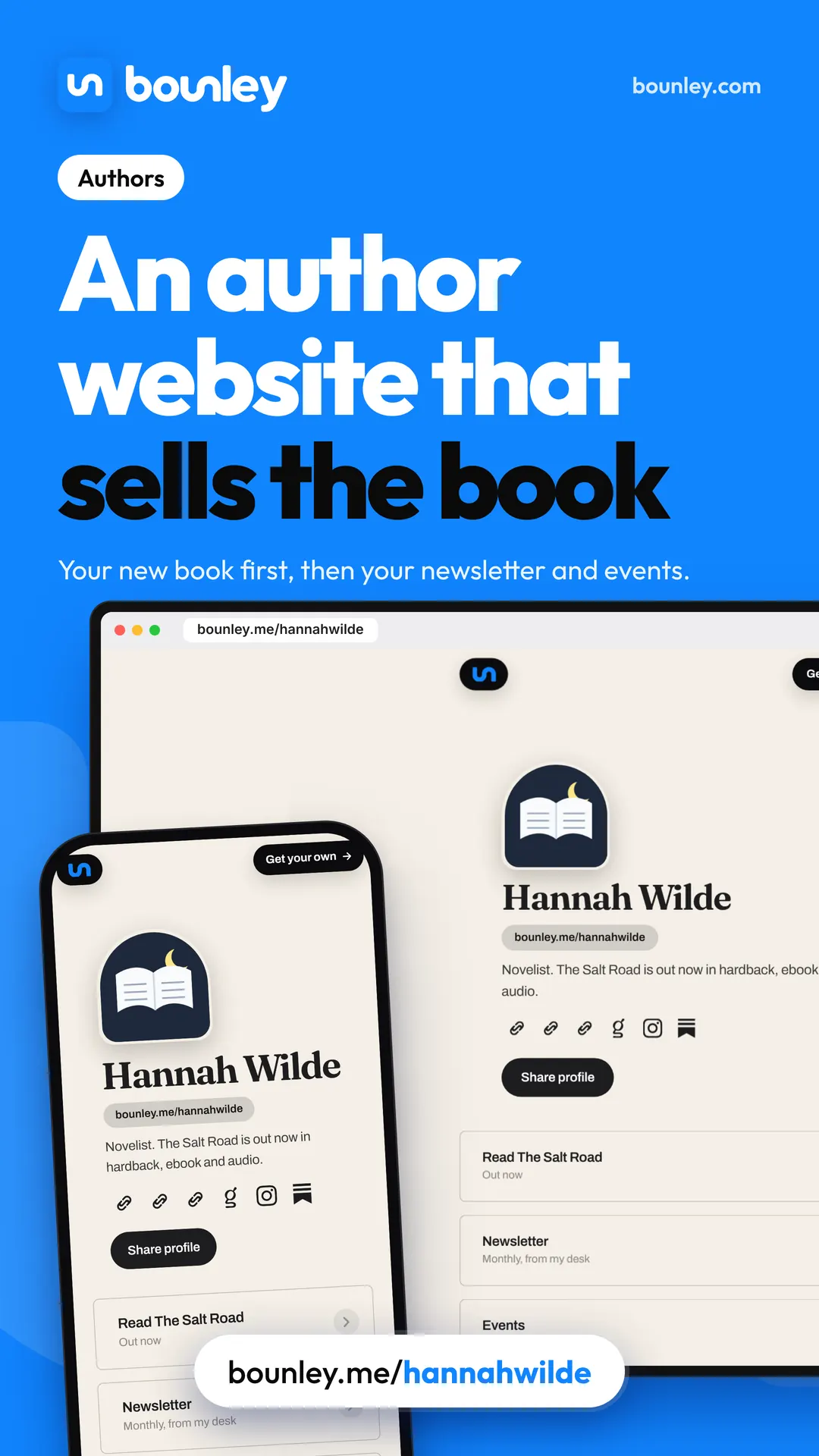
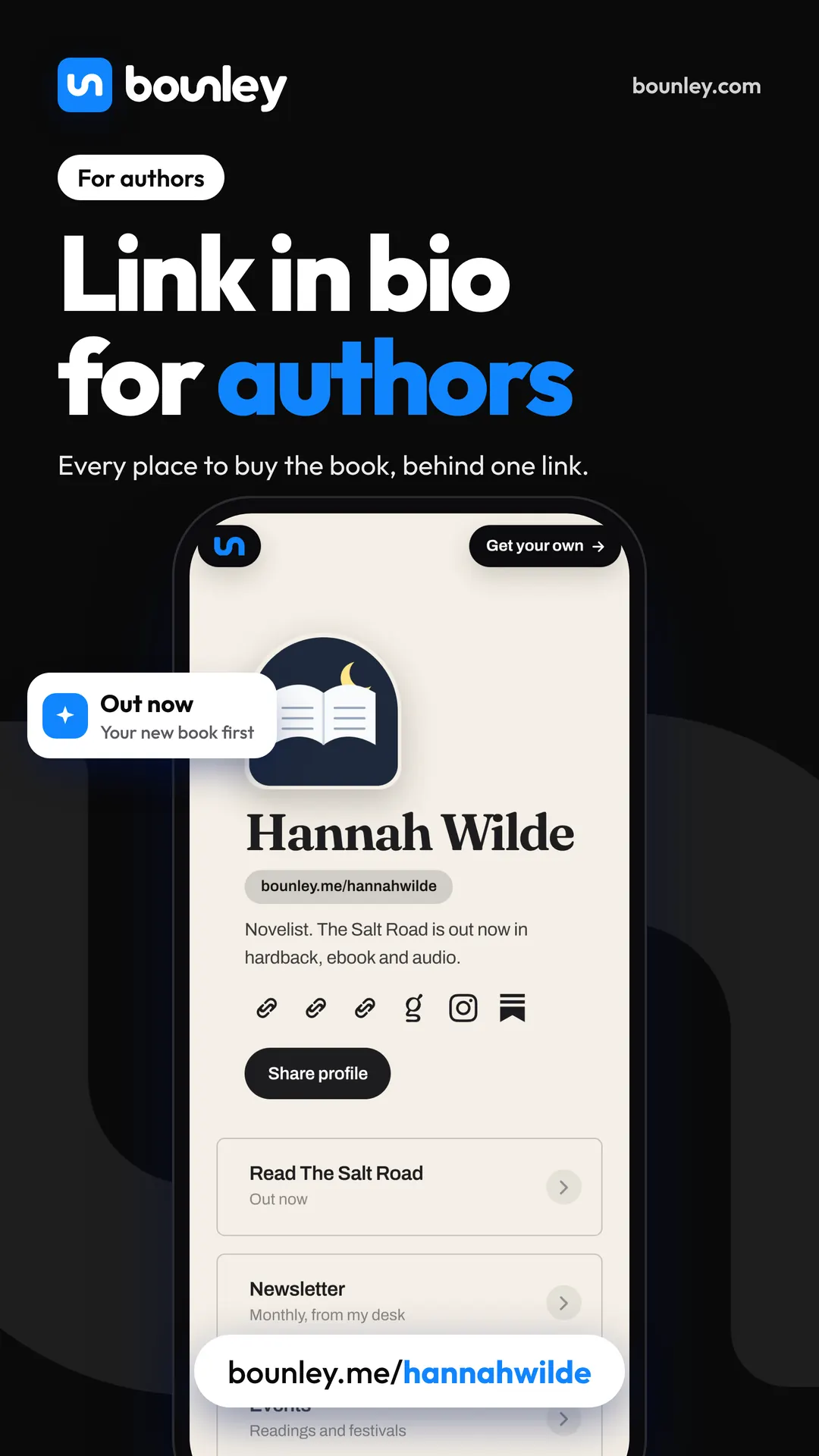
What an author’s site needs
- Your newest book first, with every place to buy it.
- A newsletter sign-up, with what people get and how often.
- Your other books, in order if they’re a series.
- Events: readings, signings, festivals.
- A short bio and a photo for press.
- Contact for your agent, publicist and readers.
Bio examples for authors
- “Novelist. The Salt Road is out now in hardback, ebook and audio.”
- “I write cosy mysteries set in small Welsh towns.”
- “Author of three books on money for people who hate money books.”
Your domain and email
Use your author name as the domain (yourname.com, or yournamebooks.com if it’s taken), so it works across every book you’ll ever write. A hello@ address there is what you put in the back of the book.
Content readers come back for
- The research and places behind the book.
- Your writing routine, honestly.
- Reading lists: what you loved this month.
- Cover reveals and release countdowns, with your newsletter link.
Disclosure
If you use affiliate links to bookshops, say so near the links, and follow your publisher’s guidance on sharing excerpts and covers before release.
How Bounley fits
Bounley is the platform built for personal brands. Your site is made from your accounts in about two minutes, with your newsletter sign-up (Substack, Kit or beehiiv) on the page, your latest post, events and every account. A business card and QR code are made for signings. With Premium it runs on your own domain, with your email there too.
Questions
Should I have an author website before I’m published?
Yes. Agents look you up, and a simple site with your name, what you write and a newsletter sign-up starts building the readership publishers ask about.
What if I write under a pen name?
Use the pen name for the domain and the site, and keep your legal name off it if you prefer. One site per name you publish under is easiest for readers.