Why it matters for podcasters
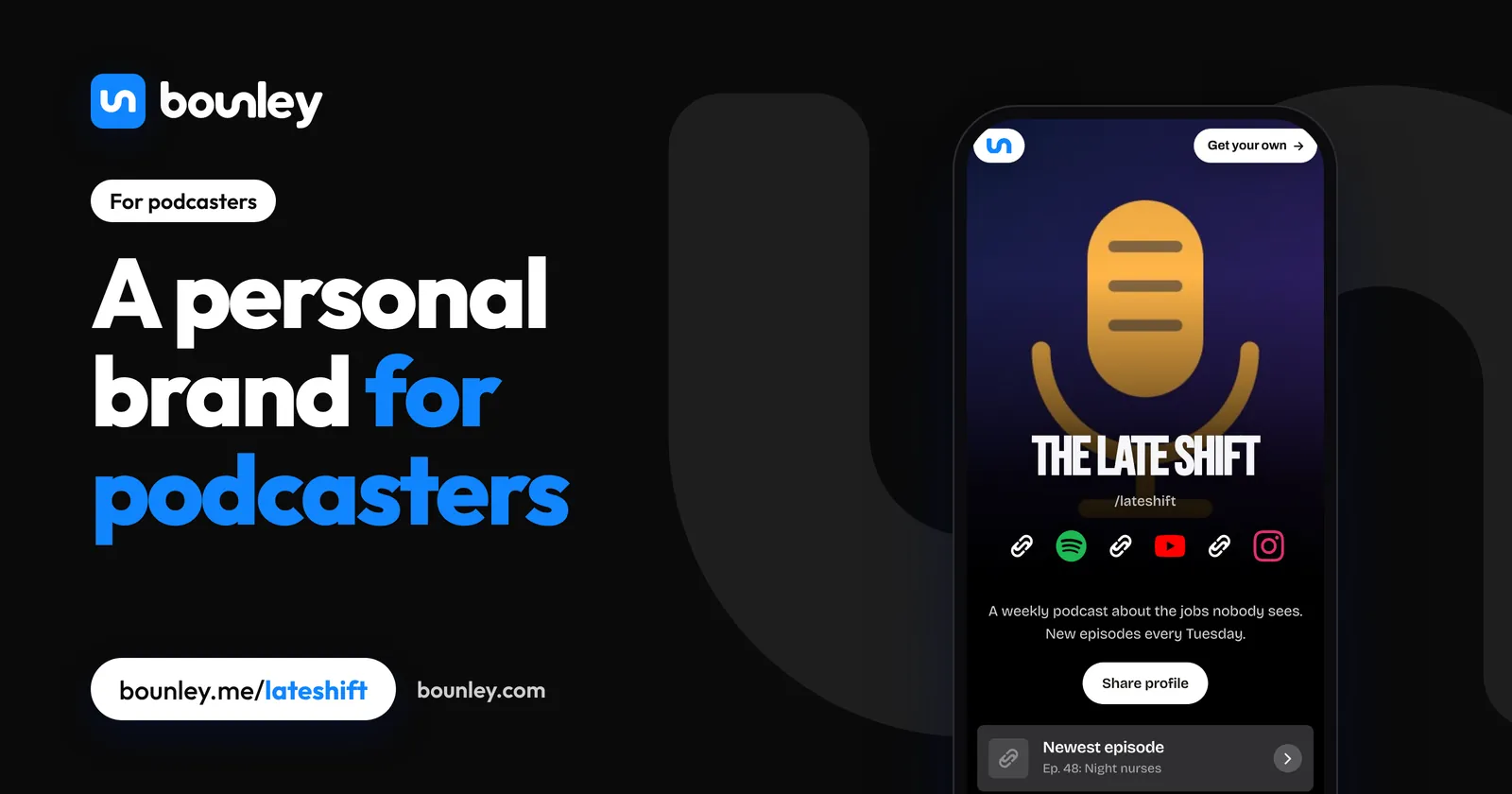
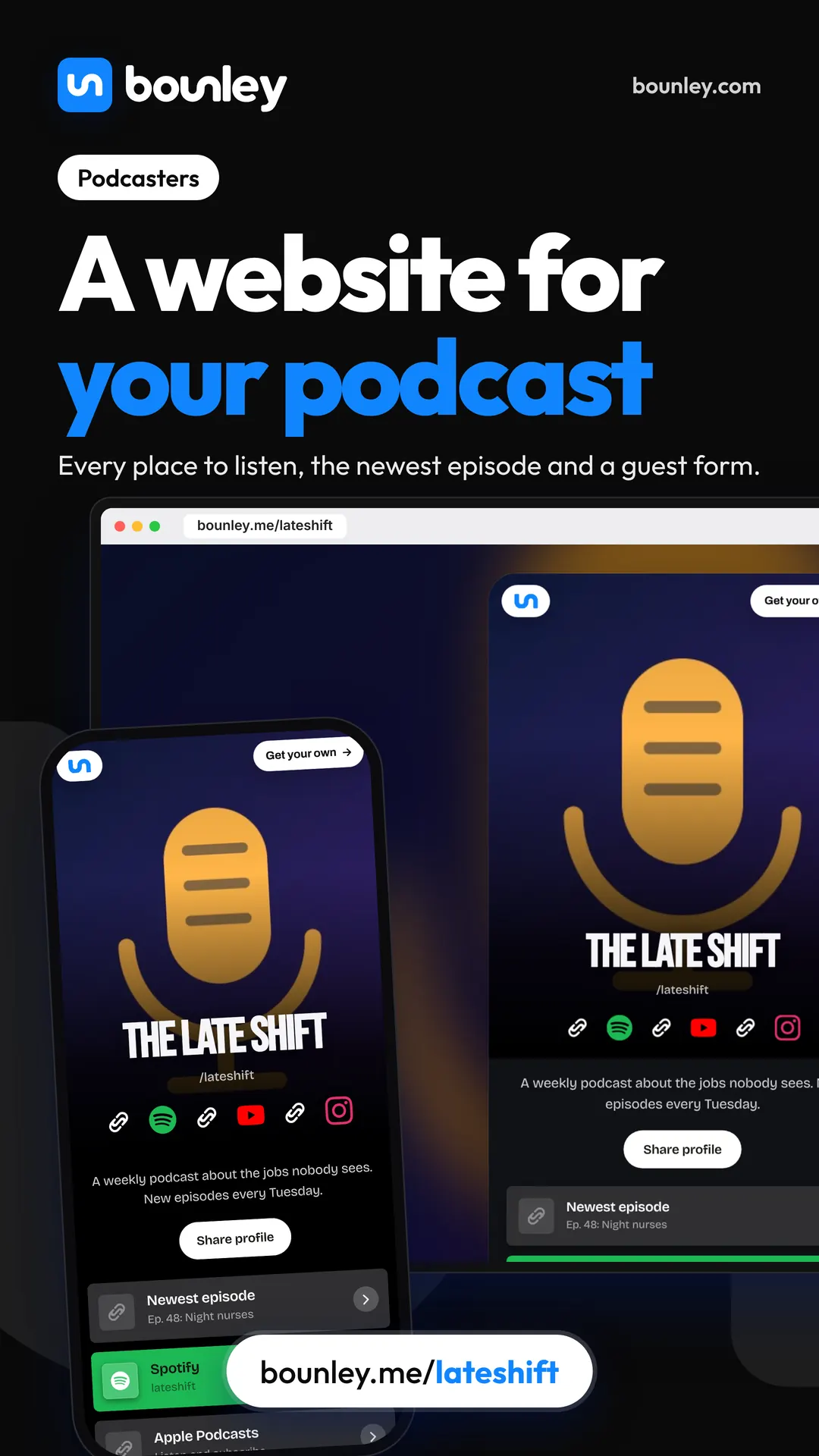
Every listener uses a different app, and every guest and sponsor asks the same questions. One page with all the apps, the latest episode and a guest form saves hours and makes the show look established.
What a podcast’s site needs
- What the show is about and who it’s for, in a line.
- The newest episode, playing on the page.
- Every app: Spotify, Apple Podcasts, YouTube and the rest.
- A guest application form.
- Sponsor information and a contact.
- The hosts and their socials.
Bio examples
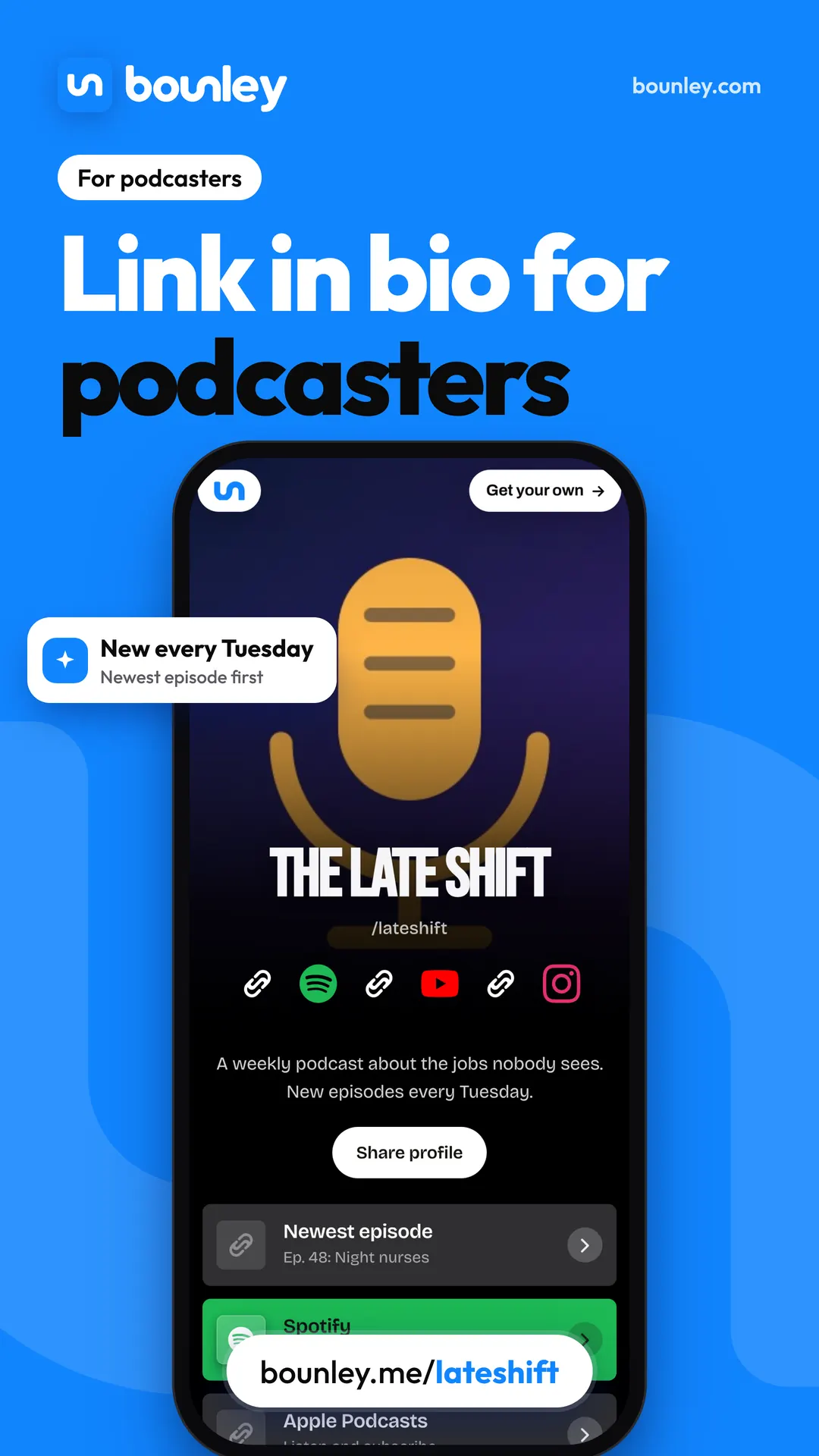
- “A weekly podcast about the jobs nobody sees. New episodes every Tuesday.”
- “Two sisters, one true crime case a week.”
- “Interviews with founders before they were famous.”
Your domain and email
Say the show’s domain at the end of every episode: short and easy to spell. guests@ and sponsors@ at it keep the inbox sorted. Email address ideas.
Growing the show
- Cut a short clip from every episode for video apps.
- Tag guests so they share it with their audience.
- Ask listeners to follow the show in their app, once, at the end.
Disclosure and music
Disclose sponsored segments as your country’s rules require, and use only music you have rights to.
How Bounley fits
Bounley is the platform built for personal brands. Your site is made from your accounts in about two minutes, with your episodes playing on the page (Spotify, Apple Podcasts, Buzzsprout, Transistor and others), a guest form you make yourself and a sponsor page. With Premium it runs on your own domain, with your email there too.
Questions
Does a podcast need a website?
It helps: one address to say on air, a place for guests and sponsors, and a page search engines can show for the show’s name.
Does my host’s page count as a website?
It’s a start, but it usually only shows episodes. Your own page adds the apps, guests, sponsors and you.