Why it matters for developers
A GitHub profile shows code, not judgement. A short portfolio that explains what you built, the trade-offs you made and what happened gives a hiring manager something to talk about, and sets you apart from the pile of identical résumés.

What a developer’s site needs
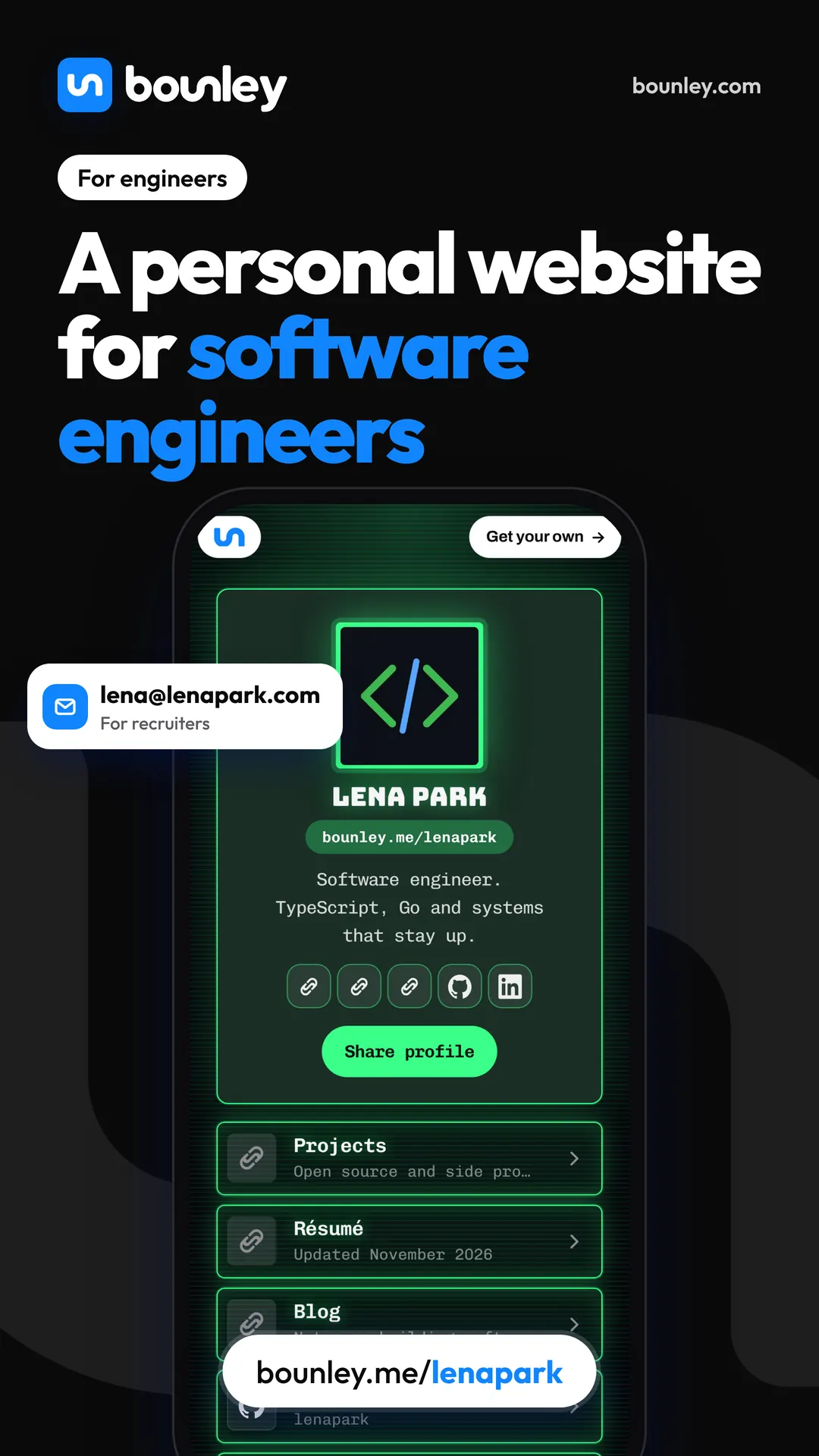
- What you do and what you’re looking for: “Software engineer. TypeScript and Go. Open to backend roles.”
- Three projects, each with the problem, your part, the stack and the result.
- GitHub and LinkedIn.
- Your résumé as a PDF.
- A few posts about things you’ve learned or built.
- A professional email.
Bio examples
- “Software engineer. TypeScript, Go and systems that stay up.”
- “Frontend developer who cares about accessibility. Open to remote roles.”
- “Data engineer. Pipelines, warehouses and dashboards people trust.”
Your domain and email
yourname.dev or yourname.com with you@ at it looks better on a résumé than a free address and never changes when you change jobs. How to get your name as a domain.
Writing that gets you noticed
- How you fixed one hard bug, step by step.
- What you learned building a side project.
- Notes from a talk or a book, applied to your work.
Employer code and secrets
Don’t publish your employer’s code or anything covered by an NDA, and never commit keys or passwords to a public repository. Describe work projects in general terms instead.
How Bounley fits
Bounley is the platform built for personal brands. Your site is made from your accounts in about two minutes, with your GitHub projects, CodePen or CodeSandbox demos and your newsletter on the page, and your résumé as a PDF. With Premium it runs on your own domain, with your email there too.
Questions
Do developers need a portfolio website?
It isn’t required, but it helps, especially early in your career or when changing fields: it shows what you can do in a way a résumé can’t.
Should I build my portfolio from scratch?
If building it is the project you want to show, yes. If not, a quick site you keep up to date beats a custom one you never finish.