Why it matters for trainers
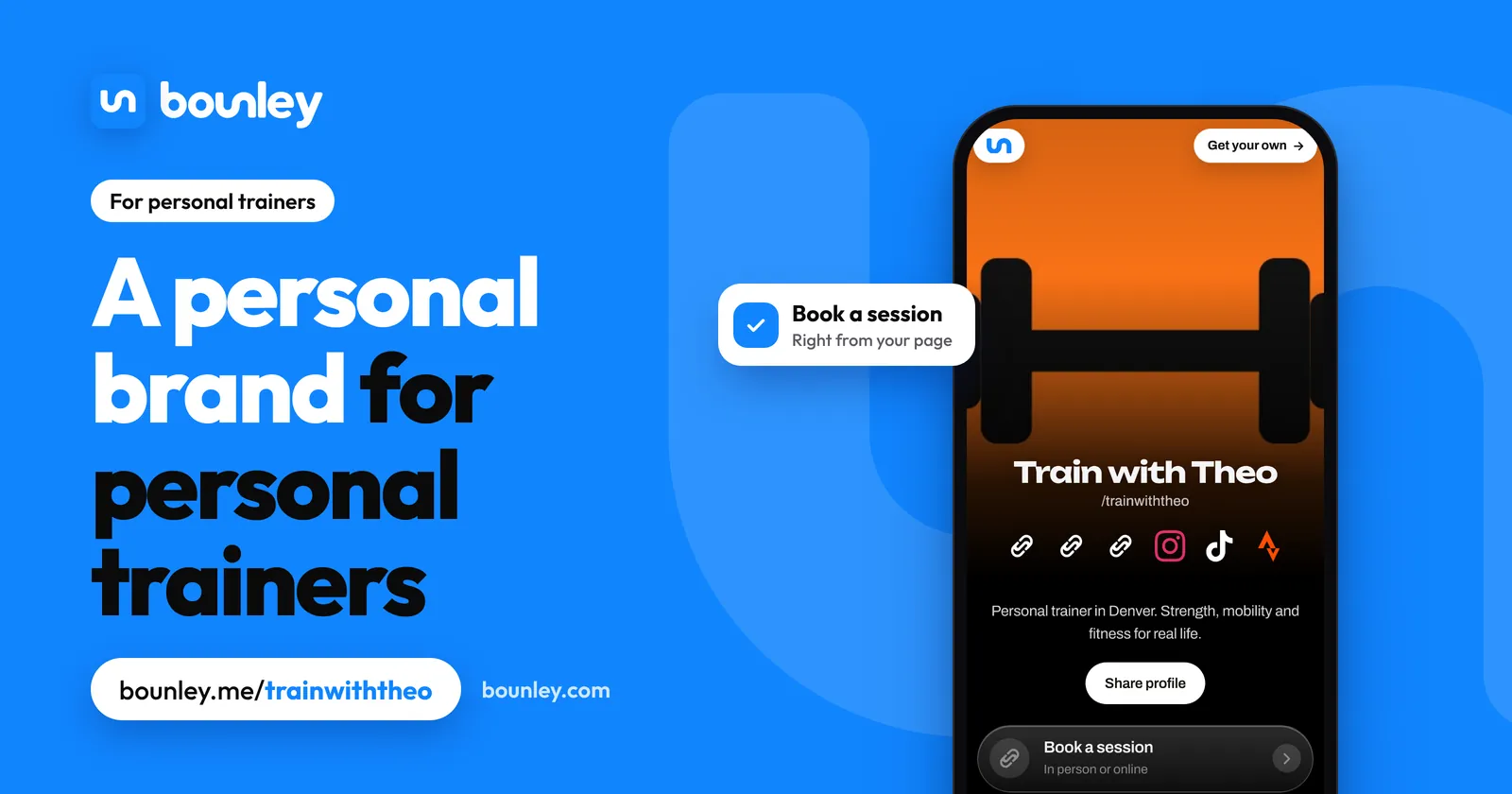
Gym floors are full of good trainers. The ones with a waiting list are the ones people can find, recognise and book without a back-and-forth in the DMs. A clear personal brand does that work while you’re on the floor with a client.
What a personal trainer’s site needs
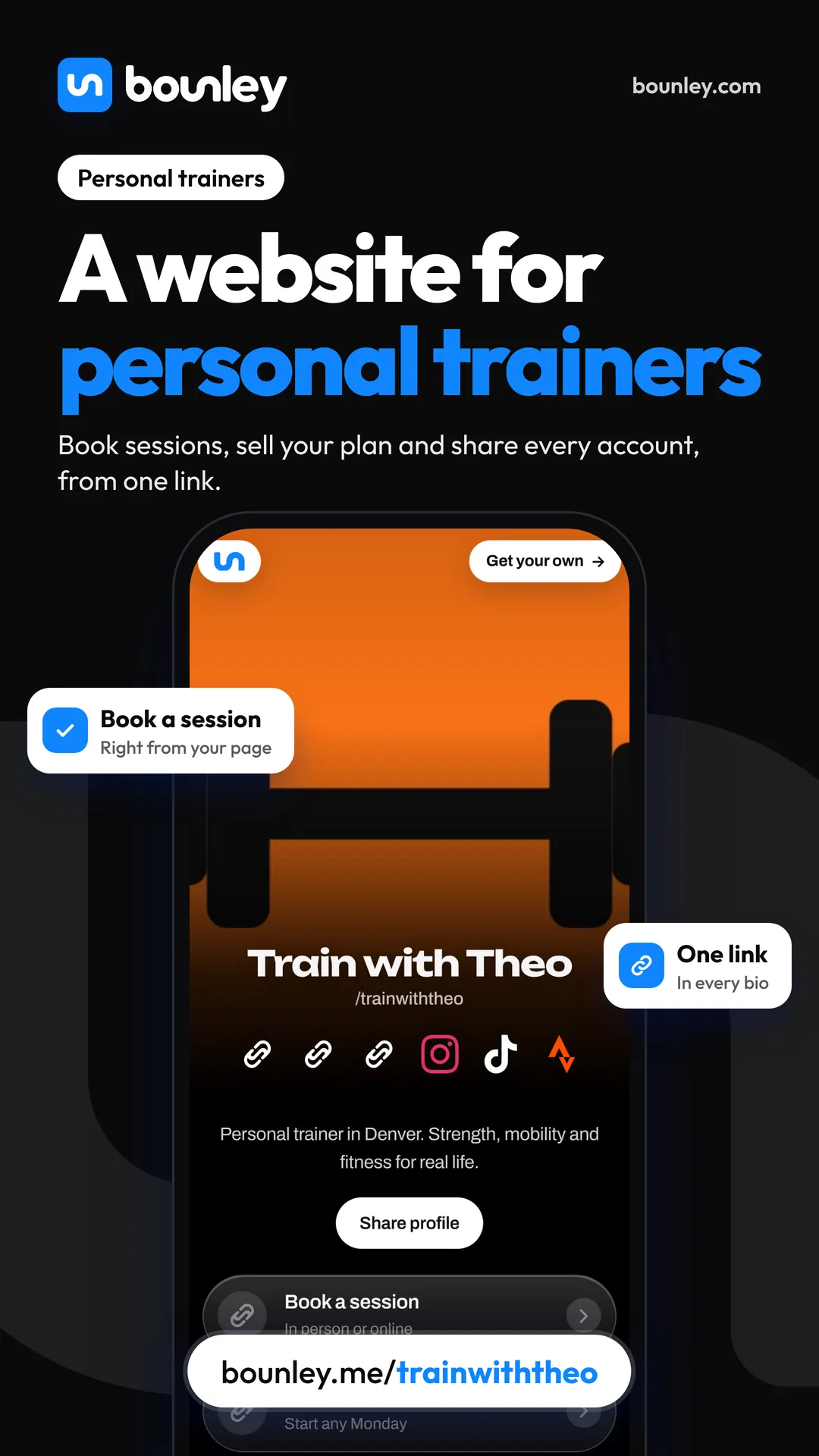
- Who you train and where, in one line: “Strength training for busy parents, in person in Denver and online.”
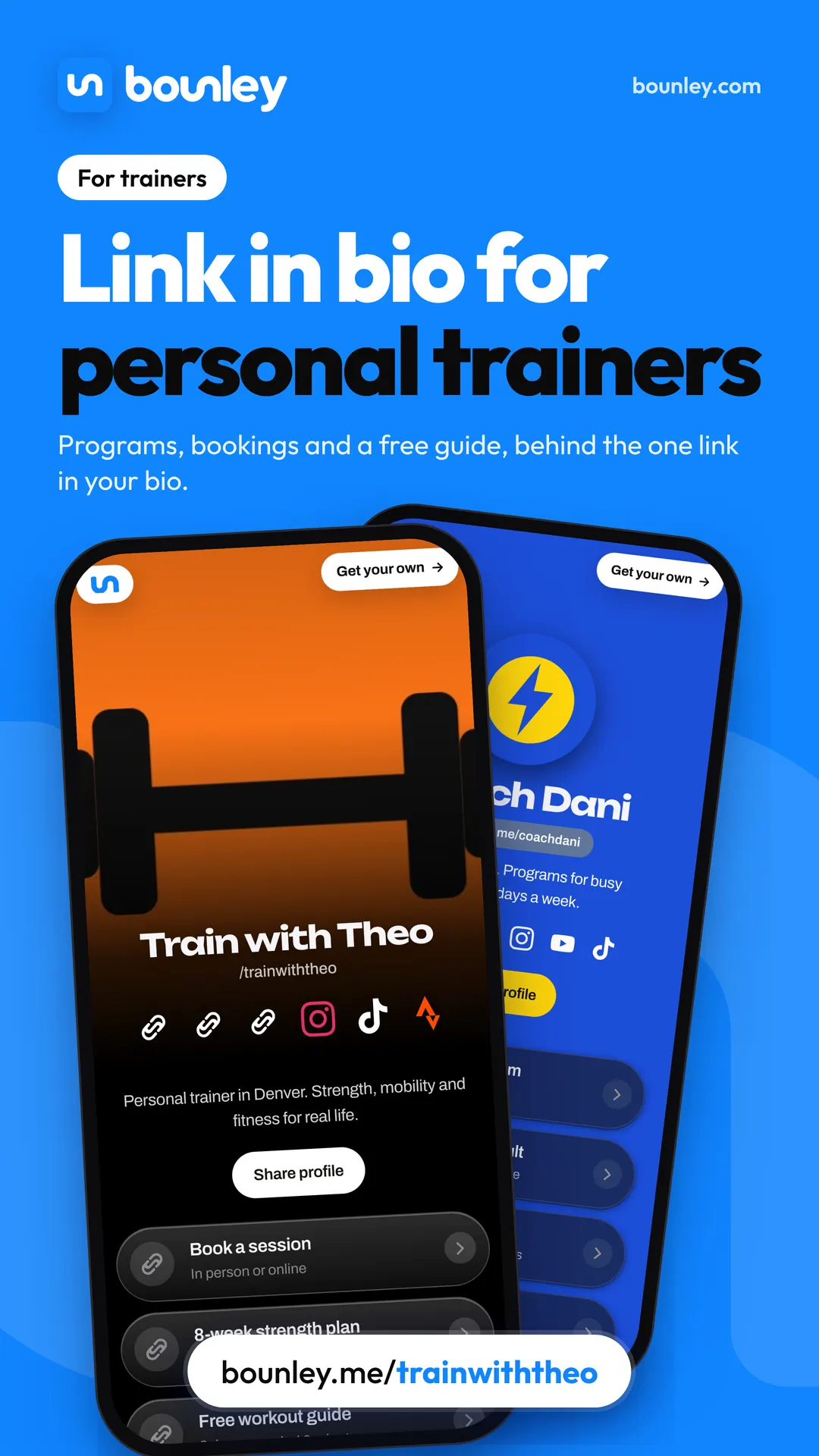
- A way to book: a first session, a free consult or a call, right at the top.
- Your packages or plan, with what’s included, so people know what they are booking.
- Client results and short stories, shared with permission.
- Your certifications and the gym or area you work in.
- A free guide or workout, for people who aren’t ready to book yet.
- Every account you post on, so a visitor can follow you while they decide.
Bio examples for trainers
- “Personal trainer in Denver. Strength, mobility and fitness for real life.”
- “I help busy parents get strong in three 40-minute sessions a week.”
- “Online coaching for lifters over 40. Programs, form checks and accountability.”
More formulas in how to write a personal brand bio.
Your domain and email
A trainer’s name is the business, so yourname.com (or trainwithyourname.com) is worth having. Use book@ or hello@ at it for enquiries: clients trust it more than a free address, and it stays the same if you change gyms. Professional email address ideas.
Content that books sessions
- Short form tips for the one lift or habit your clients struggle with most.
- A day in your clients’ week: what a session with you actually looks like.
- Answers to the questions people ask before they book (price, schedule, “am I too unfit to start?”).
- One clear next step at the end of every post: book, or grab the free guide.
Keep claims honest
Don’t promise a set weight loss or a guaranteed result, and only share before-and-after photos with the client’s written permission. Stay inside your qualifications: medical and nutrition advice may need a different licence where you live.
How Bounley fits
Bounley is the platform built for personal brands. Type your Instagram or TikTok username and your site is made from your accounts in about two minutes, free at bounley.me/yourname while Bounley is in beta. Your booking calendar (Calendly, Cal.com or Acuity), your videos and a contact form you make yourself sit right on the page, with a business card and QR code for the gym wall. With Premium it runs on your own domain, with your email there too.
Questions
Do personal trainers need a website?
If you want clients to find and book you without messaging back and forth, yes. One page with who you train, your packages, results and a booking link does most of the work.
Is Instagram enough for a personal trainer?
It’s a good place to be found, but you don’t own it, and one link in your bio has to do everything. Point that link at a site on your own name that takes bookings.
What should a personal trainer’s website be called?
Your own name if it’s free (yourname.com), or your name with a word like “train”, “fit” or “coaching”. Keep it short and easy to say out loud between sets.