Why it matters for nutrition professionals
Your credentials are your advantage over influencers selling the same advice. A site that shows them clearly, with a simple way to book, turns people who trust your content into clients.
What a nutritionist’s site needs
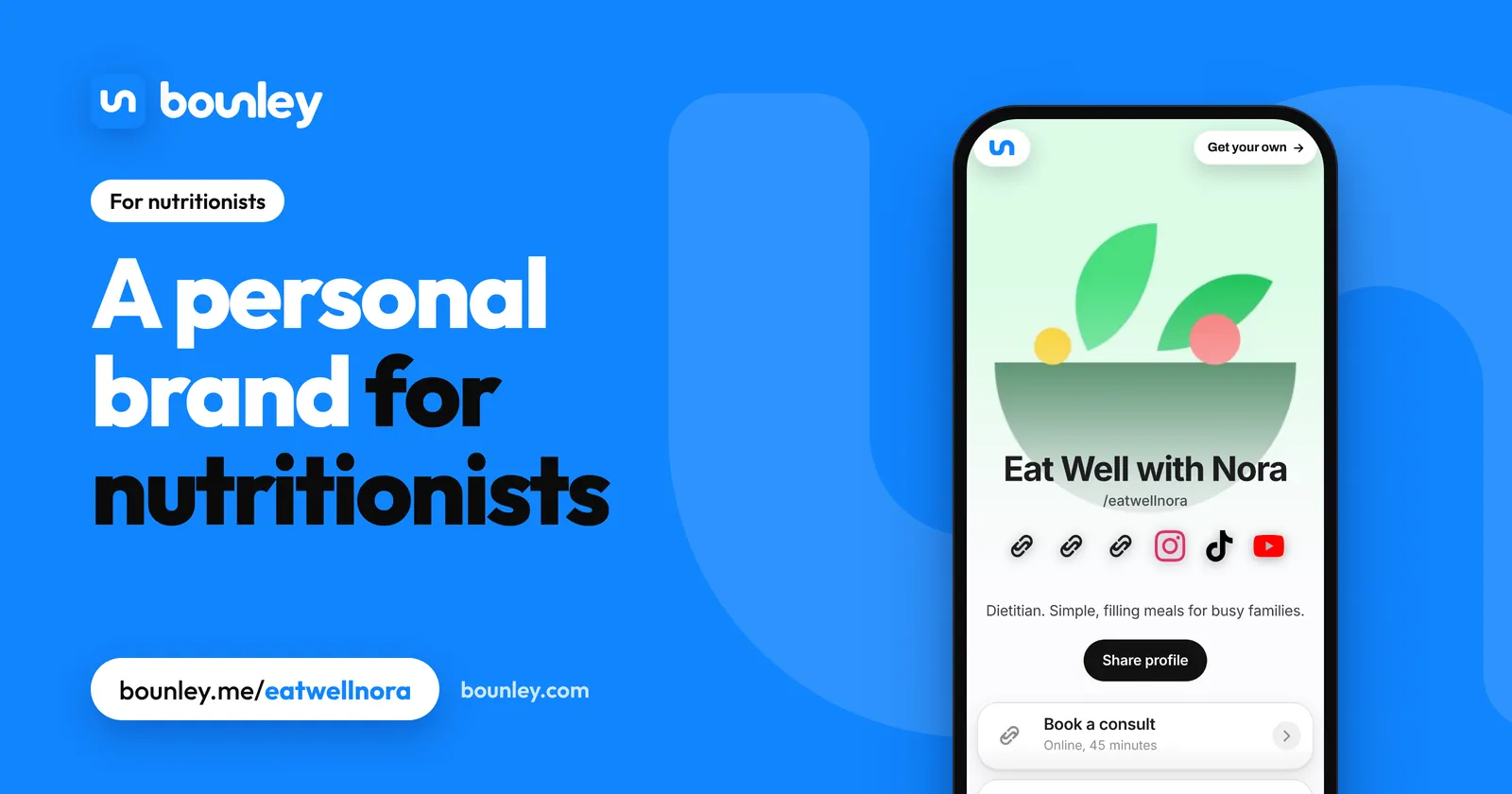
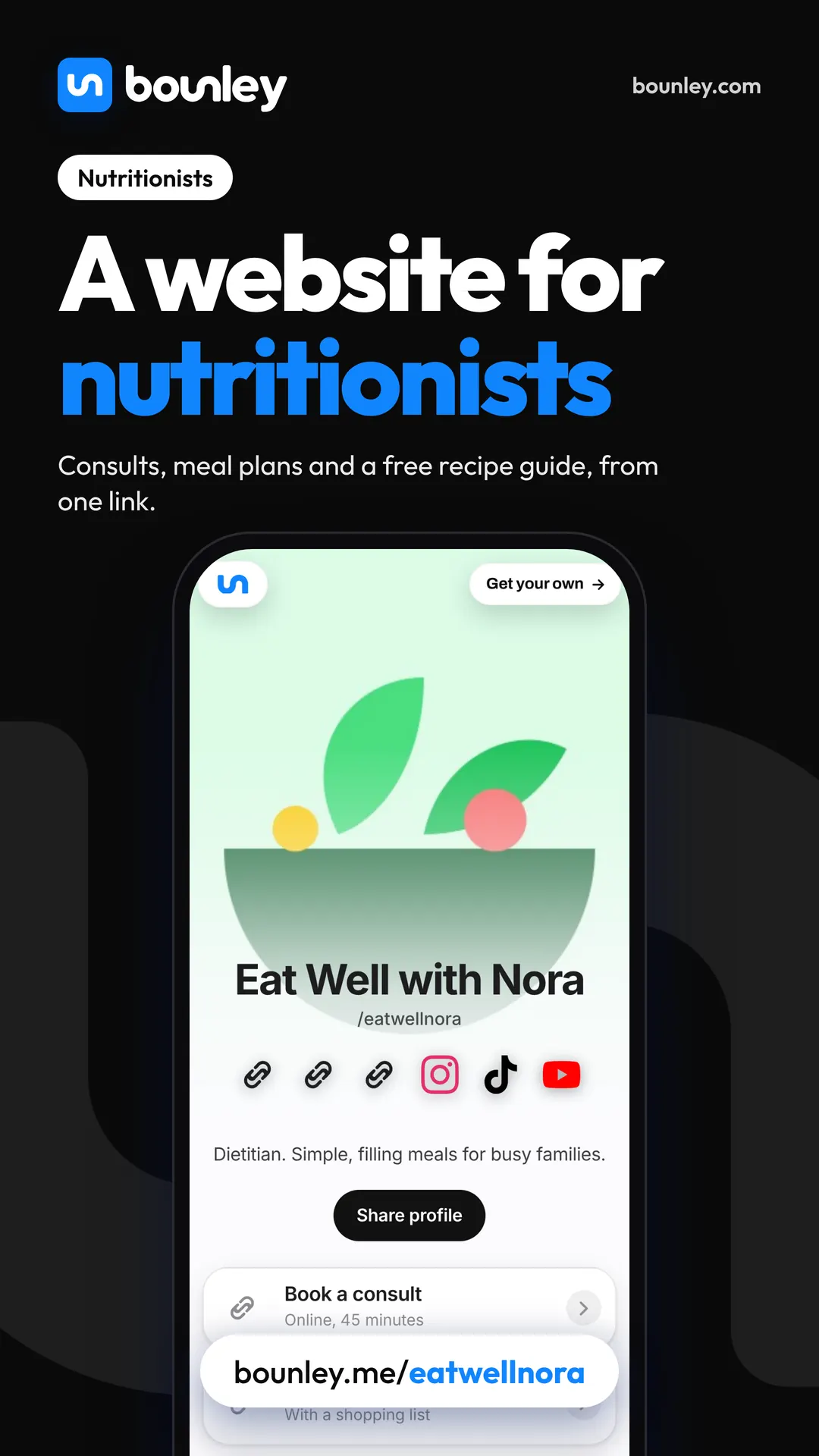
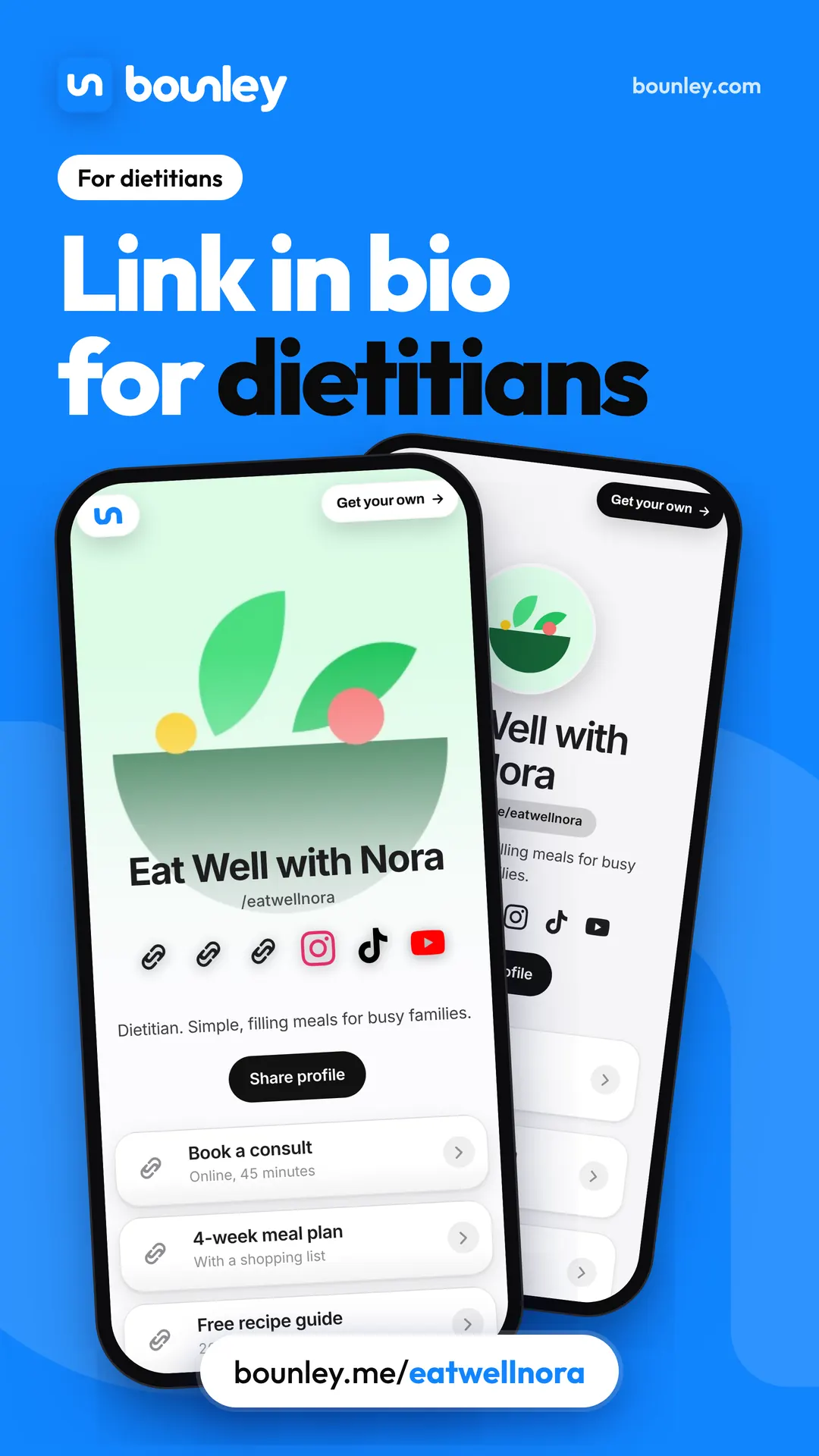
- Who you help and with what: “Simple, filling meals for busy families.”
- Your qualifications and registration, stated plainly.
- A way to book a consult, online or in person.
- Your plans or programs, with what’s included.
- Free recipes or a guide, for people who aren’t ready yet.
- Your Instagram, TikTok and YouTube.
Bio examples
- “Dietitian. Simple, filling meals for busy families.”
- “Sports nutrition for runners training for their first marathon.”
- “Helping people with IBS eat without fear. Online consults.”
Your domain and email
Clients share health details with you, so an address at your own domain looks more trustworthy than a free one. Keep detailed health information out of ordinary email where your rules require a secure system.
Content that builds trust
- Recipes people can make tonight, with the reason they work.
- Myth checks on popular claims, with sources.
- Grocery hauls and swaps on a budget.
Titles and health claims
“Dietitian” and some nutrition titles are protected in many places; use only the ones you hold. Avoid promising to cure or treat conditions, and say that your content is general information, not personal medical advice.
How Bounley fits
Bounley is the platform built for personal brands. Your site is made from your accounts in about two minutes, with your booking calendar, your videos, a free guide as a PDF and an intake or contact form you make yourself, all on the page. With Premium it runs on your own domain, with your email there too.
Questions
Do nutritionists need a website?
Yes, if you want clients beyond referrals: a site shows your credentials and lets people book, which a social profile alone can’t do well.
Should I give away recipes and guides for free?
Yes, for general advice. It shows how you work and brings people back; the personal plan and support are what clients pay for.