Why it matters for food creators
A recipe in a caption gets cut off, and comments asking for it pile up. A page with every recipe, your newest video and your cookbook turns viewers into regulars, and gives brands a clear place to start a deal.
What a food creator’s site needs
- Your kind of cooking: “Weeknight recipes in 30 minutes.”
- Your recipes, or a link to where they live.
- Your newest videos, playing on the page.
- Your cookbook, classes or products.
- A newsletter for new recipes.
- A business email and a short brand enquiry form.
Bio examples
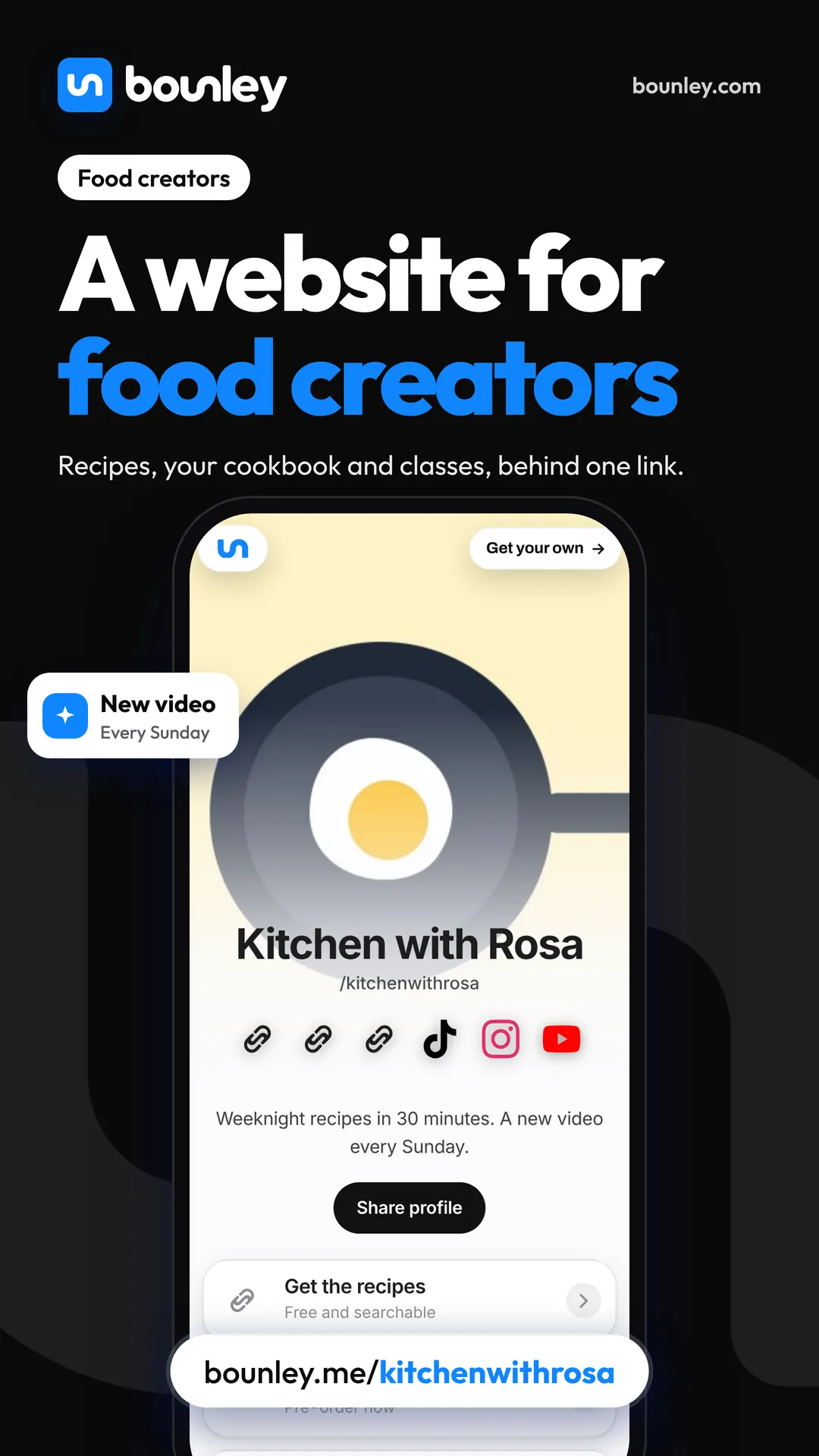
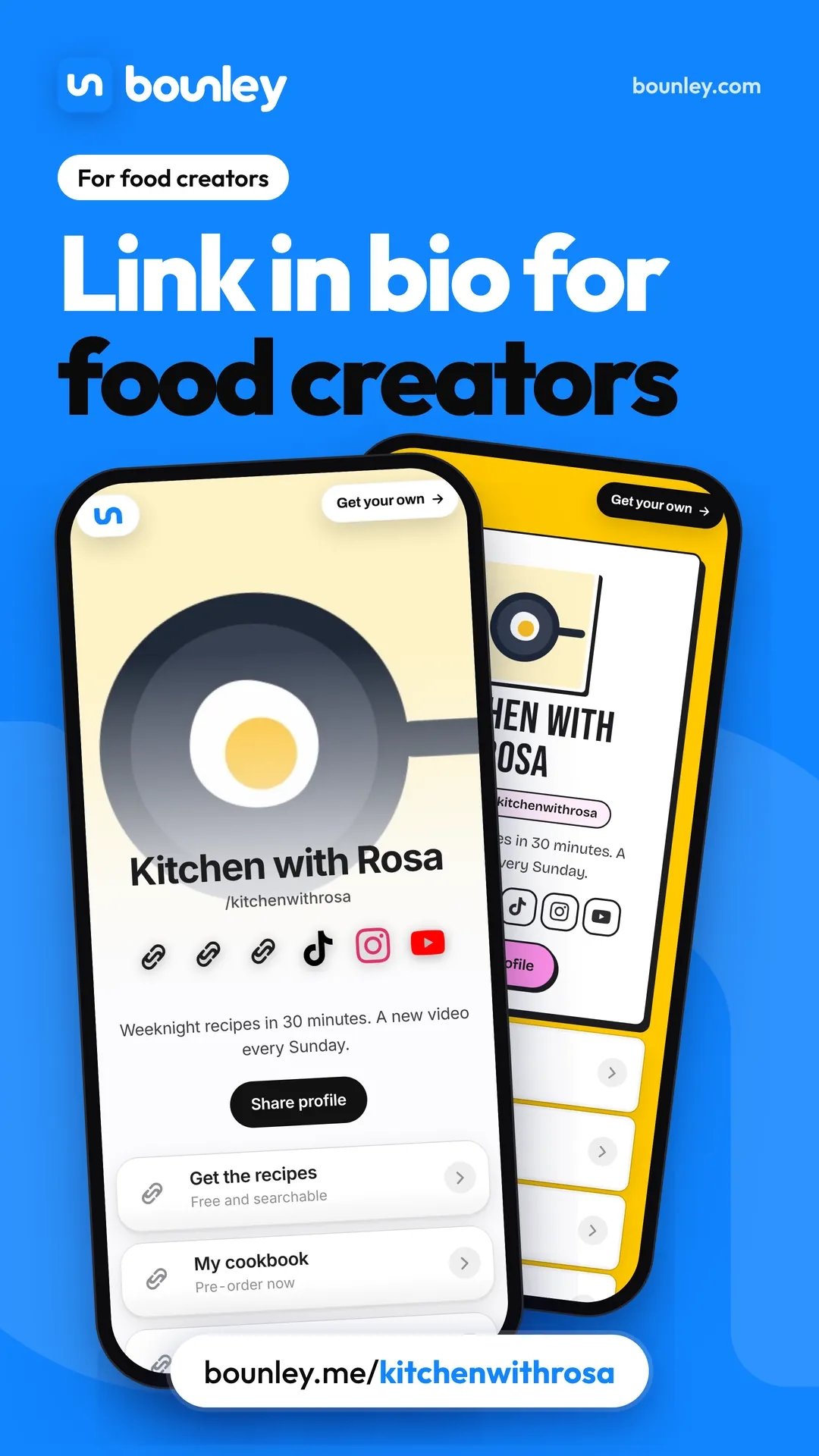
- “Weeknight recipes in 30 minutes. A new video every Sunday.”
- “Plant-based Caribbean cooking from my grandmother’s kitchen.”
- “Baking for beginners. If I can do it, you can.”
A business email
Food and kitchen brands work with creators who look like a business: hello@yourname.com instead of a free address. How to email brands for sponsorships.
Content ideas
- One recipe, three ways.
- Cooking from what’s left in the fridge.
- Your most-saved recipe, remade with a twist.
Disclosure and food safety
Disclose sponsored posts and gifted products as your country’s rules require. Give safe cooking temperatures and allergy notes where they matter.
How Bounley fits
Bounley is the platform built for personal brands. Your site is made from your accounts in about two minutes, with your TikTok, Instagram and YouTube videos playing on the page, your newsletter sign-up and a brand enquiry form you make yourself. With Premium it runs on your own domain, with your email there too.
Questions
Do I need a food blog to share recipes?
Not to start. A simple page linking each recipe (a doc, a PDF or a post) works; you can move to a full recipe blog later.
How do food creators get brand deals?
Show the kind of content a brand could use, make it easy to reach you with a business email, and pitch brands you already cook with.