Why it matters for tattoo artists
Instagram can bury your posts and lock your account without warning. A site on your own name keeps your style, your flash and your booking process in one place you control, and answers the same ten questions so you don’t have to.
What a tattoo artist’s site needs
- Your style in a line: “Fine-line and botanical tattoos.”
- When books open, and how to get on them.
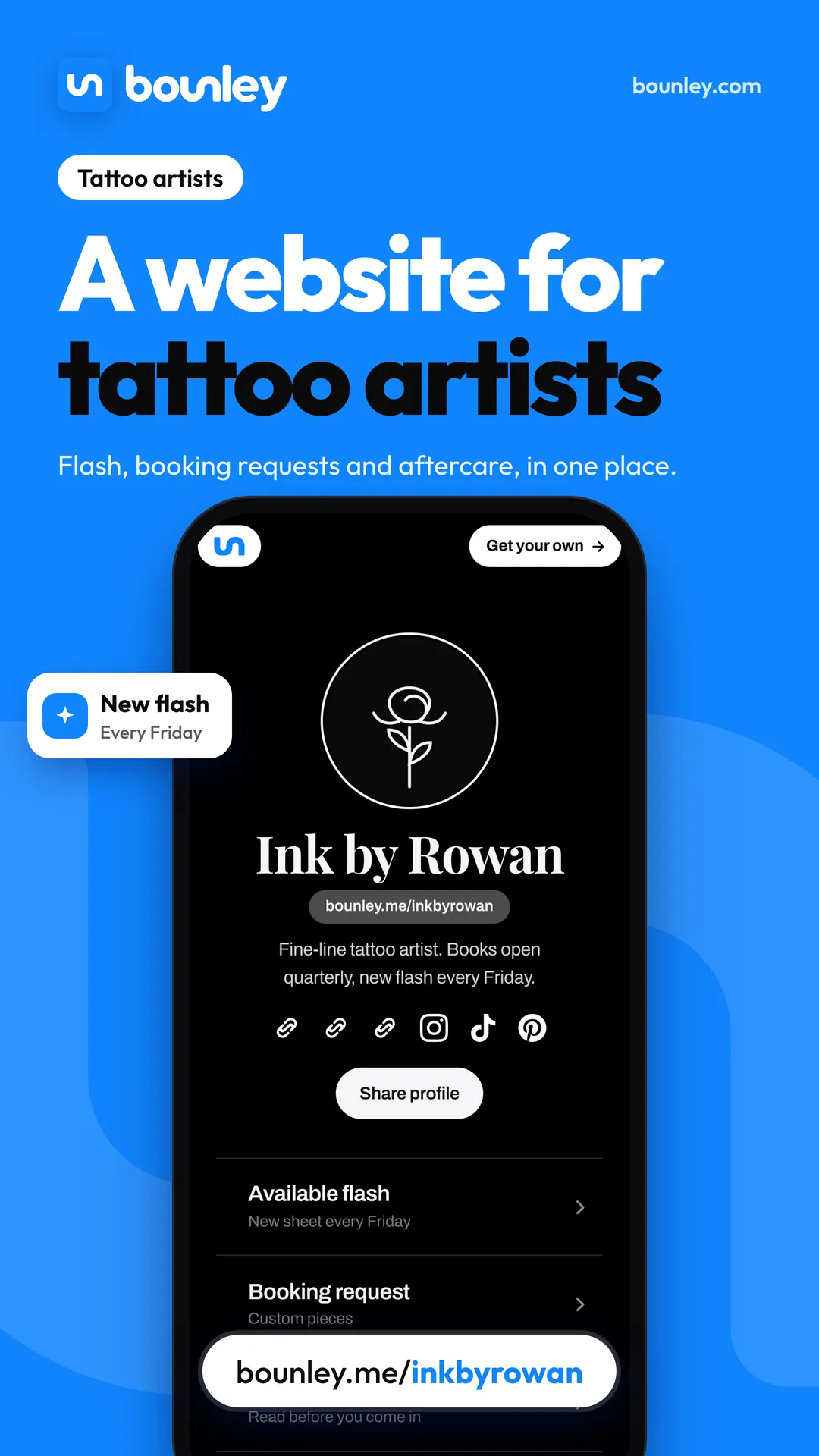
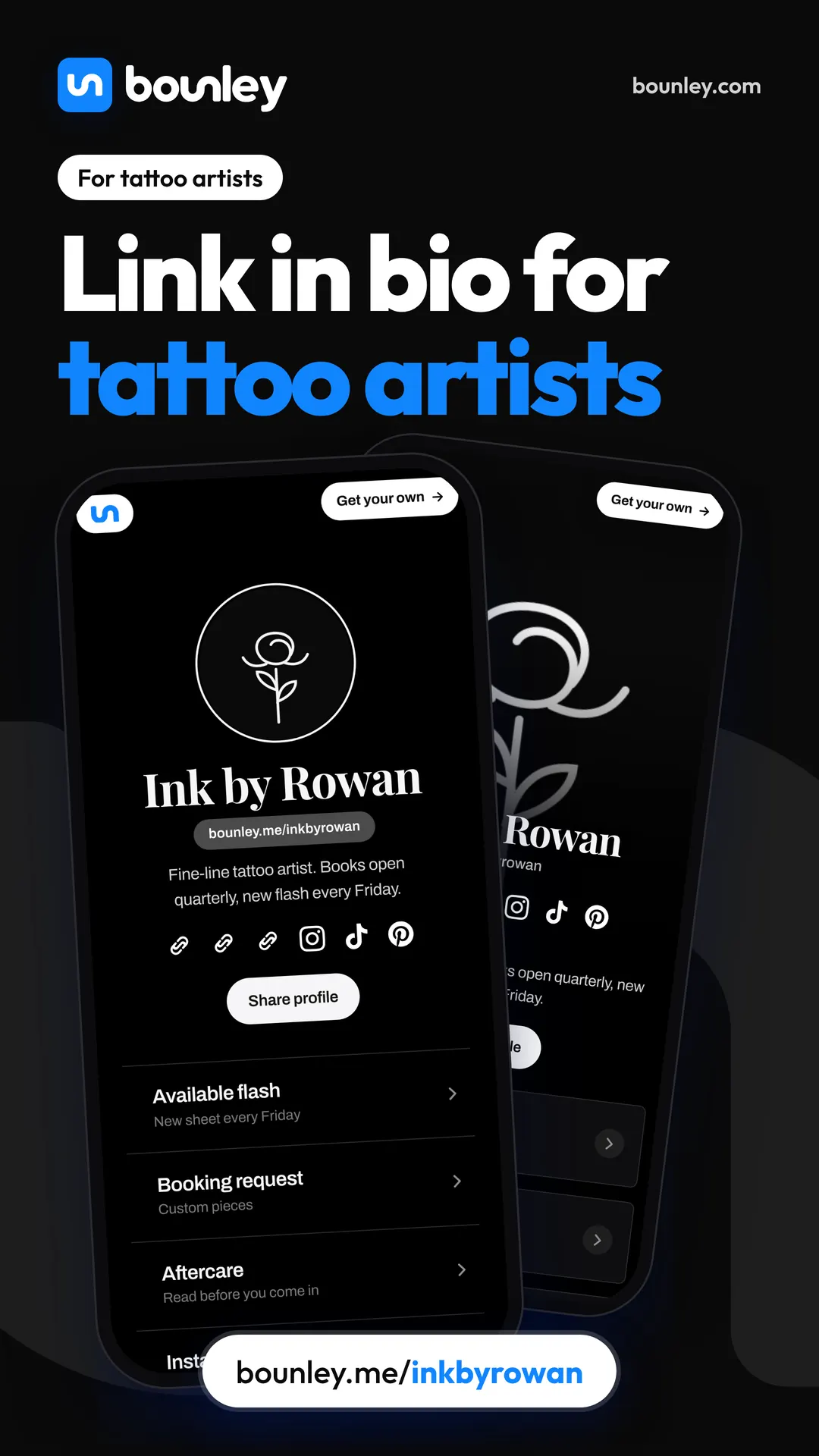
- Available flash, kept current.
- A booking request form: idea, placement, size, references, dates.
- Aftercare instructions people can find again at 2am.
- Deposit and cancellation policy, and the shop’s address.
Bio examples for tattoo artists
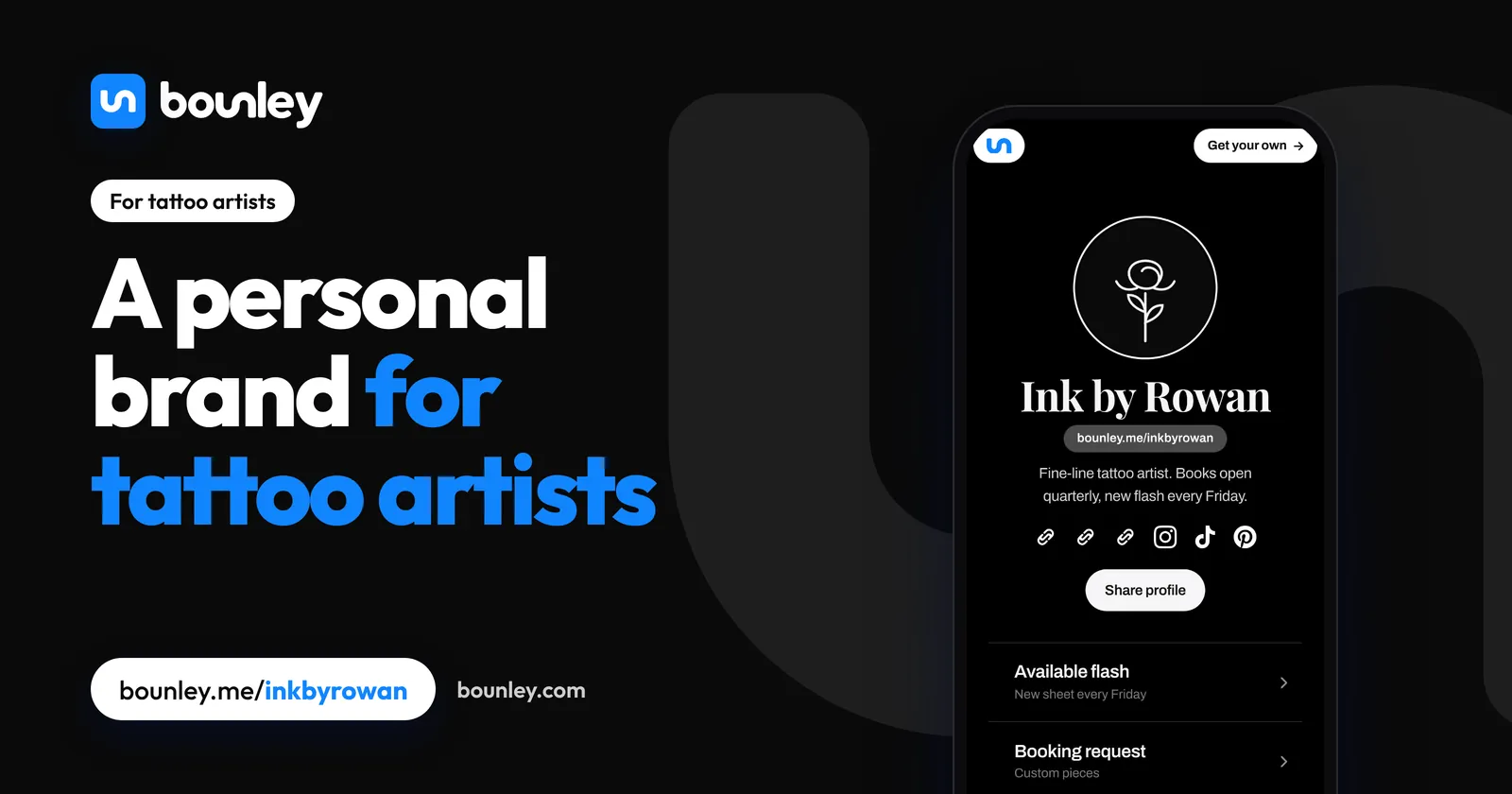
- “Fine-line tattoo artist. Books open quarterly, new flash every Friday.”
- “Neo-traditional and colour work at Iron Rose, Leeds.”
- “Blackwork and dotwork. Custom pieces only.”
Your domain and email
An address like bookings@yourname.com keeps requests out of your DMs and personal inbox. Use the name you tattoo under: inkbyyourname.com works if your own name is taken.
Content that fills your books
- Healed photos next to fresh ones: they sell your work better than either alone.
- Time-lapses of a piece from stencil to finish.
- Flash drops on a regular day, with your booking link.
Age, consent and licences
Follow your area’s rules on age, consent and licensing, and say on your site that you check ID. Ask before posting a client’s tattoo, especially if it shows their face or a personal detail.
How Bounley fits
Bounley is the platform built for personal brands. Your site is made from your accounts in about two minutes, with a booking request form you make yourself, your flash and aftercare as their own pages, and a QR code for the shop counter. With Premium it runs on your own domain, with your email there too.
Questions
Do tattoo artists need a website if they have Instagram?
Instagram is where people discover you; a site is where they book, read aftercare and see what’s available, and it stays yours if an account is ever lost.
What should a tattoo booking form ask?
The idea, placement, rough size, colour or black and grey, reference images, the dates they can do, and whether they’ve read your deposit policy.