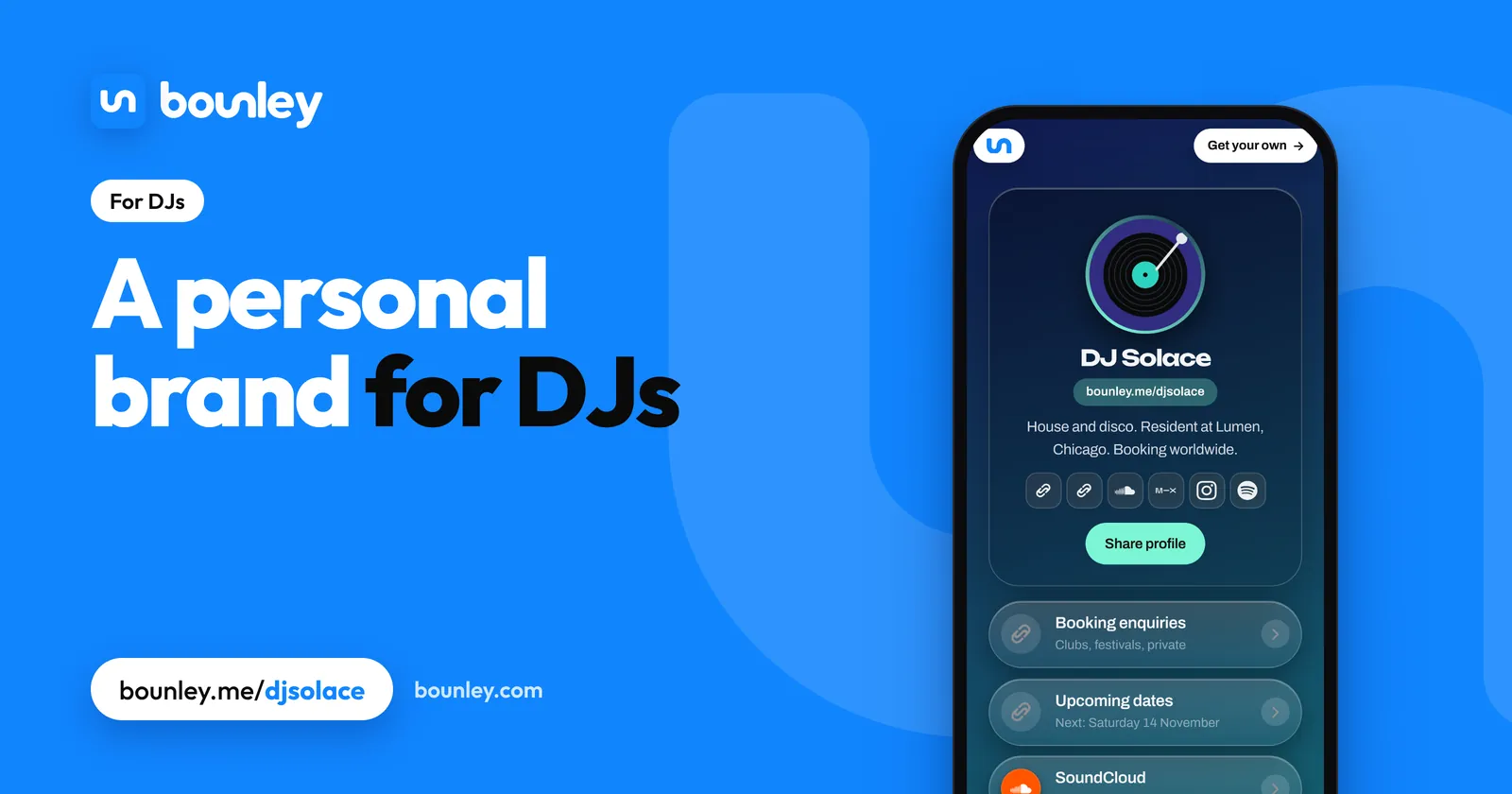
Why it matters for DJs
A promoter deciding between three names will listen to thirty seconds of each and look for a booking email. If yours is buried in a link list, they book the one who made it easy.
What a DJ’s site needs
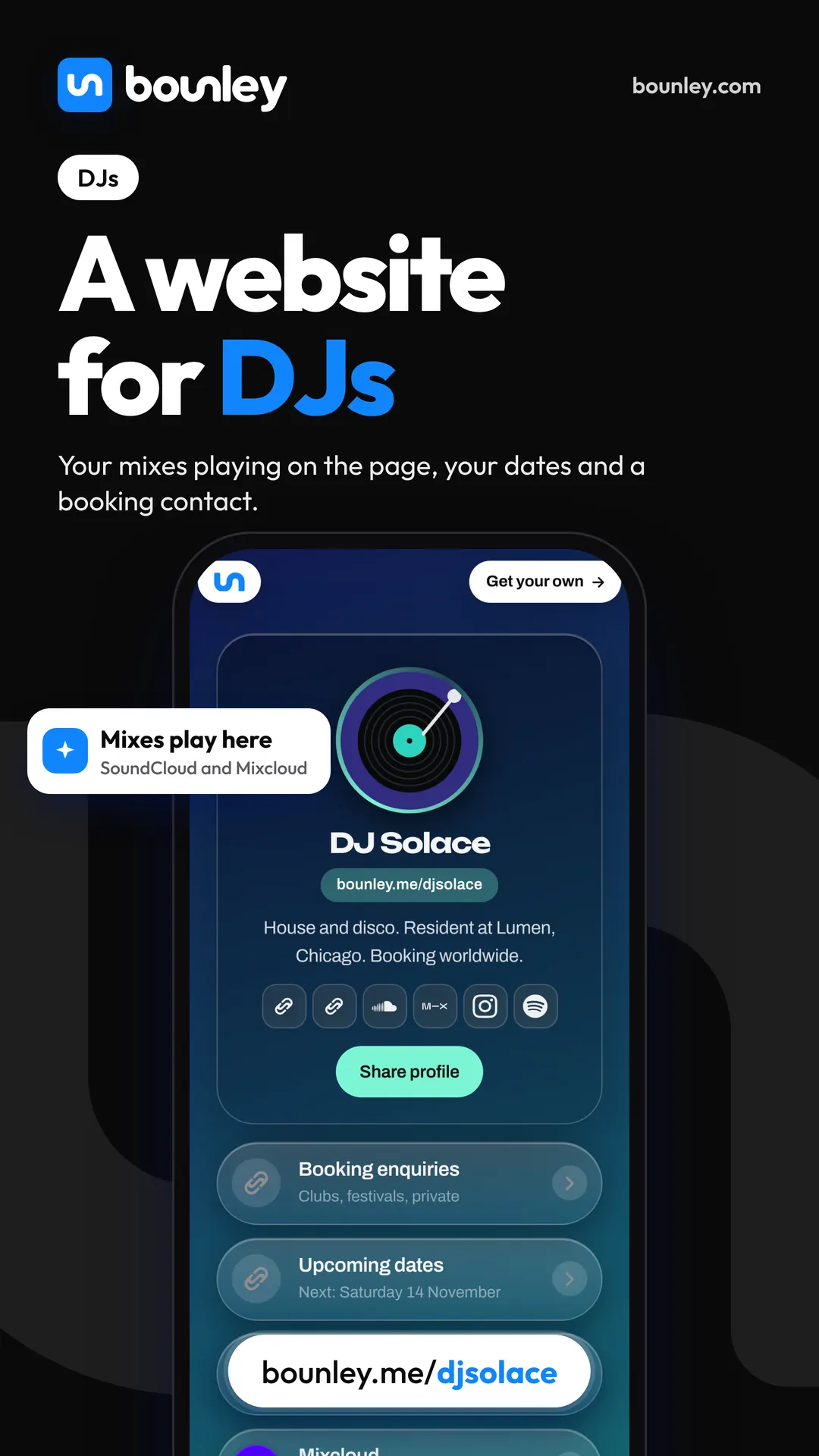
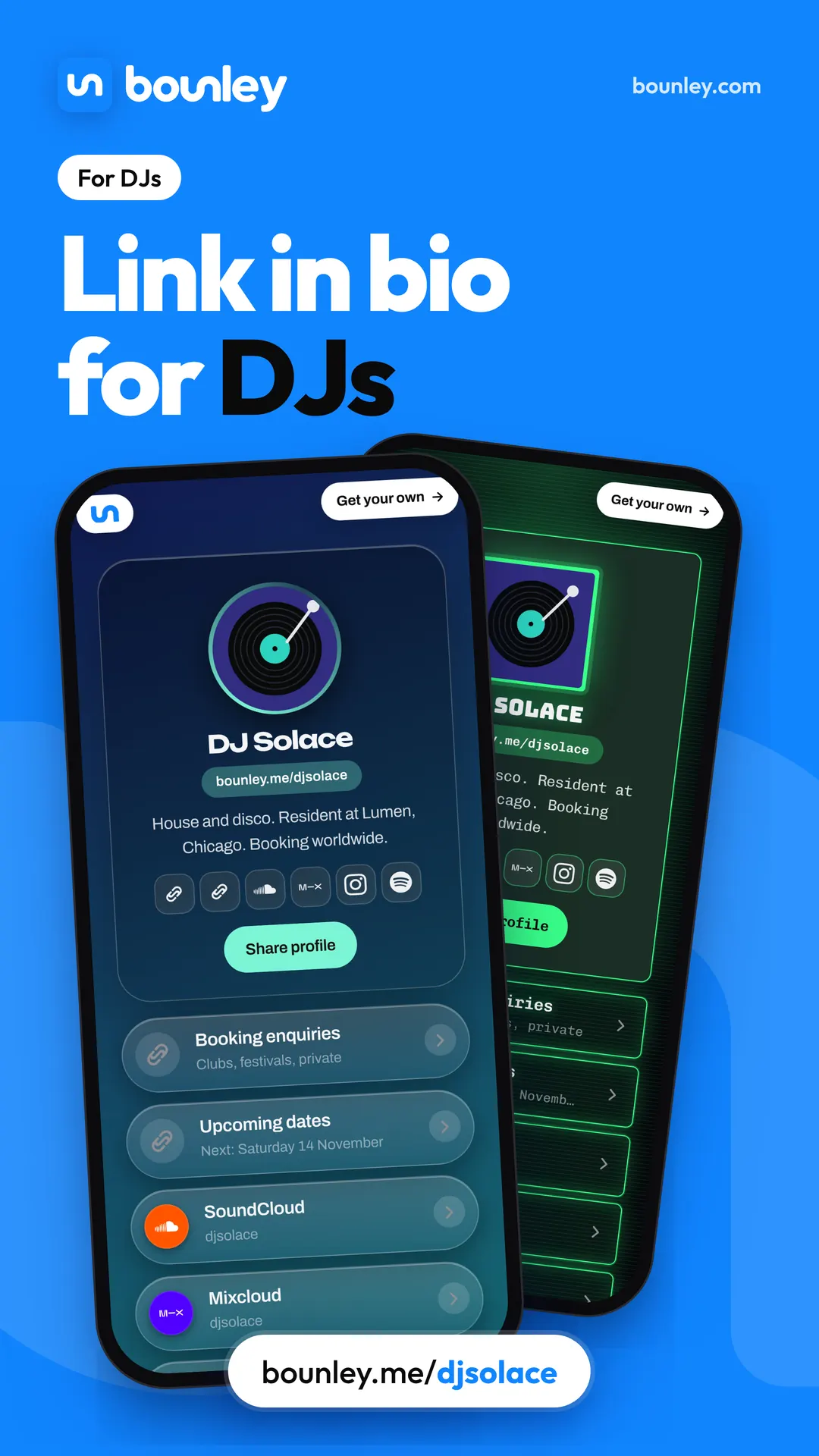
- Your sound in a line: “House and disco. Resident at Lumen, Chicago.”
- Your latest mix, playing on the page.
- Upcoming dates and residencies.
- A booking email and a short form for clubs, festivals and private events.
- A press kit: photos, a short bio, logos and your rider.
- SoundCloud, Mixcloud, Spotify and Instagram.
Bio examples for DJs
- “House and disco. Resident at Lumen, Chicago. Booking worldwide.”
- “Open-format DJ for weddings and private events in Miami.”
- “Drum and bass. Monthly show on Sub FM.”
A bookings email
bookings@yourdjname.com tells promoters you’re a professional, and you can hand it to an agent later without changing it. How to get a professional email address.
Content that gets you booked
- Clips from the booth with the crowd in shot.
- A monthly mix, released on the same day.
- Your next date, posted with the ticket link.
Music rights
Mix platforms handle licensing in different ways, and some take mixes down; keep copies, and check a platform’s rules before uploading. Credit other artists when you post their tracks.
How Bounley fits
Bounley is the platform built for personal brands. Your site is made from your accounts in about two minutes, with your SoundCloud and Mixcloud mixes playing right on the page, your dates, a booking form you make yourself and a press kit page. With Premium it runs on your own domain, with your bookings email in the same place.
Questions
Do DJs need a website?
If you want bookings from people who don’t already know you, yes: a page where they can hear you, see your dates and email you does more than a profile on one app.
What goes in a DJ press kit?
A short and a long bio, three to five photos, your logo, a recent mix, notable dates and residencies, your technical rider and a booking contact.