Why it matters for designers
Every designer has a Dribbble. Hiring managers and clients want to see how you think: why you made each decision and what it changed. A portfolio on your own name tells that story; a grid of shots doesn’t.
What a designer’s portfolio needs
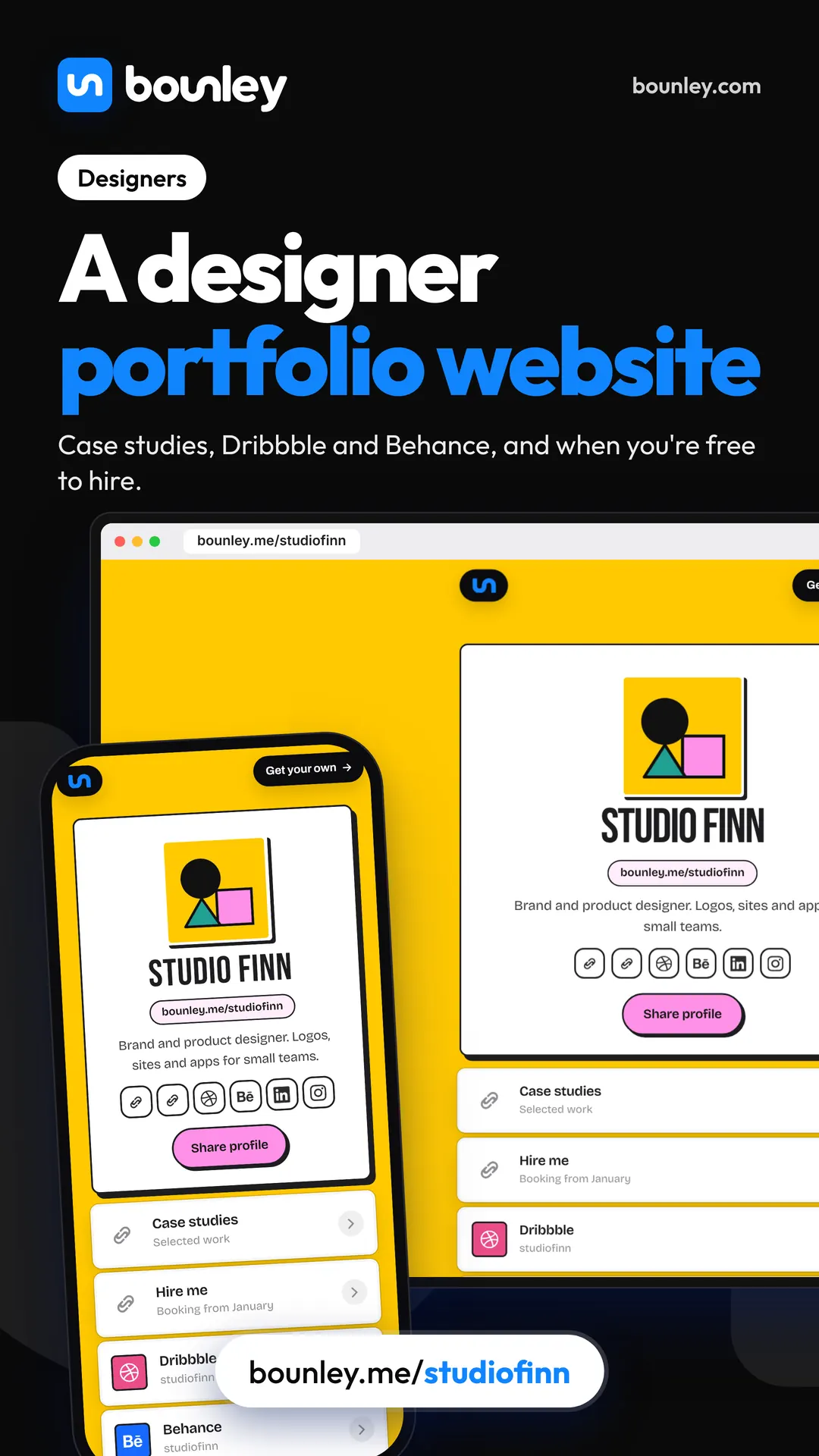
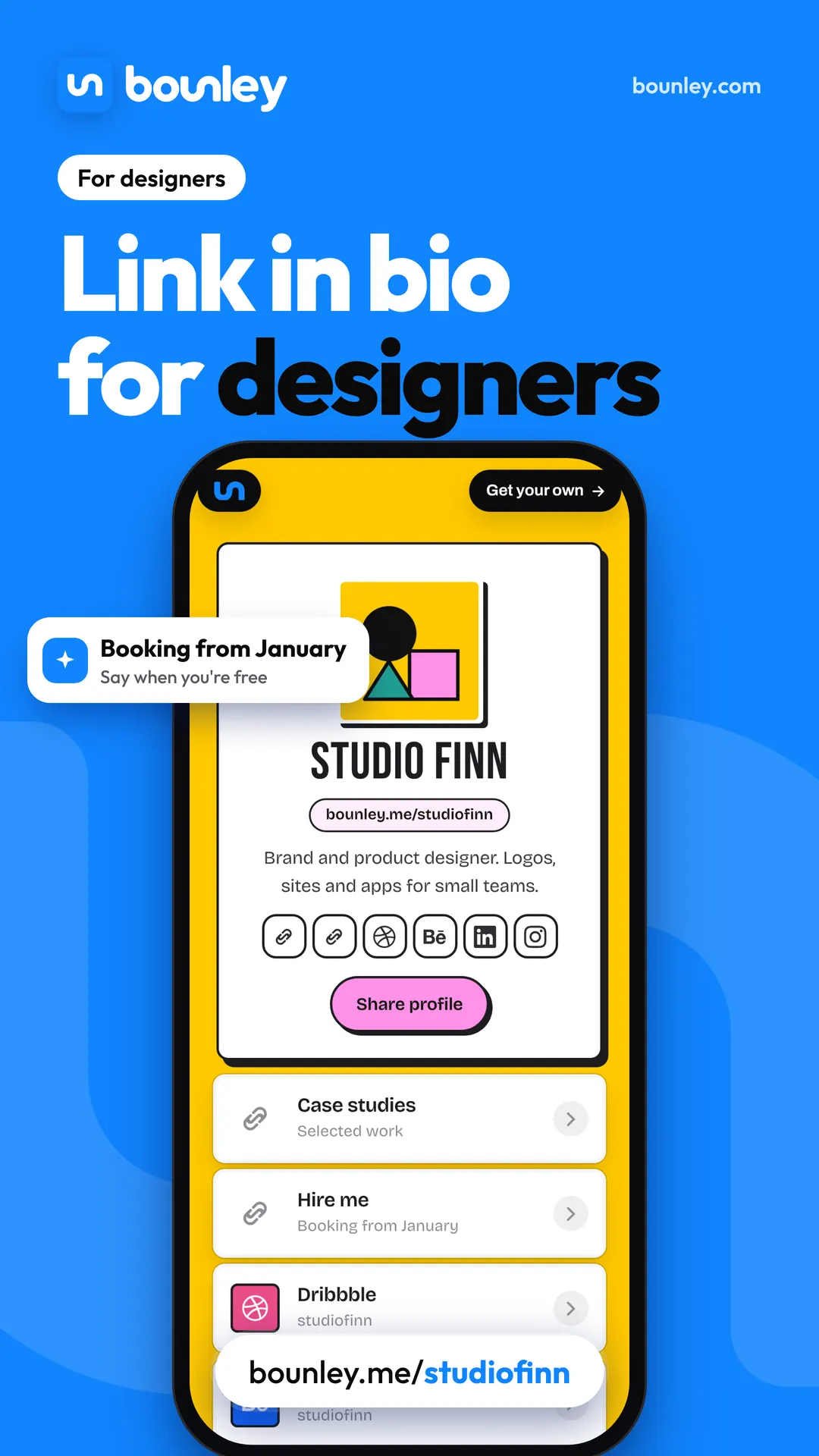
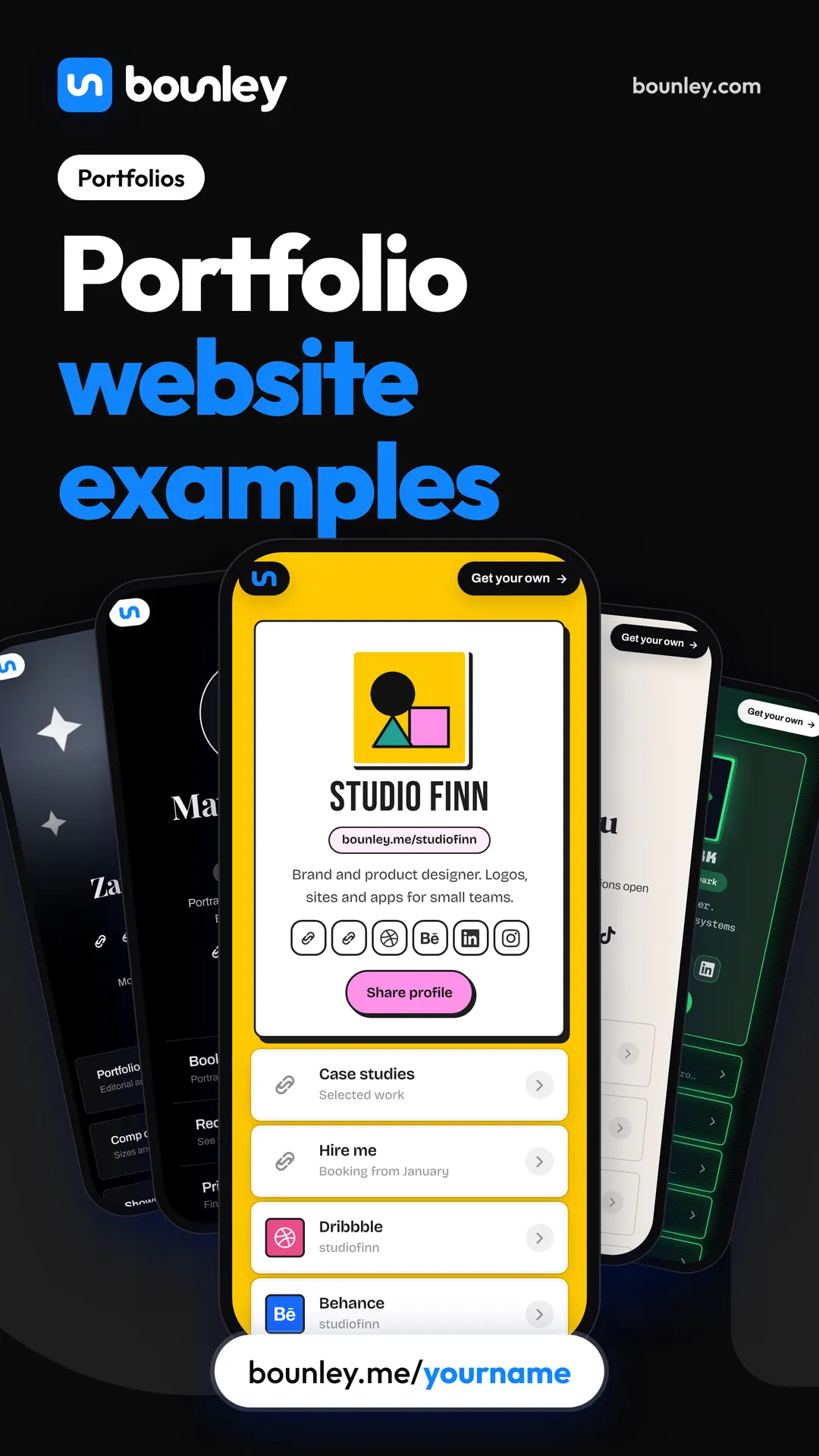
- What you design and for whom: “Brand and product design for small teams.”
- Three to six case studies: the problem, your process, the result.
- Your Dribbble, Behance and LinkedIn.
- When you’re next free, and how to start a project.
- A short about: your background and how you work.
- A professional email.
Bio examples
- “Brand and product designer. Logos, sites and apps for small teams.”
- “UX designer for healthcare software. Previously at a hospital group.”
- “Packaging design for food and drink brands.”
Your domain and email
A designer’s domain is part of the portfolio: yourname.com or yournamestudio.com, with hello@ at it. Choosing a domain name.
Content that brings work
- Before and after redesigns, with the reasoning.
- Process: sketches, rejected options and why.
- Small free resources (templates, icons) that show your style.
Client work and NDAs
Ask before showing client work, and respect NDAs: you can describe the problem and your approach without showing confidential screens.
How Bounley fits
Bounley is the platform built for personal brands. Your site is made from your accounts in about two minutes, with Figma files, Behance projects and Loom walkthroughs playing on the page, a project enquiry form you make yourself, and a business card and email signature to match. With Premium it runs on your own domain, with your email there too.
Questions
How many projects should a design portfolio have?
Three to six strong case studies. Quality and explanation matter more than volume.
Is Dribbble or Behance enough?
They’re good for being found. A portfolio on your own name is where you tell the whole story of a project and where clients contact you.