What a media kit is for
A brand manager deciding between ten creators has a few minutes for each. The media kit answers the questions they’d otherwise have to ask: is this person’s audience our customer, how many of them are there, has this person done this before, and who do I email. If the kit answers those, you get a reply. If they have to dig, they move to the next name.
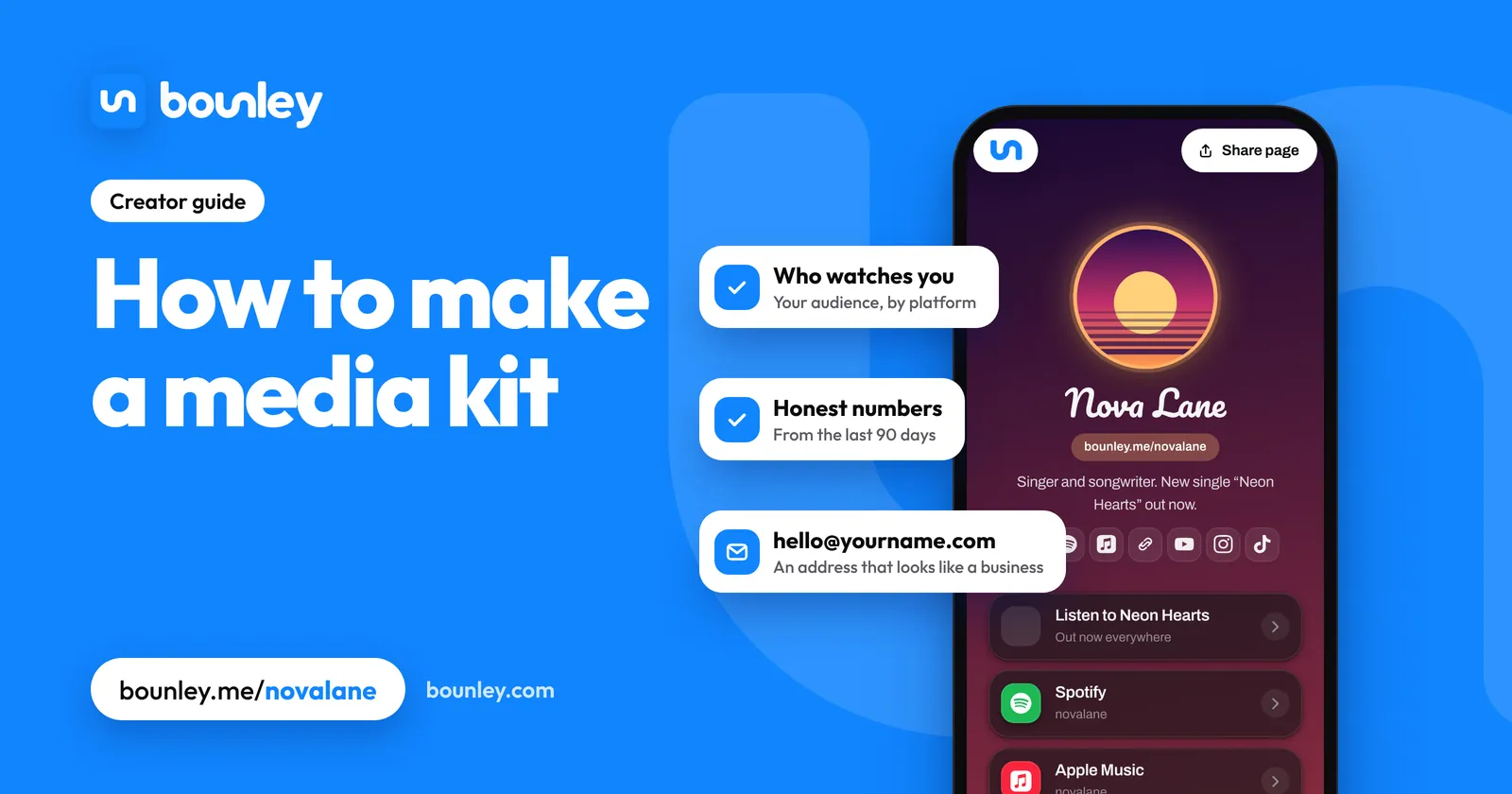
The six things on it
- Who you are. Your name, a photo, and one line: what you make and for whom. How to write that line.
- Your audience. Where they are, their age range, what they come to you for. Take it from each platform’s own analytics.
- Your numbers, platform by platform (the table below).
- Past work. Two or three collaborations, with what you made and, if you can share it, what happened. No brand work yet? Show your three best pieces in the style a brand would want.
- What you offer. The formats you make: a dedicated video, an integration, a set of photos, content the brand can run as its own.
- How to reach you. One email address and your site.
The numbers brands look for
| Number | What it tells them | How to show it |
|---|---|---|
| Followers or subscribers | The size of the room | Per platform, with the date |
| Average views | How many people actually see a post | Average of your last 10 to 30 posts, not your best one |
| Engagement rate | Whether the audience cares | Likes, comments, shares and saves divided by views or followers; say which |
| Audience location and age | Whether they can buy the product | Top three countries, main age band |
| Link clicks | Whether people act on what you say | Taps on your site’s links, if you track them |
Use the last 30 to 90 days, and put the date on the page. A smaller honest number beats a big stale one; brands check, and a mismatch ends the conversation.
If your audience is small
Plenty of brands work with creators who have a few thousand followers, because a small audience that trusts you often buys more per person than a large one that scrolls past. Lead with what’s strong: a specific audience (“new parents in the UK”), a high engagement rate, the quality of the content itself, or results from one piece. And if you make content for brands to post on their own accounts, your follower count barely matters; your examples do. A personal brand for UGC creators.
Should rates be on it?
- Leave them off the public version. What you charge depends on usage, exclusivity and how long the brand can run the content.
- Keep a rate card ready to send when asked, with a starting price for each format.
- Say what’s priced separately: usage rights, exclusivity, rush turnaround, raw footage.
Where to put it
A PDF attached to an email is out of date the week after you send it, and attachments from strangers often aren’t opened. Better:
- A link on your own site, so the numbers are current whenever a brand opens it and you can see whether it was tapped.
- The same link in your bio and your pitch email, with the PDF only for the brands that ask for one.
- Your own domain. A kit at yourname.com, sent from hello@yourname.com, reads as a business. The same kit at a free address, sent from a free inbox, reads as a hobby, and is easier to mistake for spam.
With Bounley your site is made from your accounts in about two minutes, and a link to your kit can be the first button brands see. Premium puts that site on your own domain with an email address at it; it’s invitation-only during the beta, and the waitlist is emailed the day it opens.
Sending it
The kit doesn’t pitch for you. The email does: three or four lines on why this brand, what you’d make, and a link to the kit. How to email brands for sponsorships has the wording, and why emails go to spam is worth five minutes before you send fifty.
What gets a kit ignored
- Four pages. One is read; four are skimmed.
- Your best-ever post presented as typical.
- No date on the numbers.
- A wall of logos for brands that once sent a free product.
- No email address, or one that looks personal.
- Paid work with no disclosure in the examples. Brands want to see you follow the rules.
Keeping it current
- Update the numbers on the first of each month.
- Swap in your newest collaboration when it’s better than the oldest on the page.
- Check the link from your bio still opens.
- Send yourself the pitch email and open the kit on a phone.
Questions
How many followers do I need for a media kit?
None in particular. Make one as soon as you plan to contact brands; it shows you’re organised, and small creators are hired for a specific audience or for the content itself.
How long should a media kit be?
One page. A second only if you have case studies worth reading.
Can I make a media kit for free?
Yes. It’s a page of text, a photo and a few numbers; any document or design tool will do, and so will a page on your site.
Is a media kit the same as a press kit?
Close. A media kit is for brands and is about your audience. A press kit is for journalists and bookers and is about you: a bio, photos, past coverage.
How often should I update it?
Monthly for the numbers, and whenever you finish work that’s better than what’s on it.