Why it matters for artists
Most people meet your work in a feed, one piece at a time, between everyone else’s. A site of your own is the only place they see it together, in the order you chose, with the price or the commission form next to it. It’s also what a gallery, an art director or a licensing client opens when your name comes up.
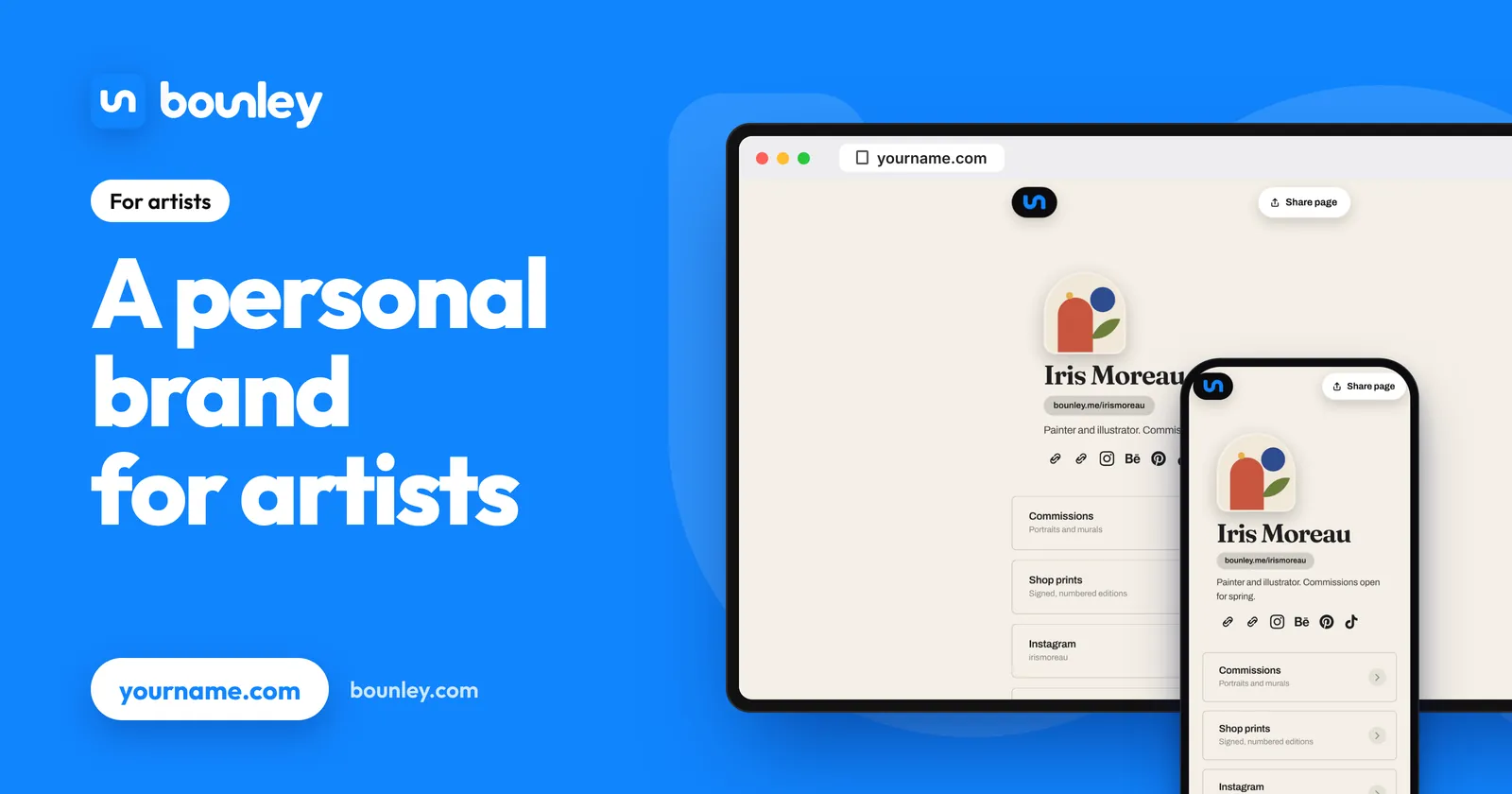
What an artist’s site needs
- What you make and in what medium, in one line: “Oil painter. Coastal landscapes.”
- Ten to twenty pieces, your best and most recent first, each with a title, size and medium.
- What’s available: originals, prints, or “sold” where it is.
- Commissions: open or closed, what you take on, a starting price and how long it takes.
- Your shop, wherever it lives.
- Shows, fairs and conventions coming up.
- One email address for enquiries.
Bio examples
- “Illustrator. Book covers and editorial. Commissions open for spring.”
- “Ceramics, made in small batches. Shop restocks the first Friday of the month.”
- “Muralist in Chicago. Walls, shopfronts and schools.”
More formats in how to write a personal brand bio.
Your domain and email
yourname.com, or yournameart.com or yournamestudio.com if it’s taken, with studio@ or hello@ at it. That address goes on the back of prints, on certificates and on invoices, and it stays the same if you change shops or platforms. Choosing a domain name, and a Gmail address or your own domain.
Taking commissions without the back-and-forth
- Say what you do and don’t take. Subjects, sizes, and uses (personal or commercial).
- Give a starting price and a timeline. It filters enquiries before they reach you.
- Use a form. Ask for the subject, size, deadline and reference pictures, so the first message has what you need.
- Take a deposit and put the terms in writing. Including who may reproduce the finished piece.
- Close them when you’re full. A link that says “Commissions closed until March” is better than slow replies.
Content that sells work
- Process: a piece from sketch to finished, in under a minute.
- The piece in a room, at its real size.
- Studio days, materials and mistakes.
- Restock and release dates, a week ahead and on the day.
Copyright, licensing and credit
In most countries you own the copyright in your work from the moment you make it, and selling an original doesn’t pass that on unless you agree it in writing. Say in commission terms what the buyer may do with the image, and get a written licence for commercial use. This is general information, not legal advice; rules differ by country.
How Bounley fits
Bounley is the platform built for personal brands. Your site is made from your accounts in about two minutes, with photo tiles that show each piece, your shop, a commissions form you make yourself, and a link you can schedule to close when your books do. A business card with a QR code goes on your table at fairs and in parcels. With Premium the site runs on your own domain, with your email there too: join the waitlist to hear the day Premium opens. For the bio link itself, see a link in bio for artists.
Questions
Do artists need a website if they have Instagram?
Yes, once people want to buy or commission. Instagram is where the work is found; a site is where it’s shown together, with prices, a form and an email. Do you need a personal website if you have social media?
How many pieces should an artist portfolio show?
Ten to twenty, your strongest and most recent. Show the kind of work you want more of.
Should artists list prices?
For prints and available originals, yes: people buy more readily when they don’t have to ask. For commissions, a starting price is enough.