Why it matters for musicians
Your music is on a dozen services, your shows are on a ticket site, your merch is somewhere else and your videos are on two more apps. No single one of them shows all of it, and none of them is yours. A site at your own name is the one link that fits on a poster, in a bio and in an email to a venue, and it still works when a release moves or an app falls out of use.
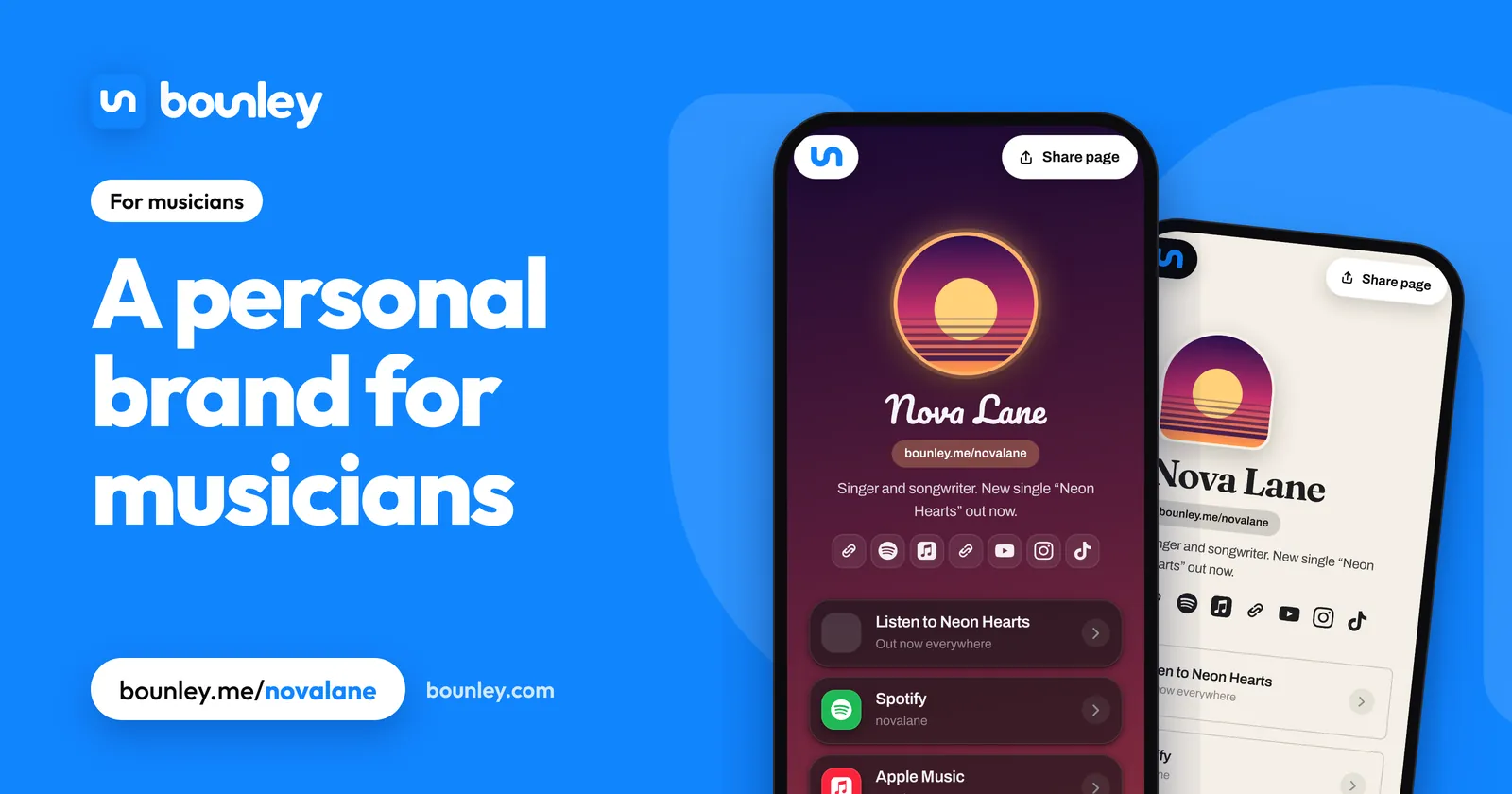
What a musician’s site needs
- Who you are and what it sounds like, in one line: “Indie folk from Leeds.”
- The newest release, playing on the page, with a link to every service.
- Upcoming shows with ticket links, soonest first.
- A video: live if you want bookings, official if you want streams.
- Merch and physical releases.
- A press kit: short bio, photos, links, contact.
- A booking email, and a way to join your mailing list.
Bio examples
- “Indie folk from Leeds. New EP ‘Low Tide’ out now. On tour this autumn.”
- “Producer and mix engineer. Credits and rates below.”
- “Jazz trio for weddings and events in the Bay Area. Booking 2027.”
Your domain and email
yourbandname.com or your artist name, with bookings@ at it. Venues, promoters and playlist editors get a lot of email; one from bookings@yourname.com with a matching site in the signature reads as an act that turns up. Add press@ and mgmt@ later: they can all reach the same inbox. Professional email address ideas has more.
A press kit in five parts
- A short bio: fifty words and a longer hundred-and-fifty, written in the third person so it can be pasted.
- Three photos, landscape and portrait, with the photographer’s credit.
- Your best two or three tracks and one live video.
- Proof: notable shows, support slots, radio play or press quotes, with numbers only if they help.
- Contact: booking and press emails, and where you’re based.
Release week, on your site
- Put the release first on the page a week before, as a pre-save or a countdown.
- On the day, swap it for the track itself, playing.
- Keep the same link in every bio the whole time: change the page, not the link.
- Afterwards, move it down and put the next show on top.
Covers, samples and photos
Releasing a cover or using a sample usually needs a licence, and the rules differ by country and by service; check with your distributor before release day. Credit the photographer on press photos and make sure you have the right to use them. This is general information, not legal advice.
How Bounley fits
Bounley is the platform built for personal brands. Your site is made from your accounts in about two minutes; tracks from Spotify, Apple Music and SoundCloud and videos from YouTube play right on it, links can be scheduled for a release or a tour date, and a QR code goes on posters and the merch table. With Premium the site runs on your own domain, with bookings@ at it: join the waitlist to hear the day Premium opens. For the bio link itself, see a link in bio for musicians.
Questions
Do musicians still need a website?
Yes. Streaming services and social apps each show one part of what you do. A site is the one place with the music, the shows, the merch and the booking email together, at an address you own.
What is an EPK?
An electronic press kit: a short bio, photos, your best tracks and a video, proof of what you’ve done, and contact details, on one page a booker or journalist can open from a link.
What email address should a musician use for bookings?
bookings@ at your own domain. It says what it’s for, and you can hand it to a manager or agent later without changing it.