Why it matters for voice actors
Casting sites charge for membership and put you in a pile of auditions. Direct clients (production companies, e-learning firms, agencies, game studios) are found by being findable, and they come back. Those clients want an address they can bookmark and a person they can email.
What a voice actor’s site needs
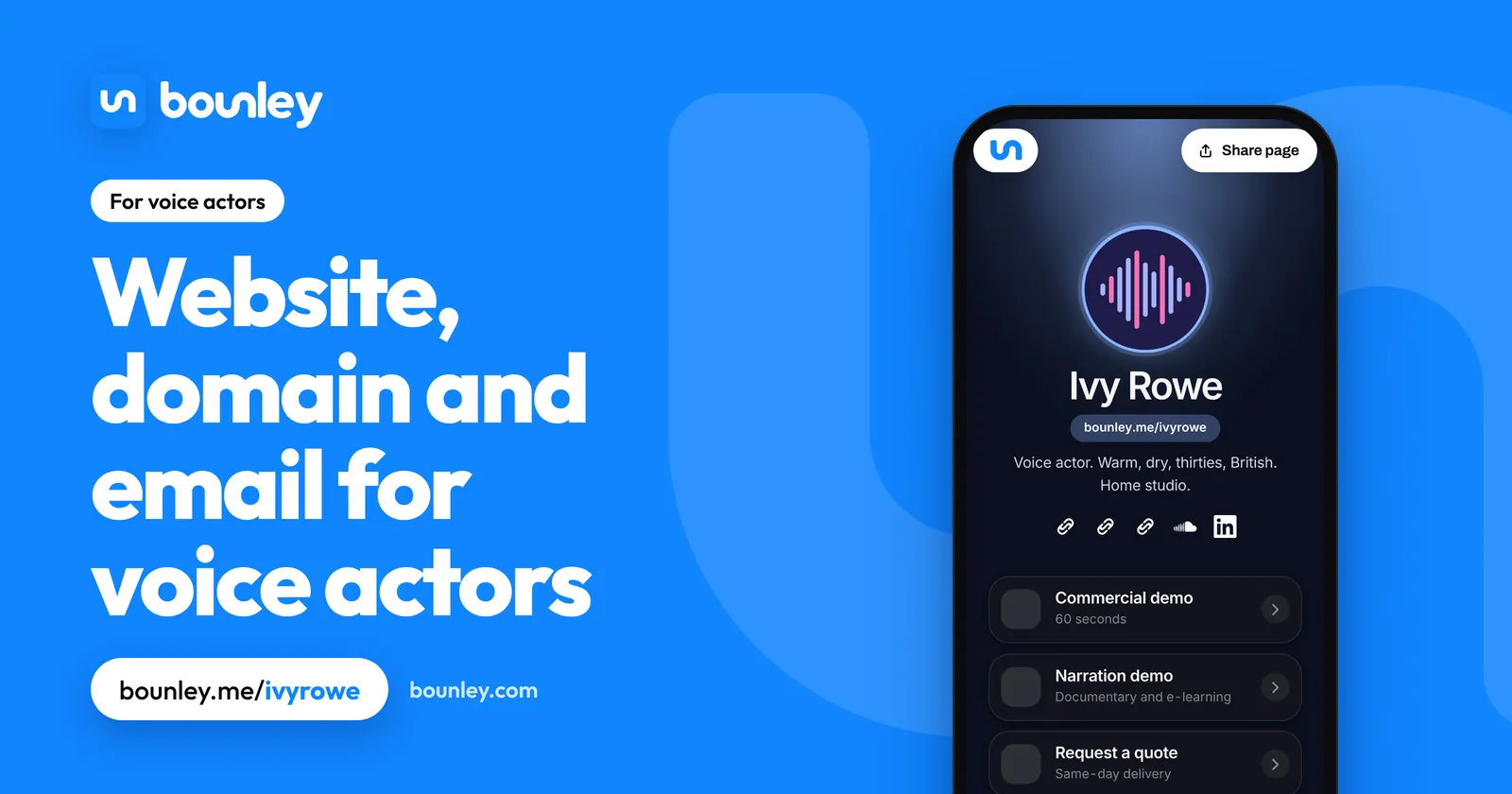
- Demos that play on the page: commercial first, then narration, e-learning, animation, games, audiobooks, whichever you do.
- One line on your voice: age range, tone, accents. “Warm, dry, thirties, neutral British.”
- Your studio: microphone, booth, and how you connect for live direction.
- Turnaround: “Same day for under two minutes of finished audio.”
- Credits and clients you can name.
- Your agent, if you have one, and where each kind of enquiry should go.
- Request a quote, with what you need to know: length, use, territory, deadline.
Bio examples for voice actors
- “Voice actor. Warm, dry, thirties, British. Home studio, same-day delivery.”
- “Bilingual voice-over, English and Spanish. Commercials and e-learning.”
- “Character voices for games and animation. 40 credits.”
Demos and usage
Keep each demo to about a minute, with your best read first, and label them by genre so nobody has to guess. Offer a download as well as a play button: casting teams collect files. Voice-over is priced by where and how long the recording is used, not only by its length, so ask about usage before quoting, and many voice actors now state how their voice may and may not be used to train or generate synthetic speech. If you’re a union member, say so.
Your domain and email
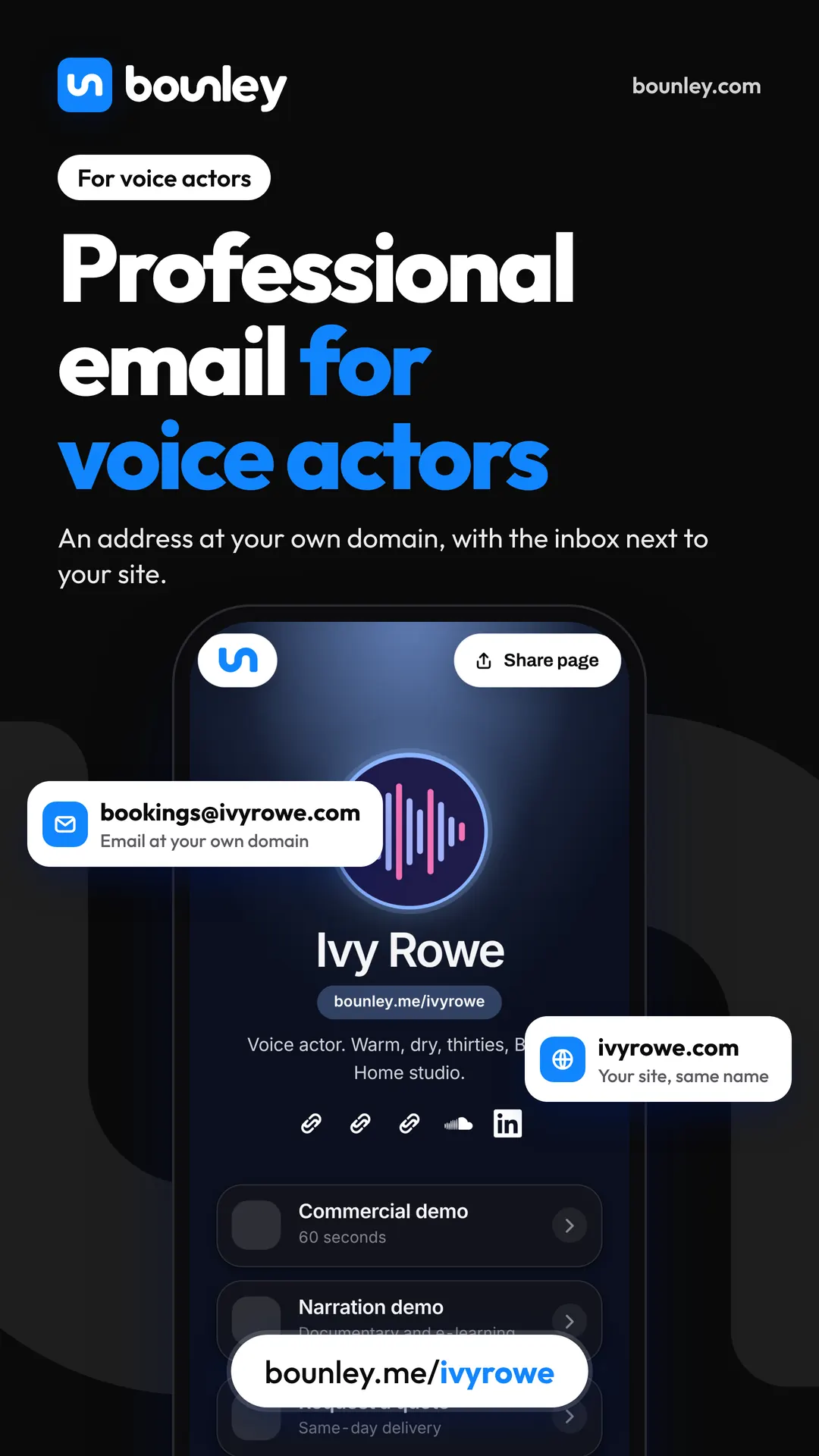
Producers file voices by name. bookings@yourname.com on a demo’s file name and metadata means the file leads back to you a year later. Your name, or your name with “voice” or “vo”, is the domain. Which address to use.
What to put first
- Your name, one line on your voice, and the commercial demo.
- Request a quote.
- The other demos, by genre.
- Studio and turnaround.
- Credits, and your agent.
What loses the booking
- A demo that has to be downloaded before it can be heard.
- One five-minute file with everything in it.
- No mention of a home studio, when most work now assumes one.
- A photo carousel before any audio.
How Bounley fits
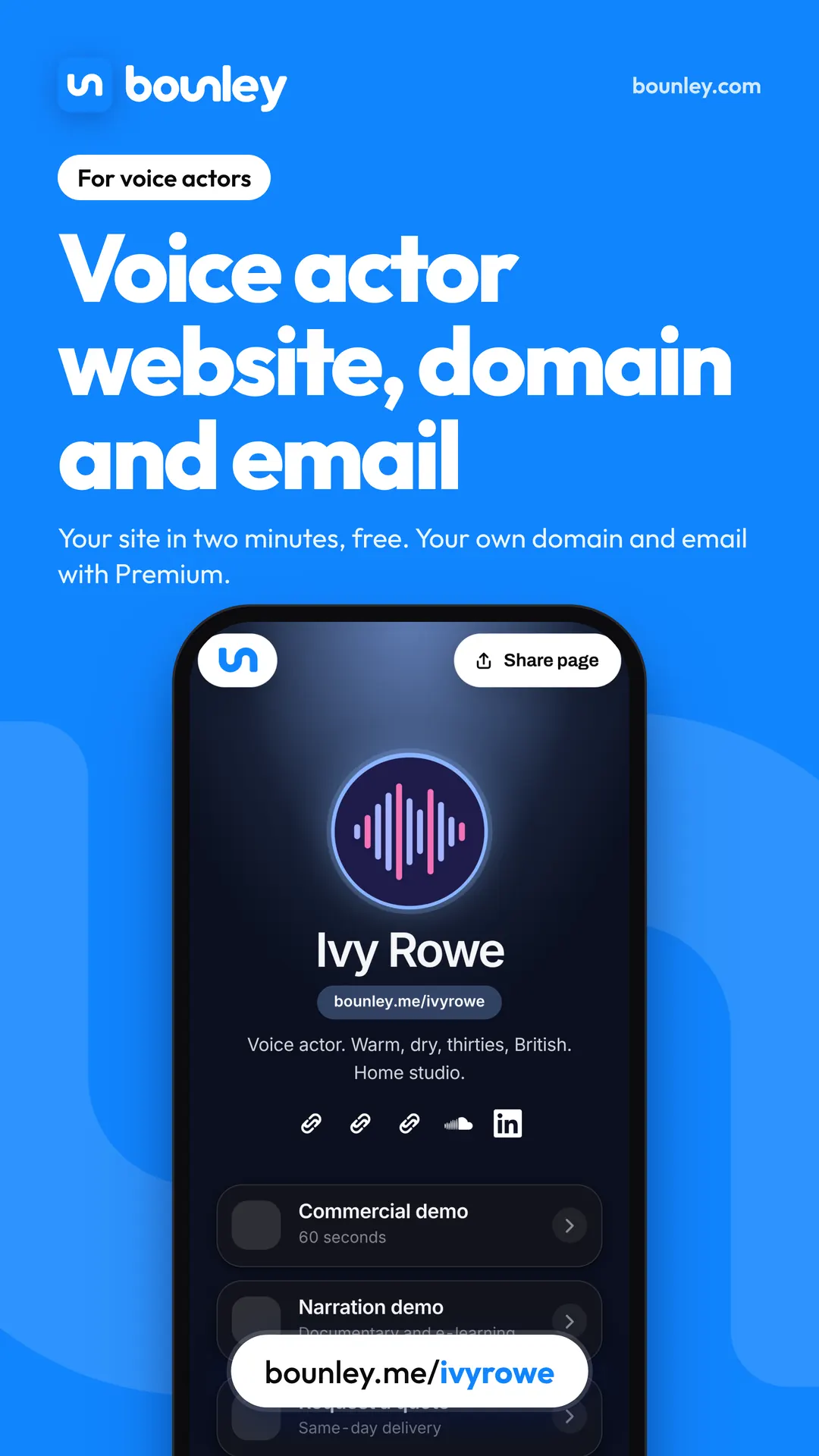
Bounley builds your site from your accounts in about two minutes. SoundCloud and Spotify audio plays on the page, so demos are one tap from the top, with a quote form, your credits and a business card made from it. With Premium it runs on your own domain, with your email in the same place.
Questions
Do I need a website if I’m on casting sites?
Yes. Casting sites are for auditions. Direct and repeat clients look you up, and a site with your demos and a booking email is what they keep.
Should voice actors publish rates?
Most give guidance, not a price list, because the fee depends on usage. Linking to an industry rate guide and inviting a quote is common.
Do I need a headshot?
It helps people remember you, but the voice comes first. Never let a photo push the demos down the page.
How many demos should I have?
One for each genre you want work in, starting with one good commercial demo. Two strong demos beat six average ones.
Related: a personal brand for models and actors and for podcasters, and the one-page website.