Why it matters for writers
Bylines are scattered across other people’s sites, and those sites redesign, paywall and delete. A portfolio you control is the only complete record of your work, and a pitch that ends with yourname.com is one an editor can check in a tap.
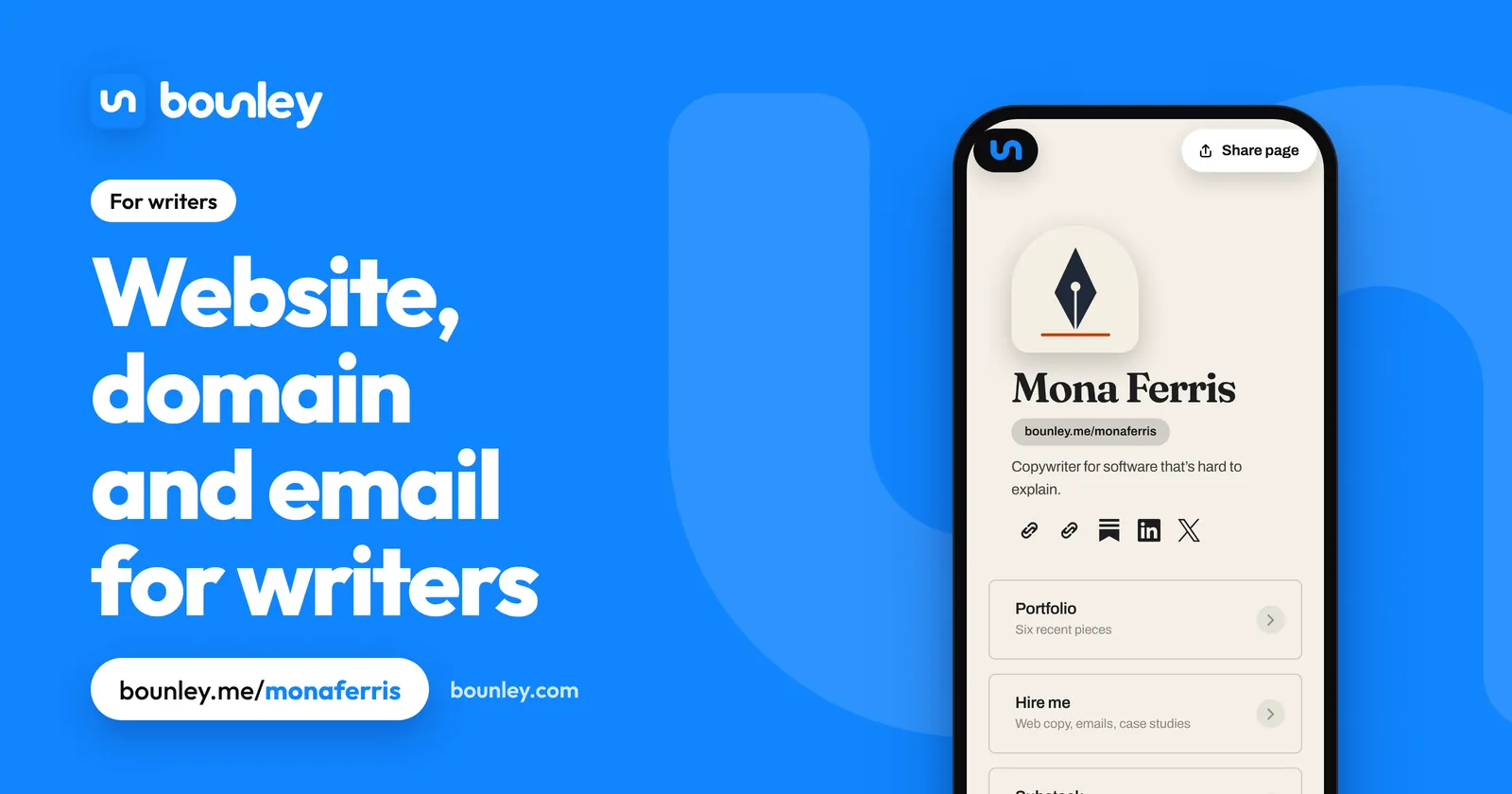
What a writer’s site needs
- What you write and who for: “B2B copywriter for fintech”, “Features on food and place”.
- Three to six pieces, your best and most relevant, each with the publication or client and a line on what it was.
- PDFs or screenshots of anything that might vanish or sits behind a paywall.
- Services, if you take commercial work: web copy, email sequences, case studies, ghostwriting.
- Names of publications or clients, where you’re allowed to give them.
- How to commission you, and how fast you reply.
Bio examples for writers
- “Freelance journalist. Food, farming and the places they come from.”
- “Copywriter for software that’s hard to explain.”
- “Ghostwriter for founders. Articles, newsletters, one book.”
Choosing and showing clips
Lead with the piece most like the work you want next, not the most famous masthead. Group by type if you do more than one kind (features, copy, scripts). For ghostwritten and client work under a non-disclosure agreement, describe the kind of company and what the piece achieved, or ask for permission to show an extract. Check your contracts before reposting full articles: you usually keep the right to link and quote, not always to republish.
Your domain and email
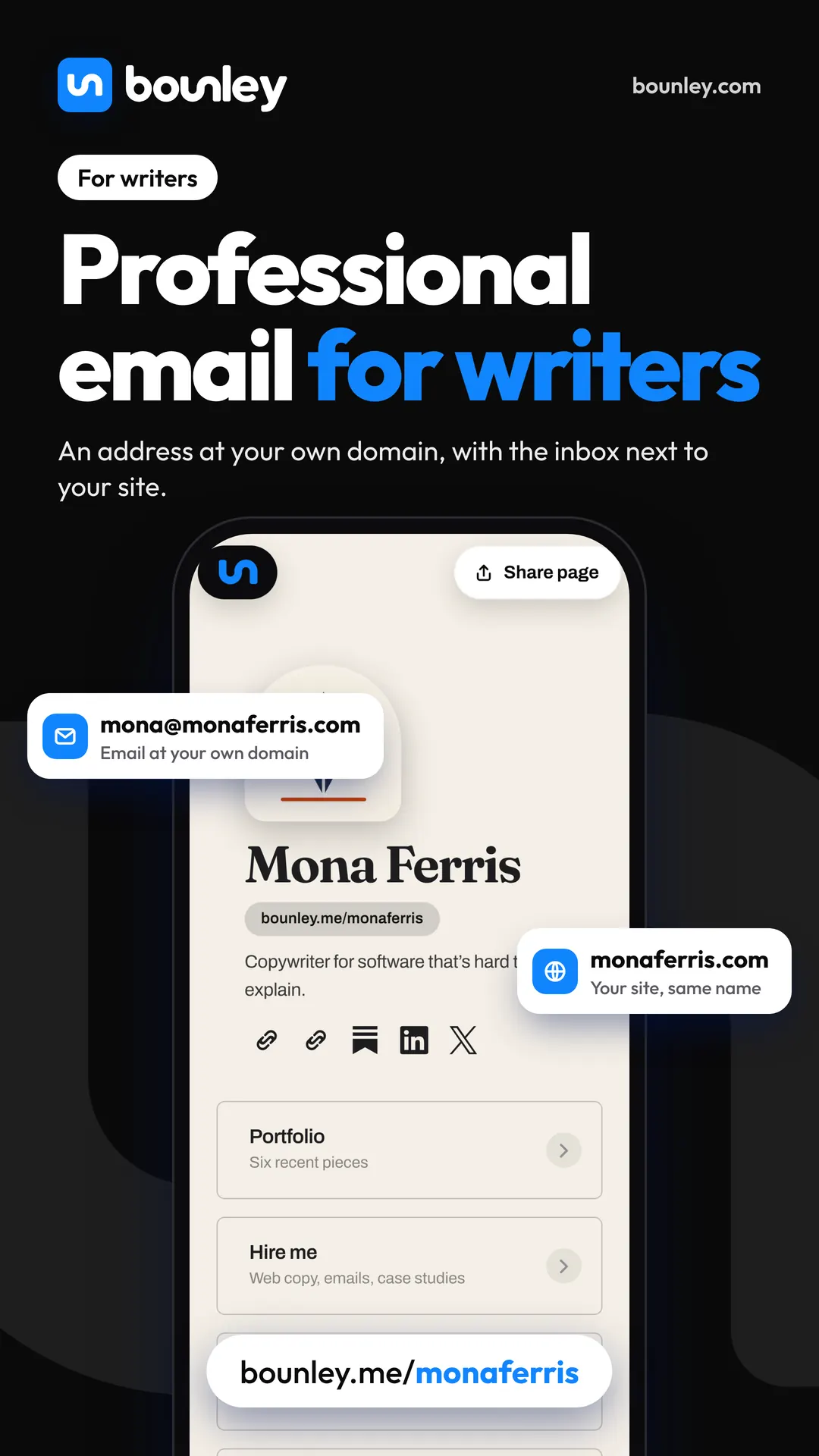
Pitches from you@yourname.com are opened by editors who’ve learned to ignore the rest. Your byline is your brand, so your name is the domain. A blog on the same domain gives you somewhere to publish what nobody commissioned. A blog on your own domain or on a platform?
What to put first
- What you write, for whom, in one line.
- Three pieces, each one tap away.
- Hire me, with your email address.
- Who you’ve written for.
- About you, short, in your own voice.
What loses the commission
- A first line that says nothing about what you write or for whom.
- Forty links in date order with nothing marked as the best.
- Links that lead to a paywall or a missing page.
- A typo in the first screen.
How Bounley fits
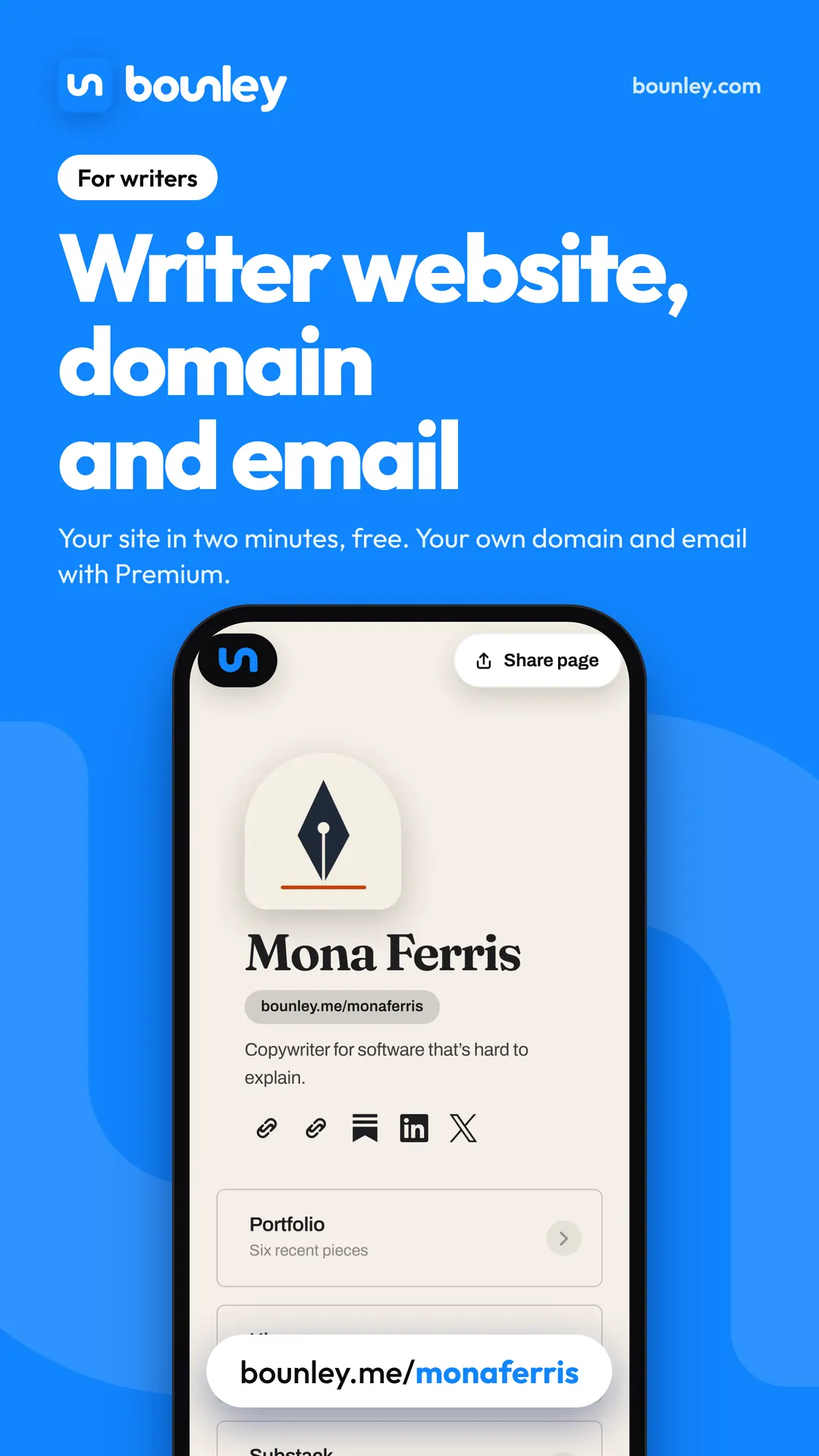
Bounley builds your page from your accounts in about two minutes: a button for each clip, your Substack or newsletter, a commissioning form, and an email signature with your portfolio in it. With Premium it runs on your own domain, with your email and a blog at blog.yourname.com.
Questions
What if I have no published clips?
Write three pieces of the kind you want to be paid for and publish them on your own site. Editors and clients judge the writing, not where it appeared.
Should writers publish rates?
For commercial work, a “from” price or typical project fee filters out mismatches. For journalism, rates are usually set by the publication.
Do I have to pick a niche?
You have to be easy to describe. A subject, a format or a kind of client each works. You can take other work; the first line just has to be clear.
Isn’t a profile on a writing platform enough?
It’s a start. A platform’s profile sits beside competitors and can change; your own address is the one you put on a pitch for years.
Related: a personal brand for authors and for journalists, and how to make a portfolio website.