Why it matters for chefs
In a restaurant your name is on nothing. Working for yourself, it’s the whole business. Clients who ate your food at a friend’s dinner need somewhere to find you by name, see what else you cook and ask about a date.
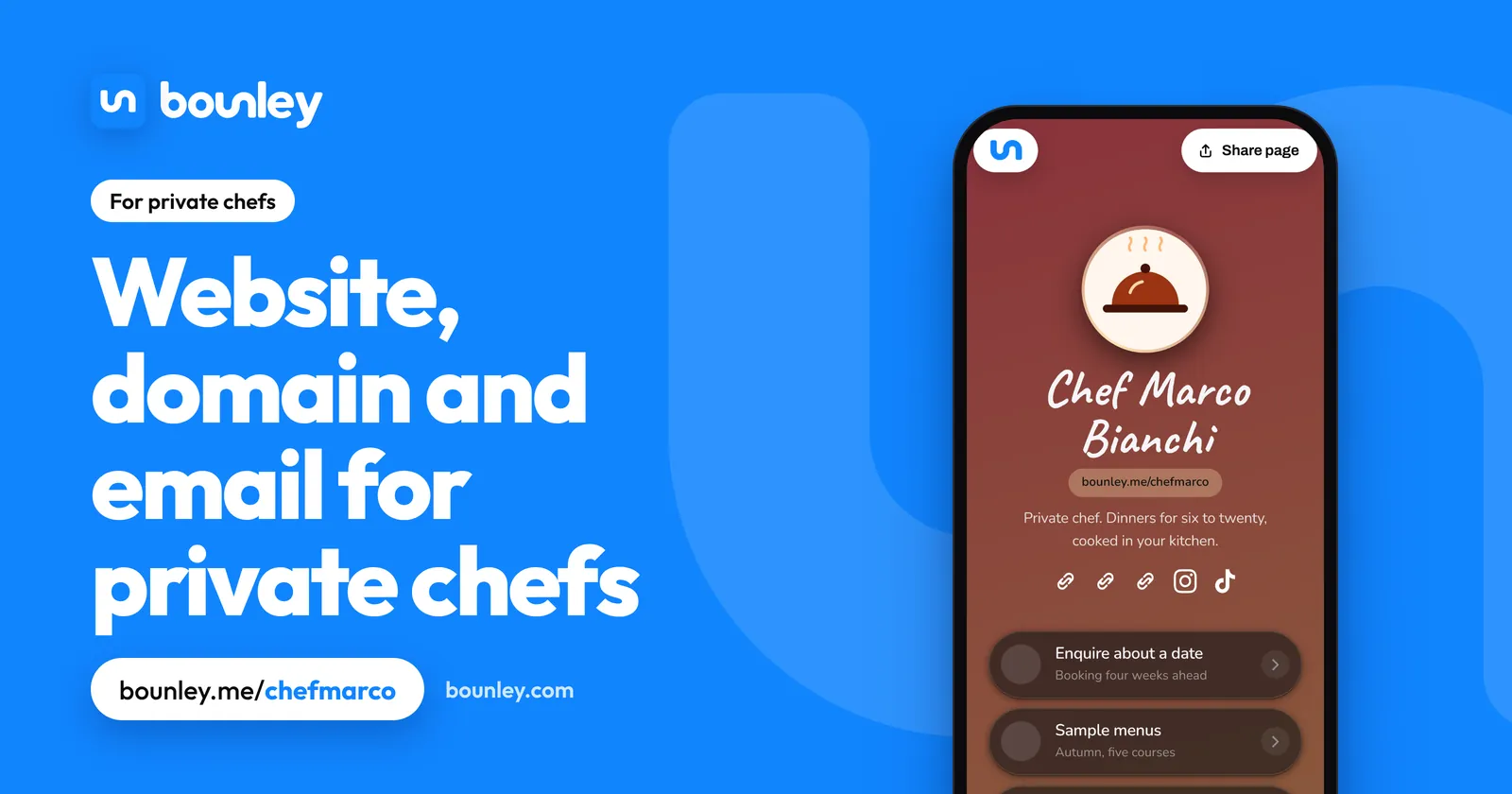
What a chef’s site needs
- Photos of your food, taken in daylight. A phone is fine; borrowed pictures aren’t.
- Two or three sample menus, with the season.
- What you offer: private dinners, events, weekly meal prep, classes, celebration cakes.
- How pricing works: per head from a figure, a minimum spend, whether ingredients are included.
- Diets you cater for, and how you handle allergies.
- The area you cover and how far ahead to book.
- An enquiry form: date, place, number of guests, occasion, budget.
Bio examples for chefs
- “Private chef in the Hamptons. Dinners for six to twenty, cooked in your kitchen.”
- “Weekly meal prep for busy families in Austin. Menus change every Monday.”
- “Celebration cakes to order. Two weeks’ notice. Collection in Hackney.”
Food safety, allergens and the rules for home kitchens
Say what you hold: a food hygiene or food handler certificate, registration with your local authority, insurance. If you cook or bake at home to sell, your area’s rules on home food businesses apply (“cottage food” laws in many US states, registration in the UK); follow them and say that you do. On allergens, be precise about what you can and can’t promise in a kitchen that also handles nuts, gluten or dairy.
Your domain and email
A quote for a dinner for twenty is a business document. bookings@yourname.com on it looks like a caterer, and event planners keep it. “Chef” plus your name is the usual domain. How to get yourname.com.
What to put first
- A photo of your food, what you do, and where.
- Enquire about a date.
- Sample menus.
- How pricing works.
- About you, your training and what clients say.
What loses the enquiry
- No menus, only adjectives.
- No idea of cost, so people assume it’s out of reach.
- Photos under yellow kitchen lights.
- A form with no date field.
How Bounley fits
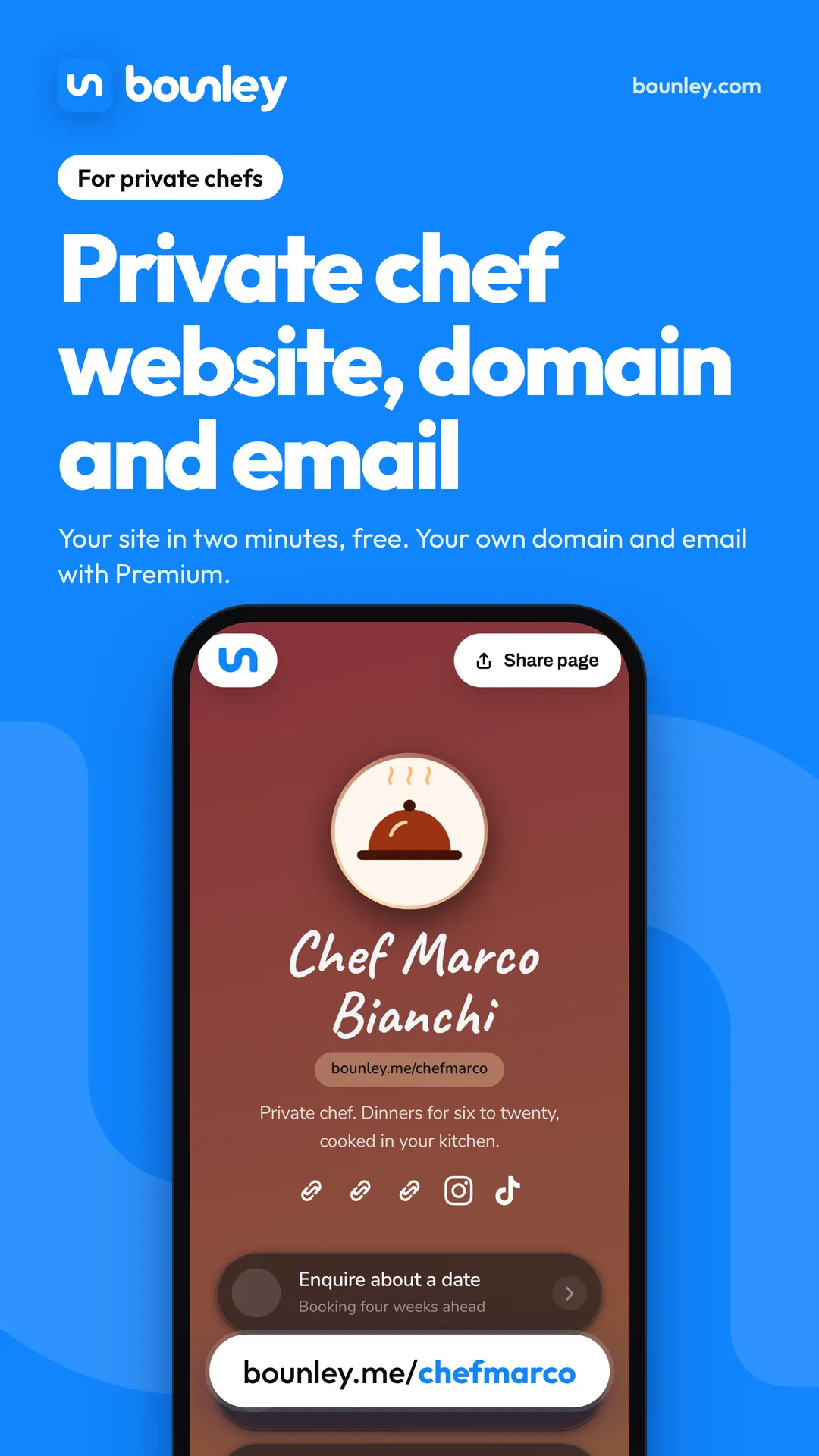
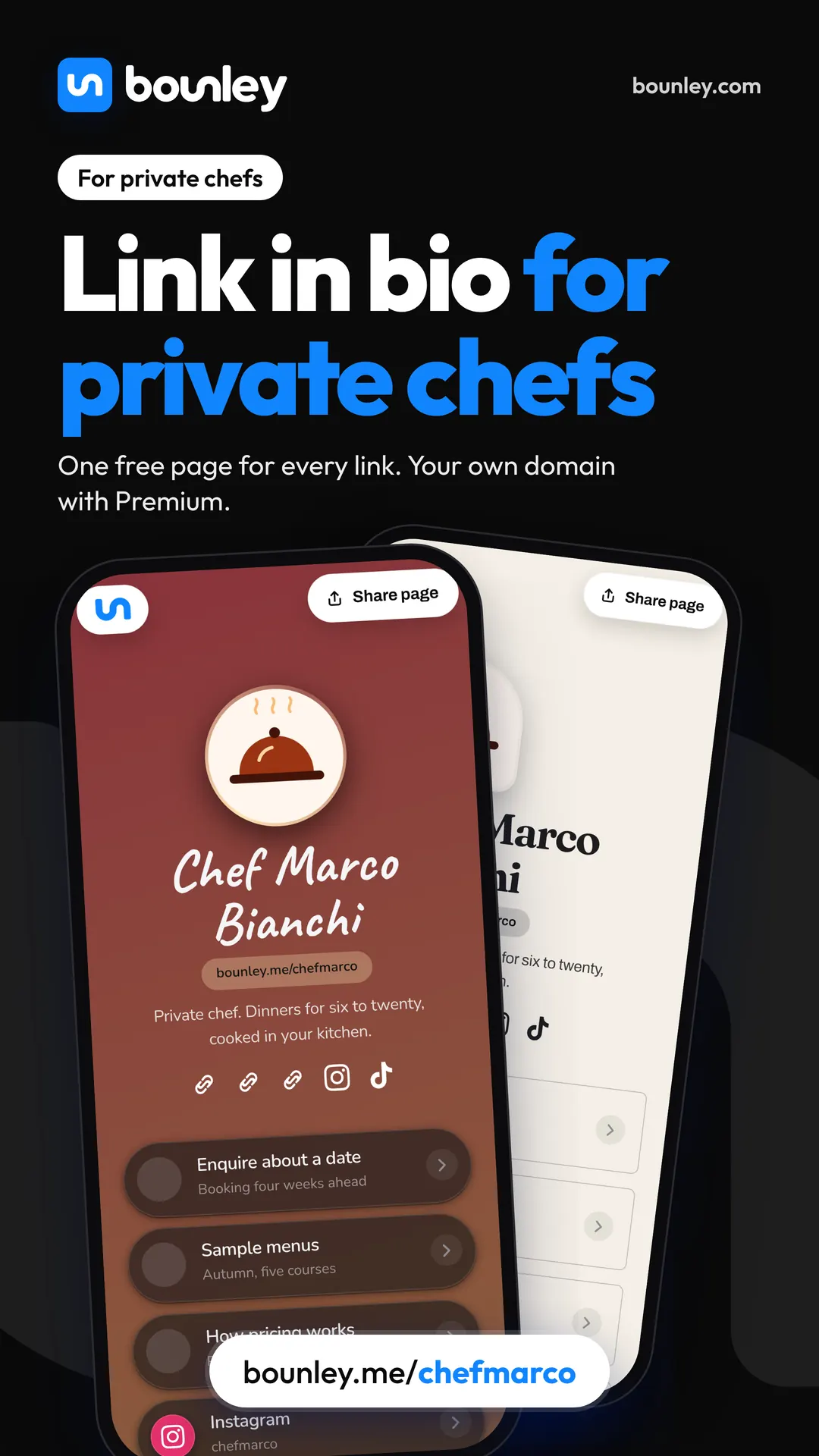
Bounley builds your site from your accounts in about two minutes, with your Instagram, a menus page, an enquiry or order form you design, and a business card with a QR code to leave on the table. With Premium it runs on your own domain, with your email in the same place.
Questions
Should private chefs publish prices?
A “from” price per head and a minimum is enough to tell a client whether to enquire. Quote the actual menu once you know the brief.
Can I take cake or meal orders from the page?
Yes, with an order form that asks for the date, size, flavours and allergies, and a clear line on notice and payment.
I still work in a restaurant. Can I have my own site?
Usually, if you’re not competing with your employer; check your contract. Many chefs start with private dinners on their days off.
Do I need to post recipes?
No. If you enjoy it, short videos bring attention. The site’s job is menus, prices and the enquiry.
Related: a personal brand for food creators and for wedding planners, and what a personal website costs.