Why it matters for estheticians
A booking app shows your menu. It doesn’t show why someone should trust you with their face. Your own site holds your approach, your results and your policies, and the link in your Instagram bio stays the same wherever you rent a room next.
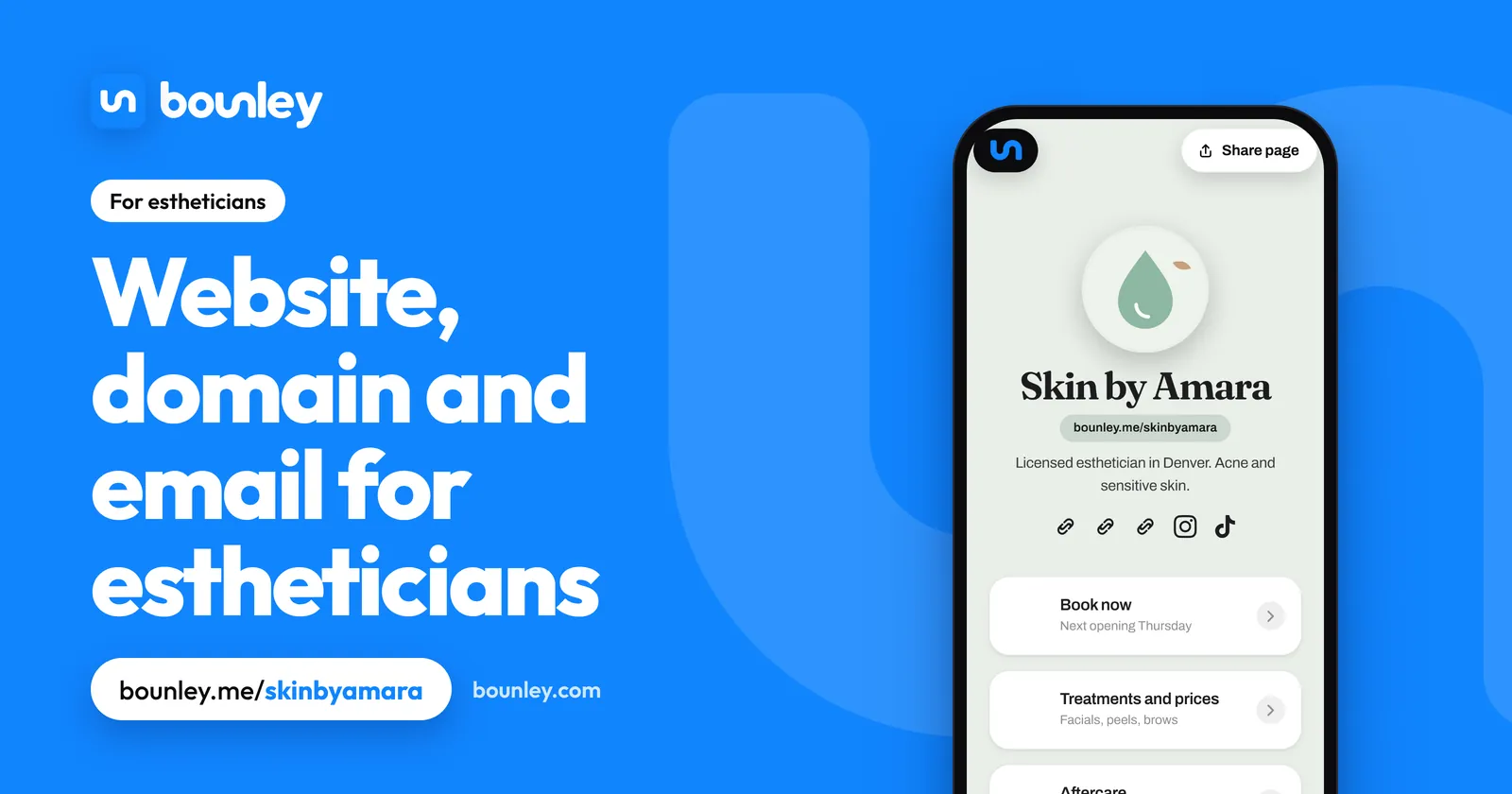
What an esthetician’s site needs
- Treatments in plain words with the time and the price: “Signature facial, 60 minutes”.
- Who each one is for, and who should book a consultation first.
- Book now, going straight to your calendar.
- Where you are, with parking and how to find the door.
- Your licence and any advanced certificates.
- Before-and-after photos, with the client’s consent and no filters.
- Aftercare and your cancellation policy.
Bio examples for estheticians
- “Licensed esthetician in Denver. Acne and sensitive skin. Book below.”
- “Holistic facials and lymphatic massage. By appointment, Tuesday to Saturday.”
- “Brows, lashes and skin. Studio 12, Salon Lofts.”
Photos, claims and your licence
Skin treatments sit close to medical ones, and what you may offer and say depends on your licence and where you work. Describe what a treatment does without promising to cure or treat a condition, keep before-and-after photos honest (same light, no retouching, written consent), and say when something needs a patch test or a consultation. If you work under a medical director for advanced treatments, say so.
Your domain and email
Appointment reminders, product recommendations and gift vouchers all come from your address. hello@yourname.com looks like a studio; a free address looks like a hobby. Your name, or “skin by” your name, is a domain clients can say to a friend. Email address ideas.
What to put first
- Your name, what you specialise in, and where.
- Book now.
- Treatments and prices.
- Results.
- Policies, aftercare and how to find you.
What loses the booking
- A menu of thirty treatments with brand names and no explanation.
- Prices “on consultation” for a standard facial.
- A booking link buried under a photo grid.
- An old salon’s address still in your bio.
How Bounley fits
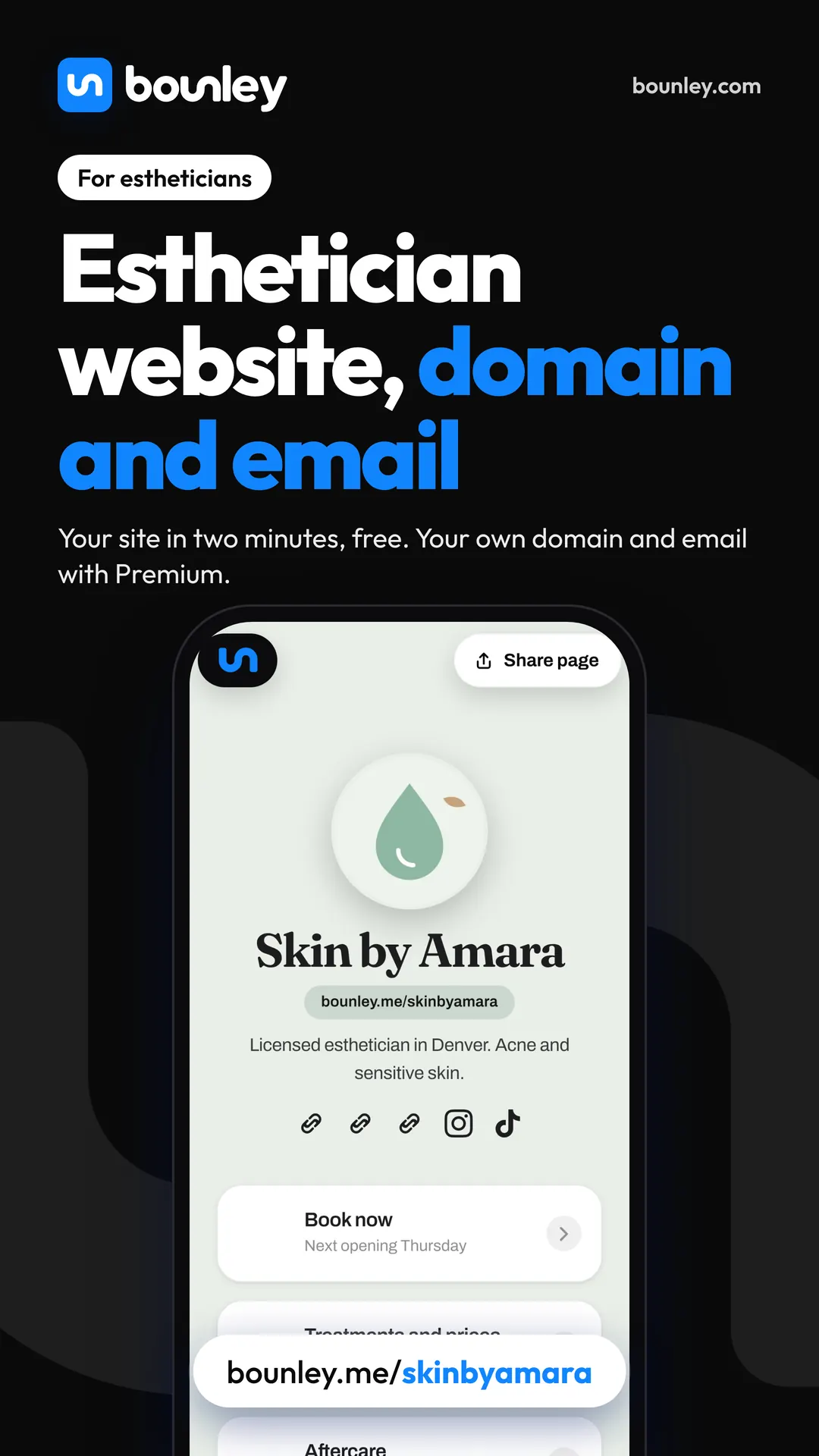
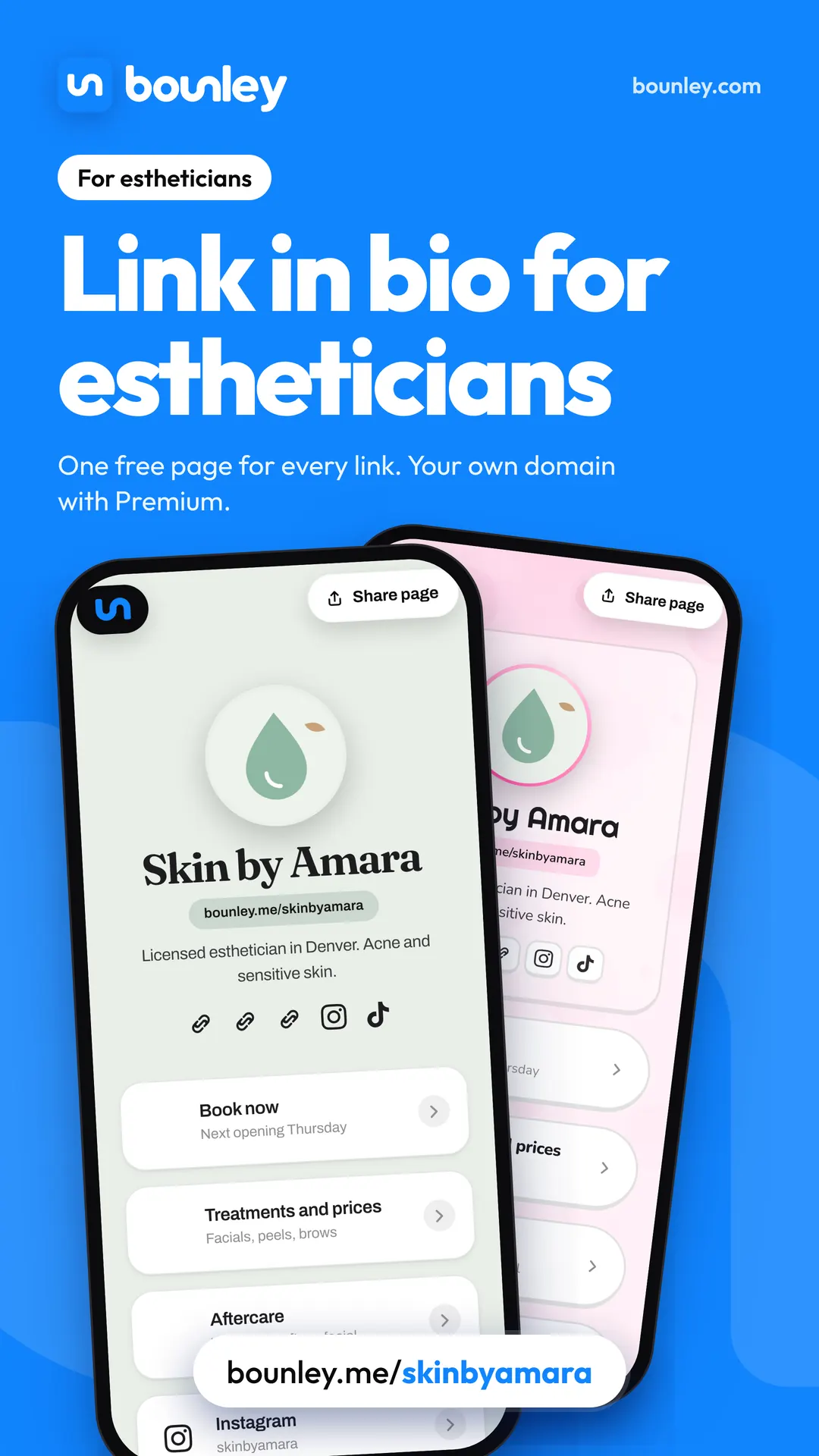
Bounley builds your site from your accounts in about two minutes, with a button to your booking calendar at the top, a treatments page, your Instagram, and a business card and QR code for your mirror and your product bags. With Premium it runs on your own domain, with your email in the same place.
Questions
I use a booking app. Do I need a website too?
Yes. The app takes the appointment; your site is what people see first, what Google shows for your name, and what stays when you change apps or locations.
Should I list prices?
Yes. People compare before they book, and a clear price list is the difference between a booking and a tab left open.
Can I sell products from my page?
You can link to wherever you sell them. Say which you use in treatments and why; recommendations from the person who treats their skin are what clients buy on.
I’m moving to my own suite. What should I do first?
Get your own domain and put it in every bio before you move, so clients have an address for you that doesn’t depend on the building.
Related: a personal brand for makeup artists and for nail techs, and what a personal website costs.