Why it matters for interior designers
Your work is seen on Instagram, Pinterest and Houzz, where it sits beside everyone else’s and is saved without your name. A site of your own is where a saved picture turns into “who did this, and can they do ours?”
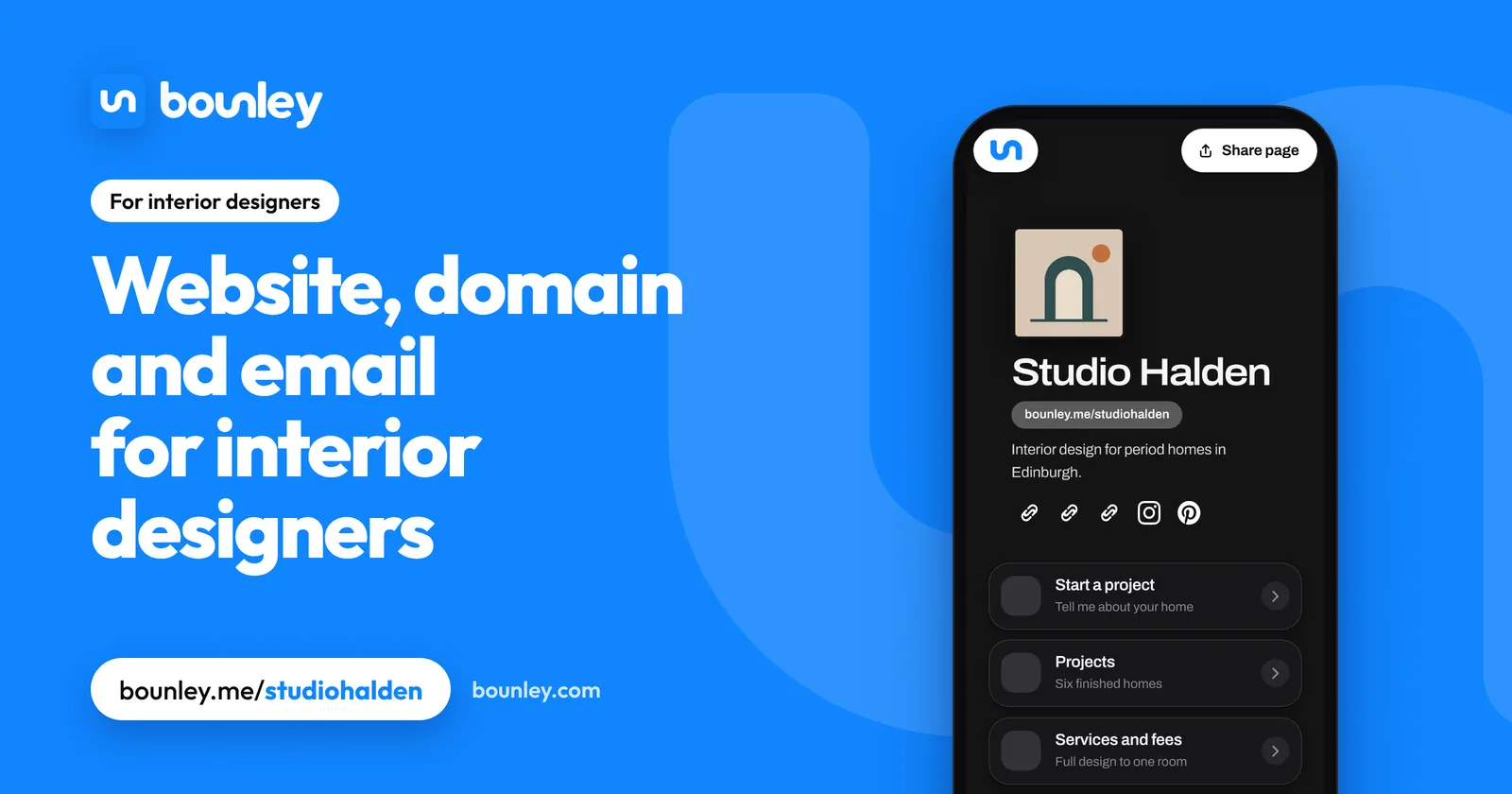
What an interior designer’s site needs
- Four to eight finished projects, each with the brief, the place and what you did.
- Before and after, where the change is the point.
- Services: full design, a single room, a consultation by the hour, e-design by post or video.
- How you charge: a fee, a percentage, an hourly rate, and where projects usually start.
- Where you work.
- Your process, in four or five steps, from first visit to handover.
- An enquiry form: the property, the rooms, the timeline, the budget.
Bio examples for interior designers
- “Interior designer for period homes in Edinburgh. Colour, calm and proper storage.”
- “Small-space designer. Flats under 60 square metres.”
- “E-design: your room planned in two weeks, anywhere.”
Photography and credit
A phone photo of a beautiful room undersells it. Budget for a photographer on every project you want to be hired for again, agree in writing that you can use the pictures, and credit them. Ask clients before showing their home, and leave out anything that identifies the address. Name the makers and trades you work with: it’s generous, and they send work back.
Your domain and email
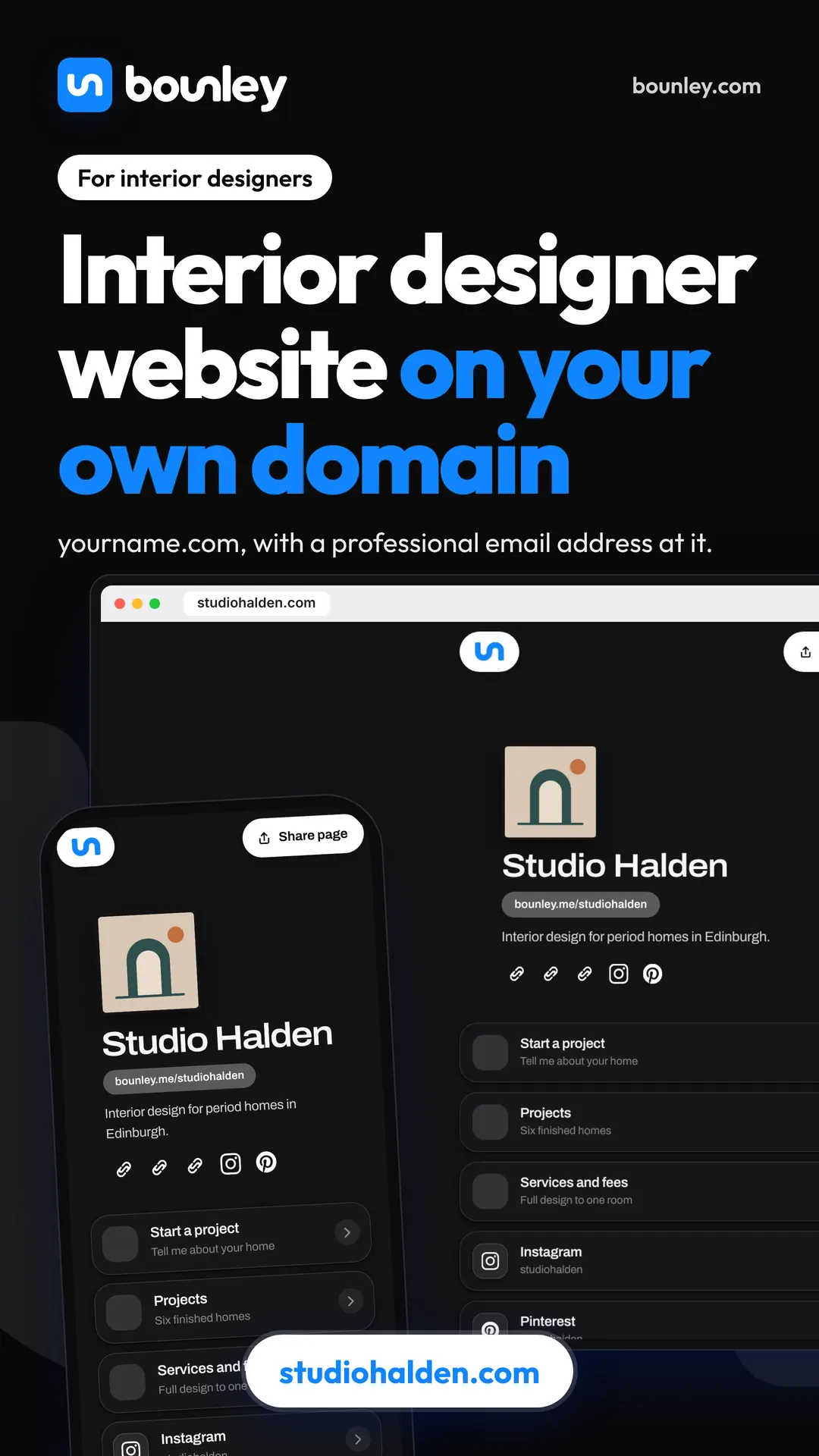
You’ll be writing to builders, suppliers and clients spending serious money. studio@yourname.com or hello@yourname.com fits the invoices. Your name, or your name with “interiors” or “studio”, is the usual domain. Which ending to choose, including .studio and .design.
What to put first
- Your best room, full width, with one line on what you do and where.
- Start a project.
- Projects.
- Services and how fees work.
- Your process, and about you.
What loses the enquiry
- Renders and mood boards with no finished rooms.
- No word on budget, so every enquiry is a guess for both sides.
- A gallery with no captions: lovely, and no idea what you did.
- Pictures so large the page takes ten seconds to open on a phone.
How Bounley fits
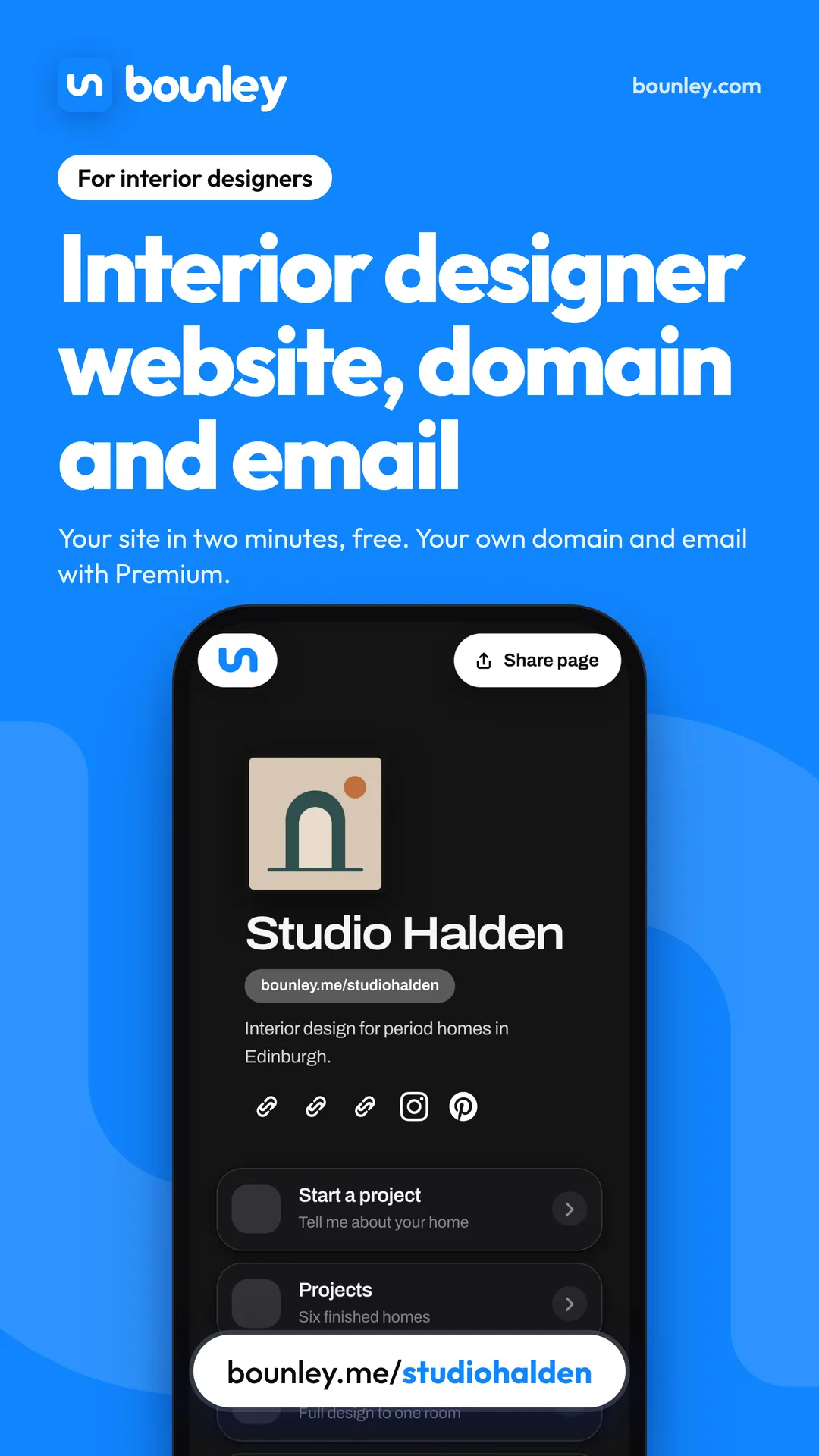
Bounley builds your site from your accounts in about two minutes, with your Instagram and Pinterest, a project enquiry form you design, a services page, and a business card and QR code for site visits and showrooms. With Premium it runs on your own domain, with your email and a blog for project write-ups.
Questions
Should interior designers publish fees?
How you charge and a typical starting point is enough. It tells a client whether to enquire, and stops you quoting for projects that were never in range.
What if I only have my own home to show?
Show it, room by room, and add a paid or favour project as soon as you can. Say plainly which is which.
Do I need a site if I’m on Houzz and Instagram?
They bring attention. Your site is where the enquiry is made, on your terms, without a competitor one swipe away.
Designer or decorator: does the title matter?
In some places “interior designer” is a regulated title. Use the one you’re entitled to and describe the work, which is what clients actually search.
Related: a personal brand for designers and for photographers, and how to make a portfolio website.