Why it matters for dog trainers
Dog training is mostly unregulated, so owners have no easy way to tell a qualified trainer from a confident one. Your site is where you show the difference: what you’re trained in, how you work, and dogs you’ve helped. Vets, groomers and walkers who refer to you need a link to send, too.
What a dog trainer’s site needs
- The problems you solve, in owners’ words: pulling on the lead, recall, reactivity to other dogs, separation anxiety, puppy basics.
- Your methods, stated plainly.
- Qualifications, memberships and insurance.
- Services and prices: one-to-ones, puppy classes, behaviour consultations, packages.
- The area you cover, and whether sessions are at home, in a park or online.
- Before-and-after stories and short videos, with owners’ permission.
- Book a first session, with a form asking about the dog.
Bio examples for dog trainers
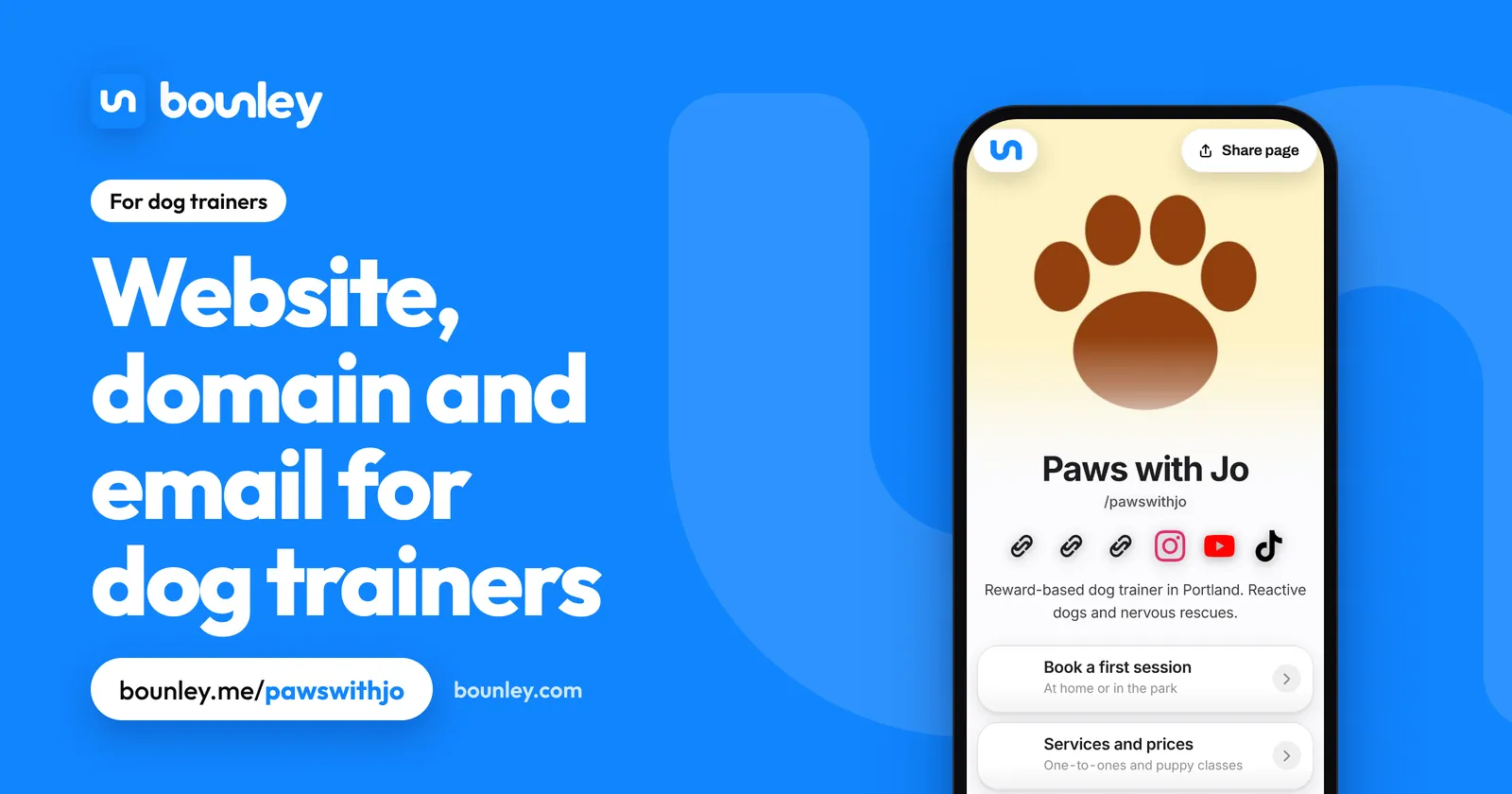
- “Reward-based dog trainer in Portland. Reactive dogs and nervous rescues.”
- “Puppy classes in Leeds. Six weeks, six dogs, Saturday mornings.”
- “Certified behaviourist. Separation anxiety, online worldwide.”
Be clear about methods, and careful with promises
Owners increasingly ask how a trainer trains before anything else, and so do the vets who refer them. Say what you use and what you don’t. Don’t guarantee results: behaviour depends on the dog, the owner and time, and professional bodies generally advise against guarantees. For aggression and sudden changes in behaviour, say that you’ll ask for a vet check first; it shows you know where training ends and medicine begins.
Your domain and email
Vets and rescues refer to people who look established. hello@yourname.com on a card at a vet’s reception does that. Your name with “dog training” makes a clear domain that also helps in local searches. Choosing a domain name.
What to put first
- What you help with, how, and where.
- Book a first session.
- Services and prices.
- Stories and videos.
- Your qualifications and methods.
What loses the booking
- “All breeds, all problems, guaranteed.”
- No word on methods.
- No prices.
- Photos of your own dog only, and none of dogs you’ve trained.
How Bounley fits
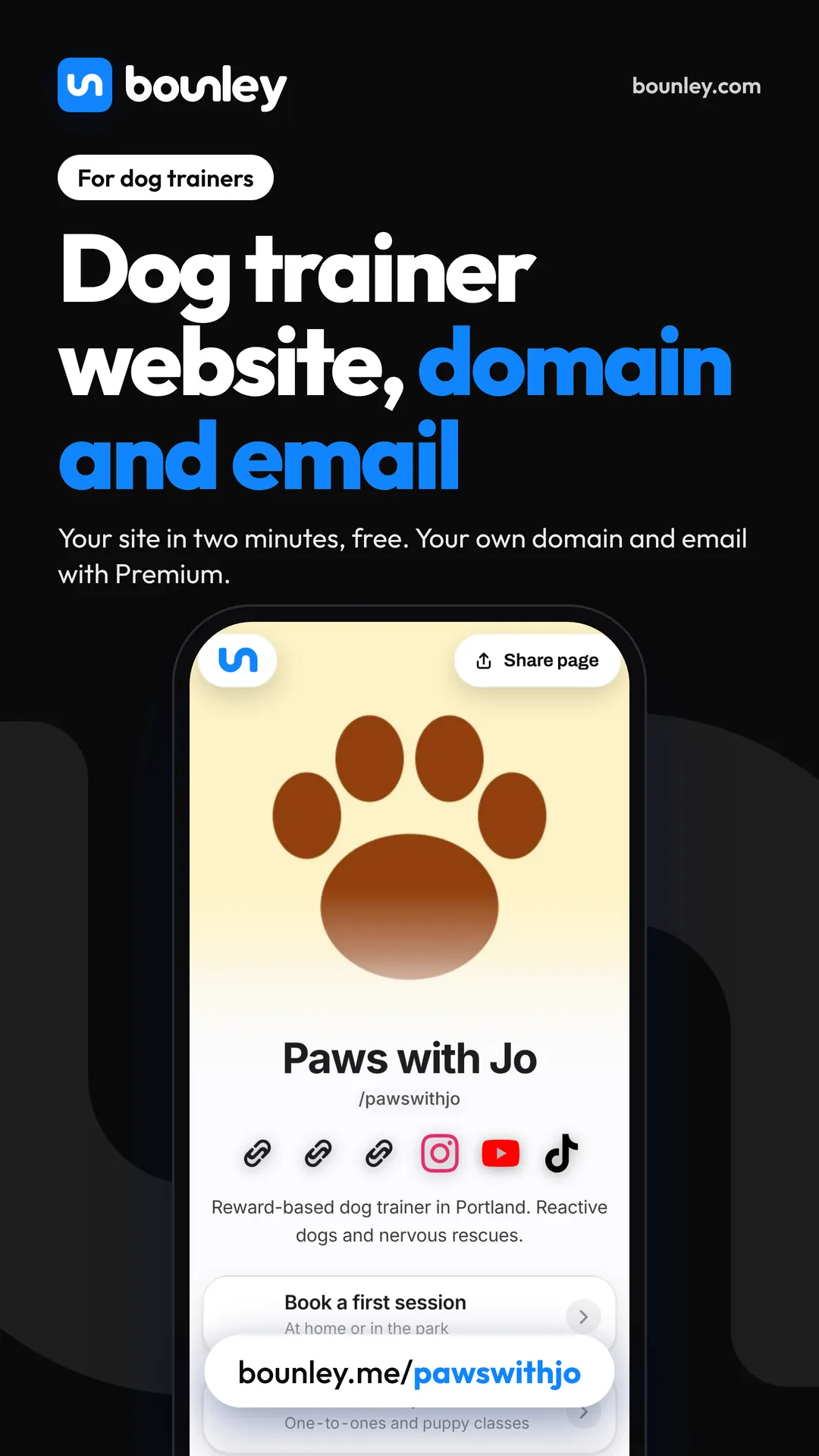
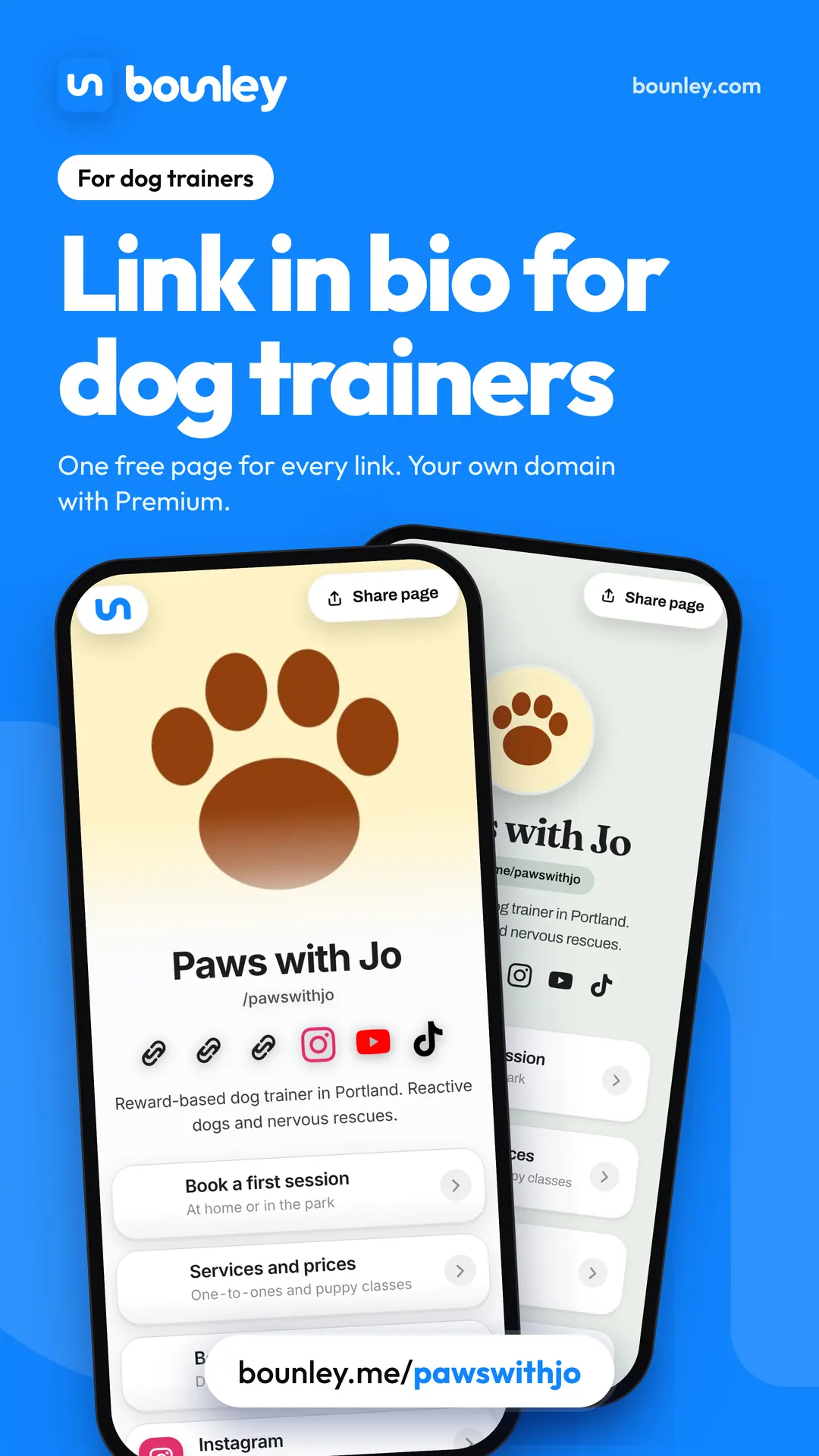
Bounley builds your site from your accounts in about two minutes. Your training videos play on the page, your booking calendar is the first button, and you can add an enquiry form that asks the dog’s age, breed and the problem. A QR code and business card are made from it for vets and groomers. With Premium it runs on your own domain, with your email in the same place.
Questions
Should dog trainers list prices?
Yes. Owners compare, and a clear price for a first session gets the booking over a “contact me” page.
Do I need videos?
They help more than anything else: a thirty-second before and after shows what words can’t. Always get the owner’s permission.
Can I train dogs online?
Many trainers run behaviour consultations and puppy coaching by video. Say which problems suit it and which need you there.
How do I show my area?
List the towns or postcodes and any travel fee. It helps owners and local search alike.
Related: a personal brand for coaches and for tutors, and the one-page website.