Why it matters for therapists
Directories put you in a grid of similar faces and similar words. A site of your own is the one place a prospective client hears how you actually talk, and the fit between you is most of what they’re choosing. It also belongs to you if a directory raises its fees or you change practice.
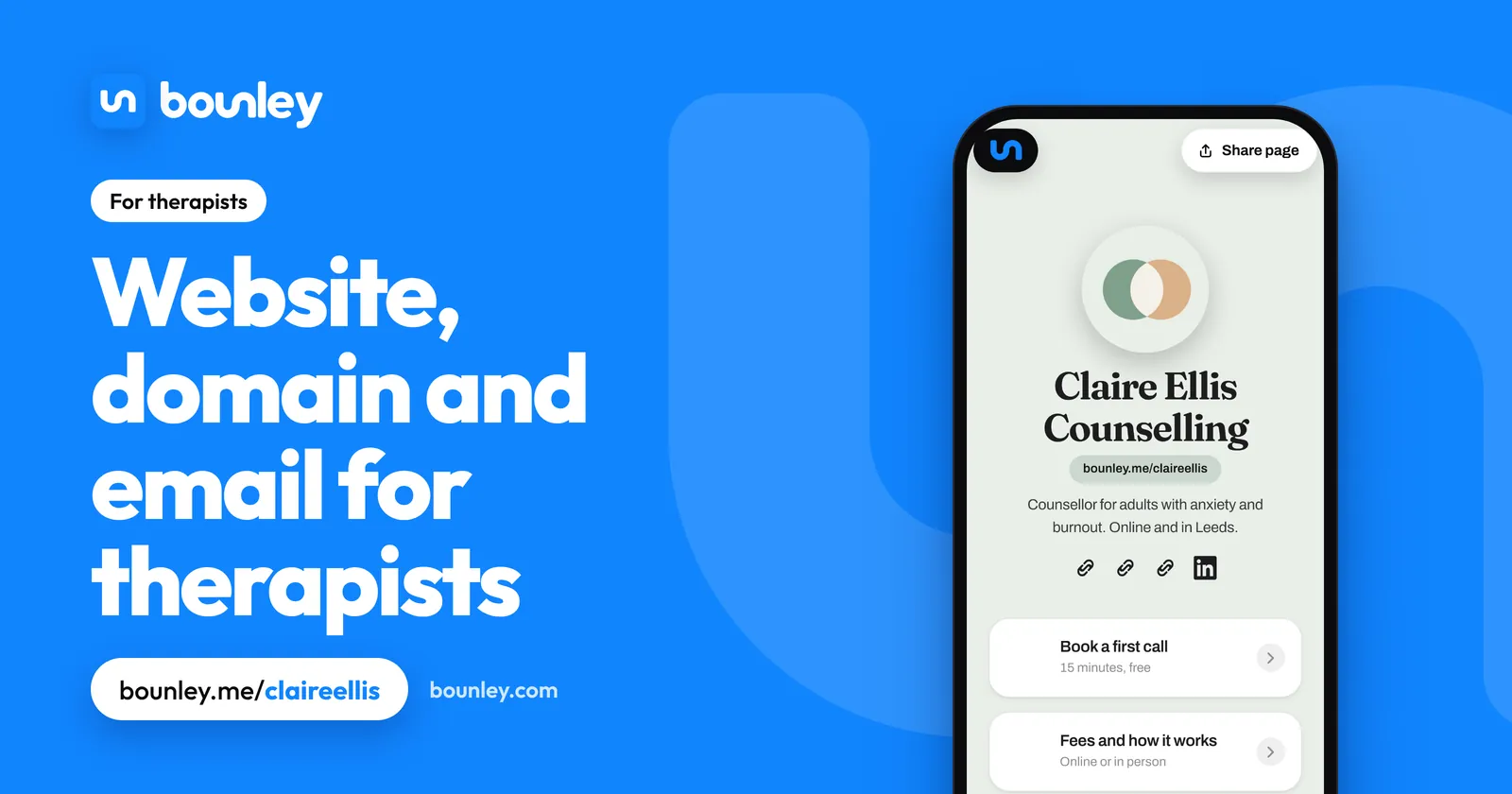
What a therapist’s site needs
- Who you work with and the difficulties you help with, in the words a client would use: “anxiety that won’t switch off”, not a list of modalities.
- How you work, in two or three plain sentences.
- Practicalities: in person or online, where, session length, fees, and whether you take insurance or offer a sliding scale.
- Your qualifications and your registration or licence, with the body that issued it.
- How to enquire, and what happens after: “I reply within two working days and offer a free fifteen-minute call.”
- What to do in a crisis: a line saying you’re not an emergency service, with the local emergency number or crisis line.
Bio examples for therapists
- “Counsellor for adults with anxiety and burnout. Online and in Leeds.”
- “Licensed therapist working with couples on communication and conflict.”
- “Psychotherapist for new parents. Evening sessions online.”
Enquiries and confidentiality
An enquiry should ask for as little as possible: a name, how to reply and a good time. Say on the page not to include personal or medical details in a first message. Ordinary website forms and ordinary email are for arranging a first conversation; notes, assessments and anything clinical belong in the secure system your practice uses, under the privacy rules that apply where you work (HIPAA in the US, data protection law in the UK and EU). Check your professional body’s guidance on advertising and testimonials too: many don’t allow client testimonials at all.
Your domain and email
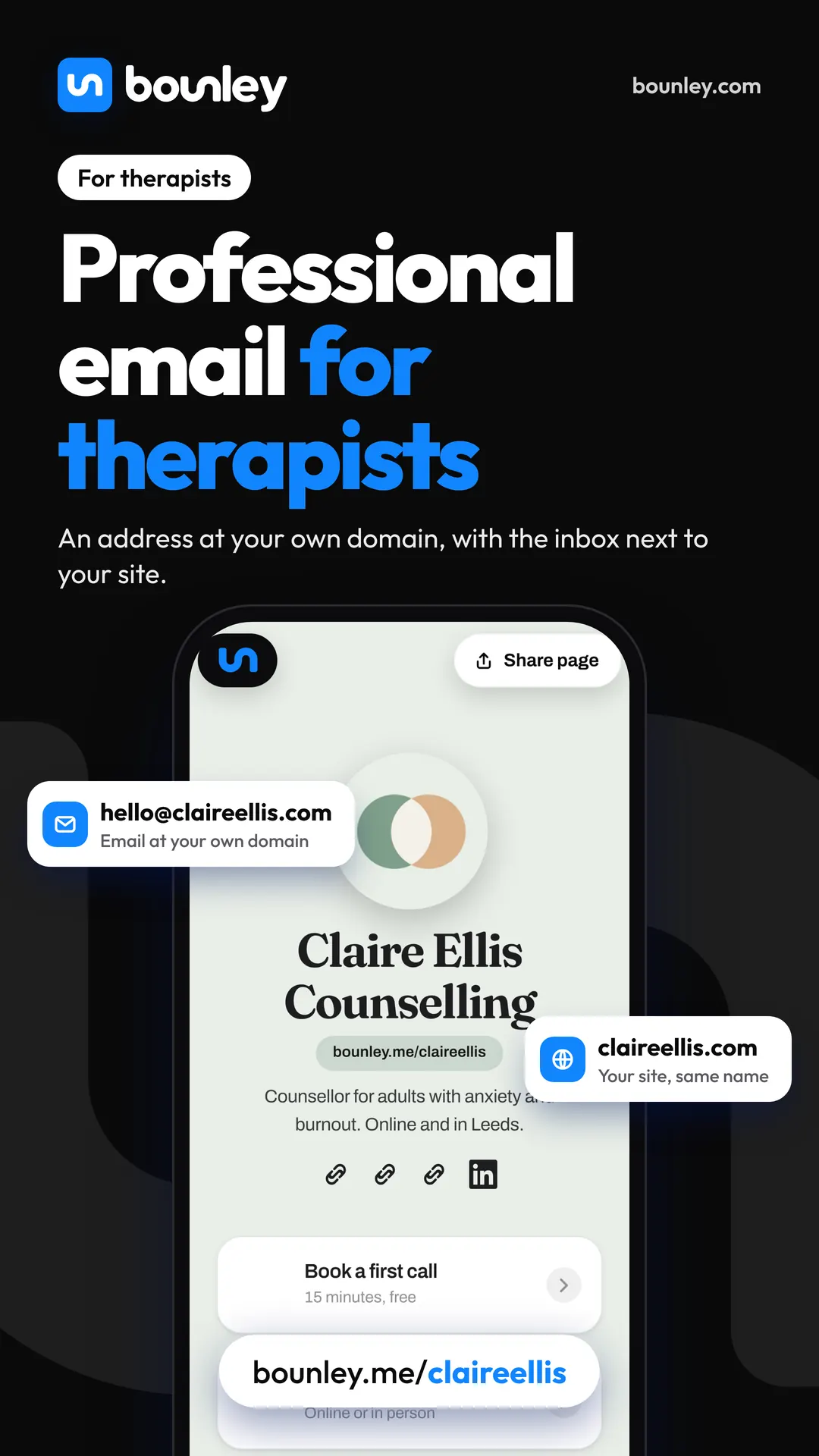
An address like hello@yourname.com on your directory profiles and cards tells a nervous client they’re writing to a practice, not a personal inbox. Your own name is the usual domain for a sole practitioner; a practice name works if you plan to bring in associates. Turn on privacy protection so your home address isn’t in the domain record. How domain privacy works.
What to put first
- Who you help, in one sentence a client would recognise themselves in.
- Enquire or book a first call.
- How it works: where, how long, how much.
- About you, with a warm, clear photo.
- Your registration, and the crisis line.
What loses the enquiry
- A wall of approaches and acronyms with nothing about the person reading.
- No fees. People assume the worst and move on.
- A form that asks for a history before they’ve spoken to you.
- A stock photo where your own photo should be.
How Bounley fits
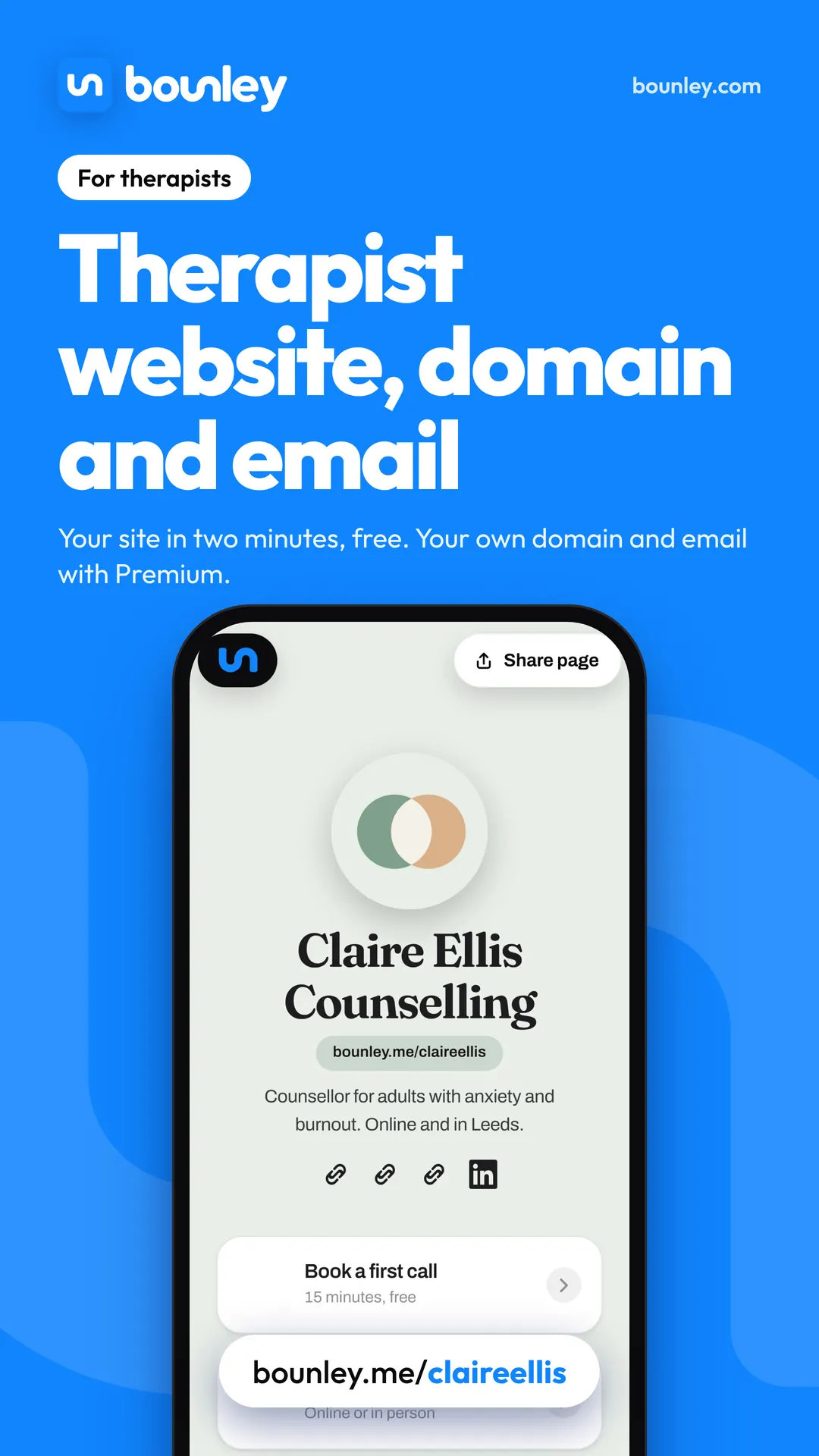
Bounley builds a simple, calm one-page site from your details in about two minutes, with a button for your booking calendar or a short enquiry form, plus a business card and email signature made from it. Bounley’s forms and inbox are for general enquiries, not for health information. With Premium the site runs on your own domain, with your email in the same place.
Questions
Does a therapist need a website if they’re on a directory?
Yes. Many clients read your directory profile, then search your name to see more. A site of your own is where they decide, and it stays yours if you leave the directory.
Should therapists list their fees?
Yes, or at least a range. Cost is one of the first things clients need to know, and leaving it out reads as expensive.
Can I put client testimonials on my site?
Often not. Many professional bodies and licensing boards restrict or forbid them, because of confidentiality and the nature of the relationship. Check yours before you publish any.
My name or a practice name for the domain?
Your name if you’re the practice. A practice name if you expect to add other therapists. You can own both and point one at the other.
Related: a personal brand for life coaches and for nutritionists and dietitians, and what a personal website costs.