Why it matters for music producers
Producers are the least visible people on a record. Streaming services bury the credit, and beat marketplaces put your work in a catalogue of thousands. A site with your name on it is where a credit becomes a reputation, and where an artist who liked one track can hear ten more.
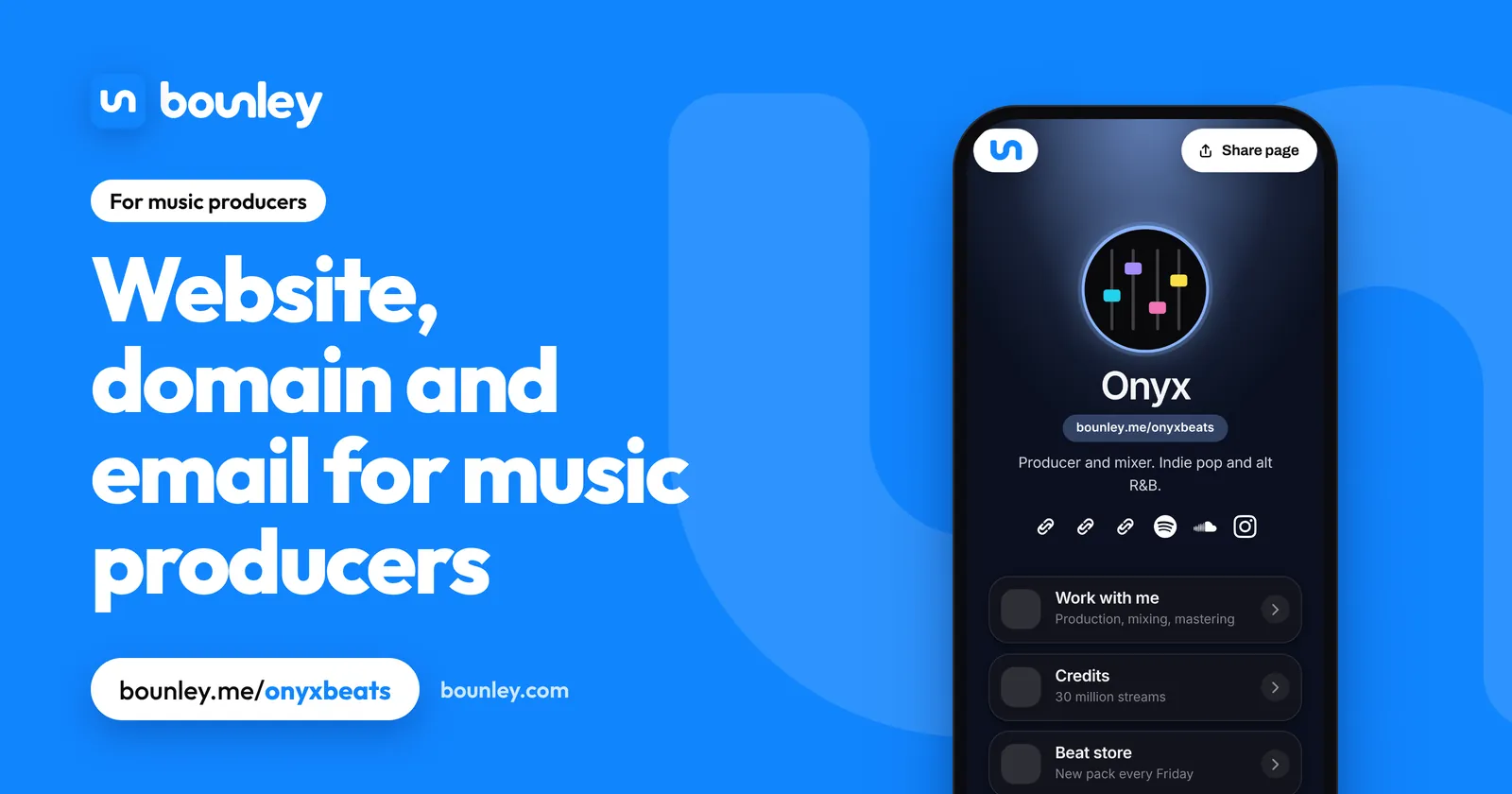
What a producer’s site needs
- A playlist of your best work that plays on the page: finished records first.
- Credits: artist, track, your role (produced, co-produced, mixed, mastered), and where to hear it.
- Services: full production, beats, mixing, mastering, vocal production, remote sessions.
- Rates or where they start, and what’s included: stems, revisions, turnaround.
- Beats to license, with a link to your store.
- Your studio and how remote sessions work.
- Booking: what to send (a demo, references, a deadline).
Bio examples for music producers
- “Producer and mixer. Indie pop and alt R&B. 30 million streams in credits.”
- “Beats for drill and trap. New pack every Friday.”
- “Mixing and mastering, 48-hour turnaround. Send your stems.”
Licences, splits and credit
State your terms before the first session, because that’s when everyone is friendly. For beats: what a lease allows (streams, sales, performances), what an exclusive costs, and whether you keep publishing. For production: your fee, your share of the master or publishing if any, and how you’re credited. Only list credits you can back up, and get the artist’s agreement before posting unreleased work. Plain terms on your site save an argument after the song does well.
Your domain and email
Labels, managers and sync agents email producers constantly and file them by name. you@yourname.com in a track’s metadata and on a split sheet leads back to you for years. Your producer name is the domain, the one in your tag. Choosing a domain name.
What to put first
- Your name, your sound in a line, and music that plays.
- Work with me.
- Credits.
- Services and rates.
- Beat store and socials.
What loses the session
- Thirty-second snippets with a tag over every bar and nothing finished.
- Credits with no links.
- “DM for prices.”
- No word on stems or revisions until the invoice.
How Bounley fits
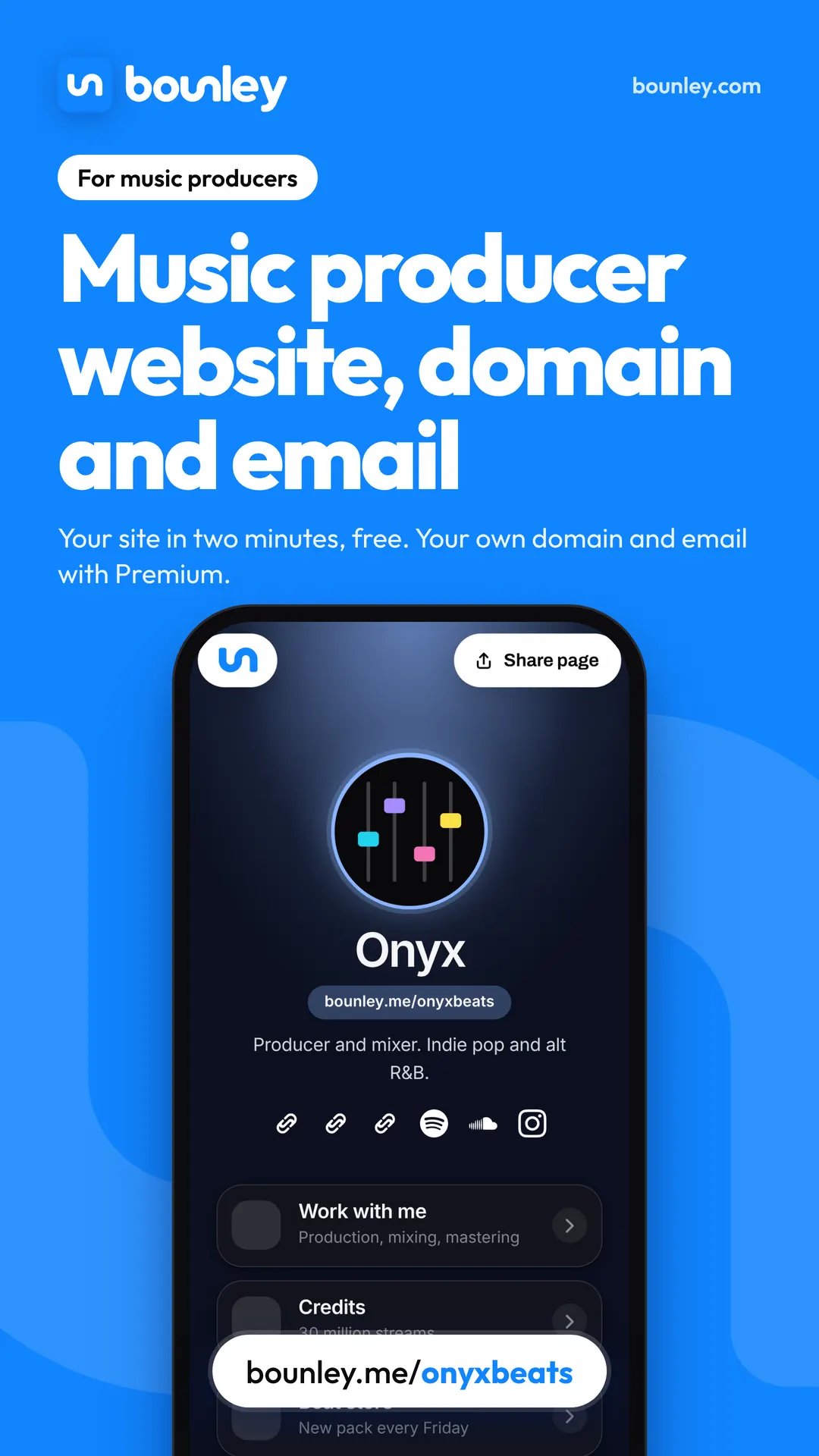
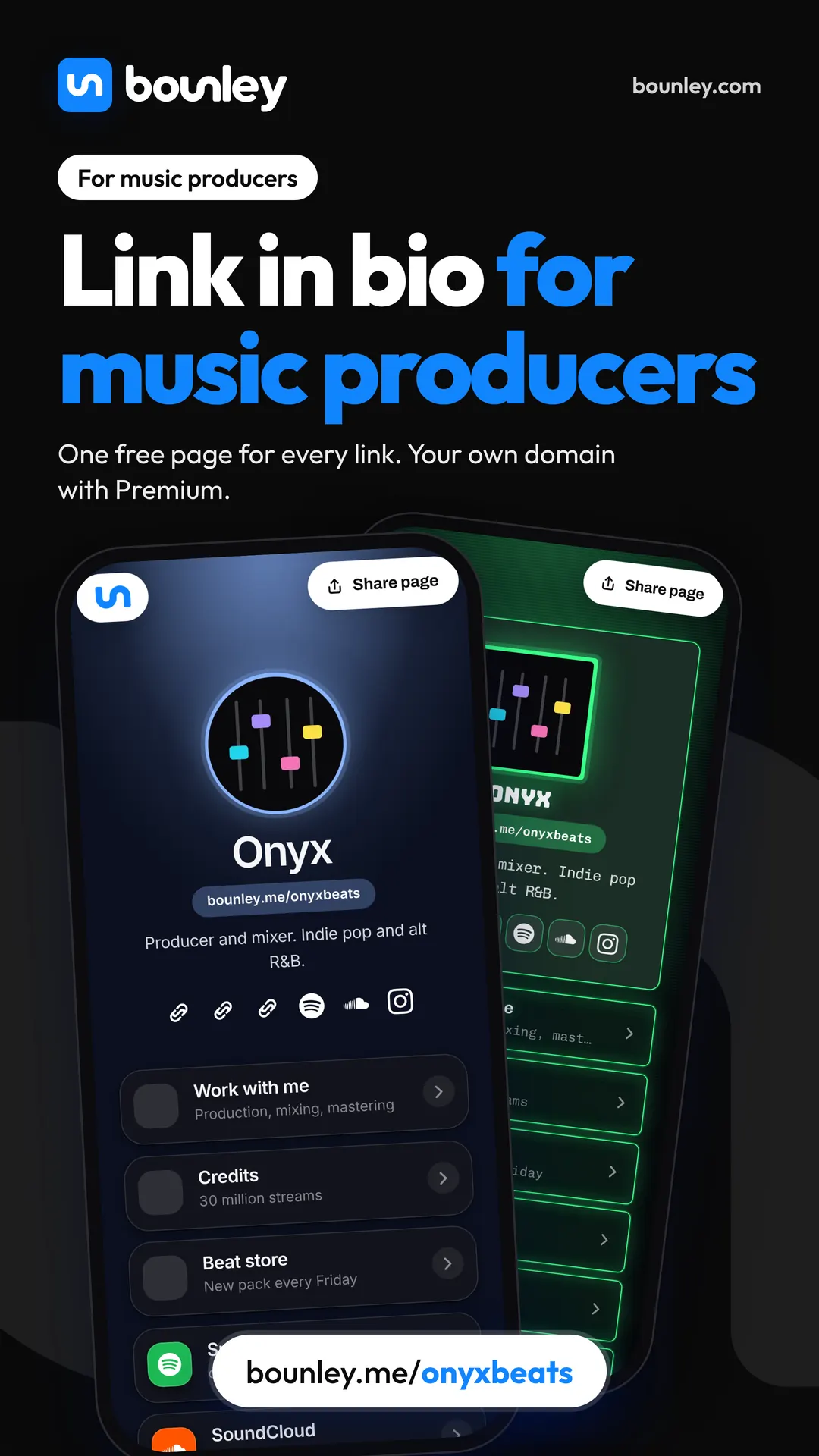
Bounley builds your site from your accounts in about two minutes. Spotify, SoundCloud and YouTube play on the page, your beat store and credits are a button each, and you can add a booking form that asks for the demo and deadline. With Premium it runs on your own domain, with your email in the same place.
Questions
I sell on a beat marketplace. Do I need my own site?
Yes. The marketplace handles the sale; your site is where artists get to know your work and where custom production, which pays more, is booked.
Should producers post their rates?
A starting price per track or per mix sets expectations and filters out mismatches. Negotiate the rest per project.
I don’t have placements yet. What do I show?
Your strongest finished tracks, including your own, and work with local artists. Three complete songs say more than a hundred loops.
I’m also an artist. One site or two?
One, if the name is the same: your releases first, production services below. Two only if the names differ.
Related: a personal brand for musicians and for DJs, and the one-page website.