Why it matters for accountants and bookkeepers
Your clients are handing over their bank statements. Before they do, they check you’re real: a name, a qualification, an address that isn’t free webmail. A site on your own name does that checking for them and tells the wrong-fit clients, politely, to look elsewhere.
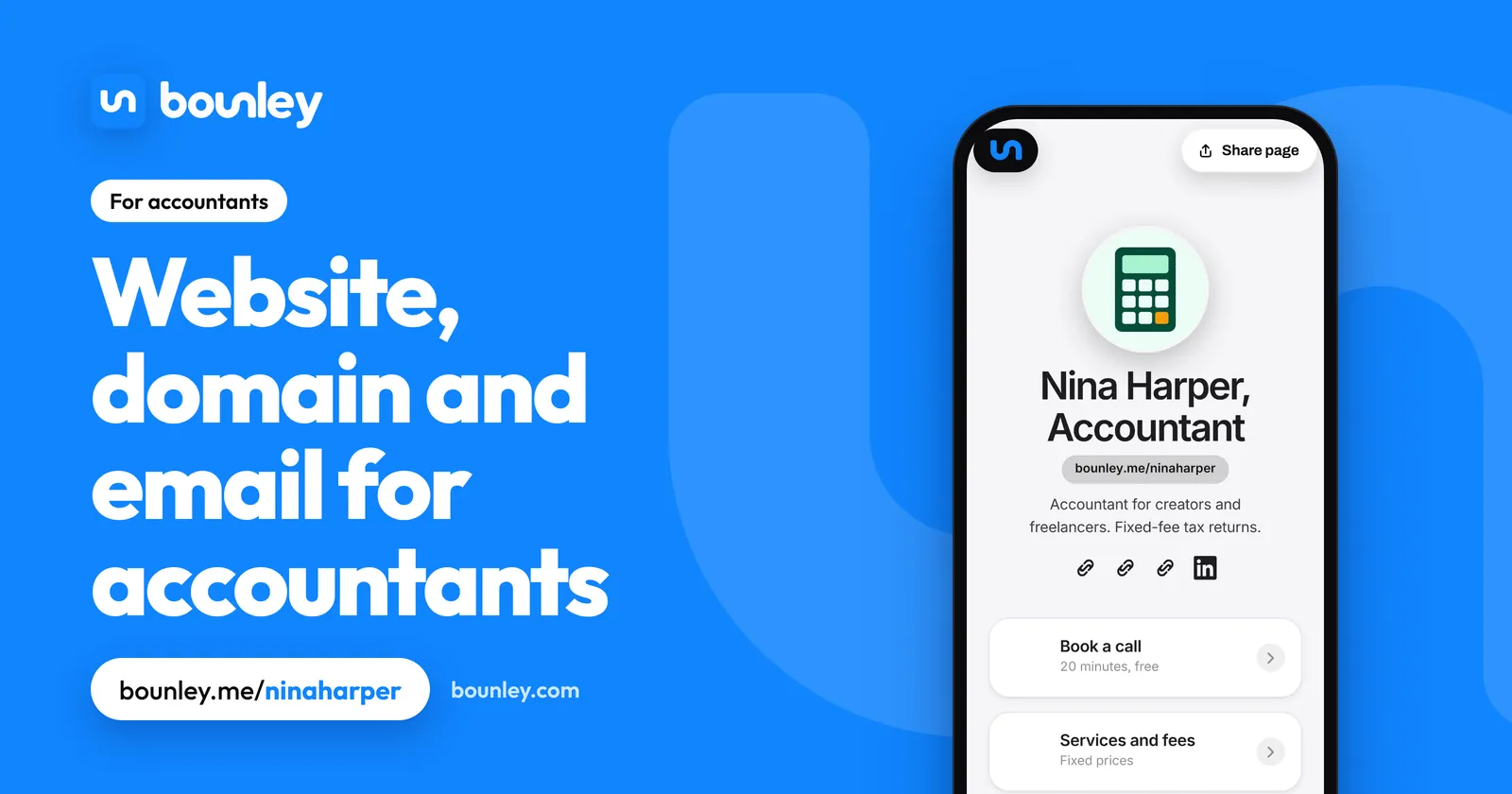
What an accountant’s site needs
- Who you work with: “sole traders and creators”, “restaurants”, “landlords with one to ten properties”.
- Services, as clients name them: tax returns, bookkeeping, payroll, year-end accounts, sales tax or VAT.
- Fees: fixed prices or “from” prices for the standard jobs.
- Your qualification, professional body and membership or licence number.
- The software you work in.
- How to start: a call, what to bring, how long onboarding takes.
- Deadlines that matter to your clients, kept current.
Bio examples for accountants and bookkeepers
- “Accountant for creators and freelancers. Fixed-fee tax returns.”
- “Bookkeeper for restaurants and cafés. Weekly numbers, no surprises.”
- “Enrolled agent. Tax problems solved for the self-employed.”
Documents, security and what you may call yourself
Tell clients never to send tax documents, bank details or identity numbers through a website form or ordinary email, and give them your secure portal or your software’s upload link instead. Saying so on the site is itself a sign of competence. Use only titles you hold: “chartered”, “certified” and “CPA” are protected in most places, while “accountant” and “bookkeeper” often aren’t. If your profession requires anti-money-laundering supervision or a practising certificate, name the body.
Your domain and email
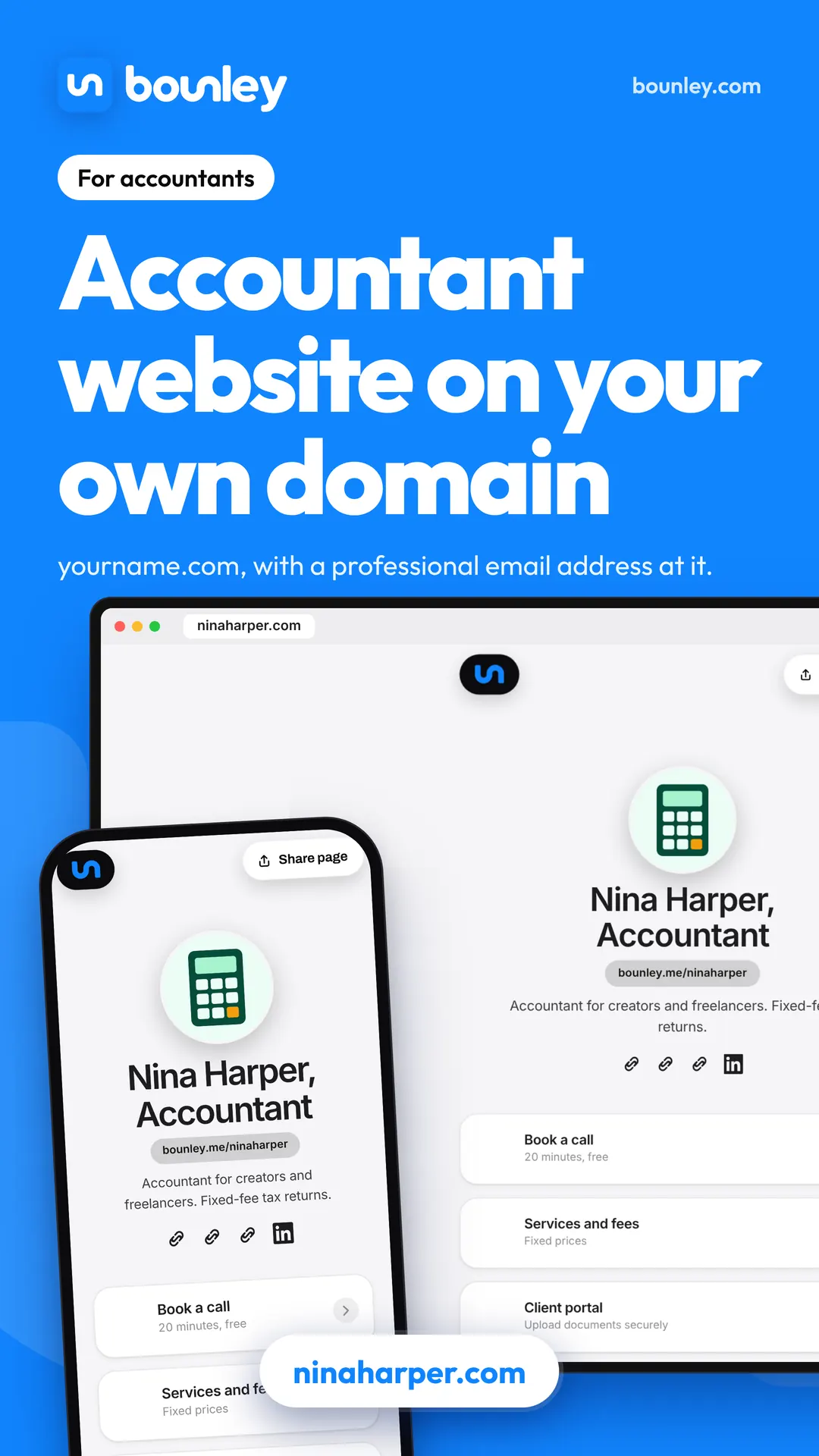
An engagement letter from a free address is the first thing a careful client questions. firstname@yourname.com, or an address at your practice’s name, is expected. Use your name if clients hire you personally. Gmail or your own domain?
What to put first
- Who you help and with what, in one line.
- Book a call.
- Services and fees.
- Your qualifications and body.
- How it works, and what clients say.
What loses the client
- “We offer a full range of accountancy services” from one person.
- No fees, so every enquiry is a price check.
- A blog last updated three tax years ago.
- Asking for documents by email.
How Bounley fits
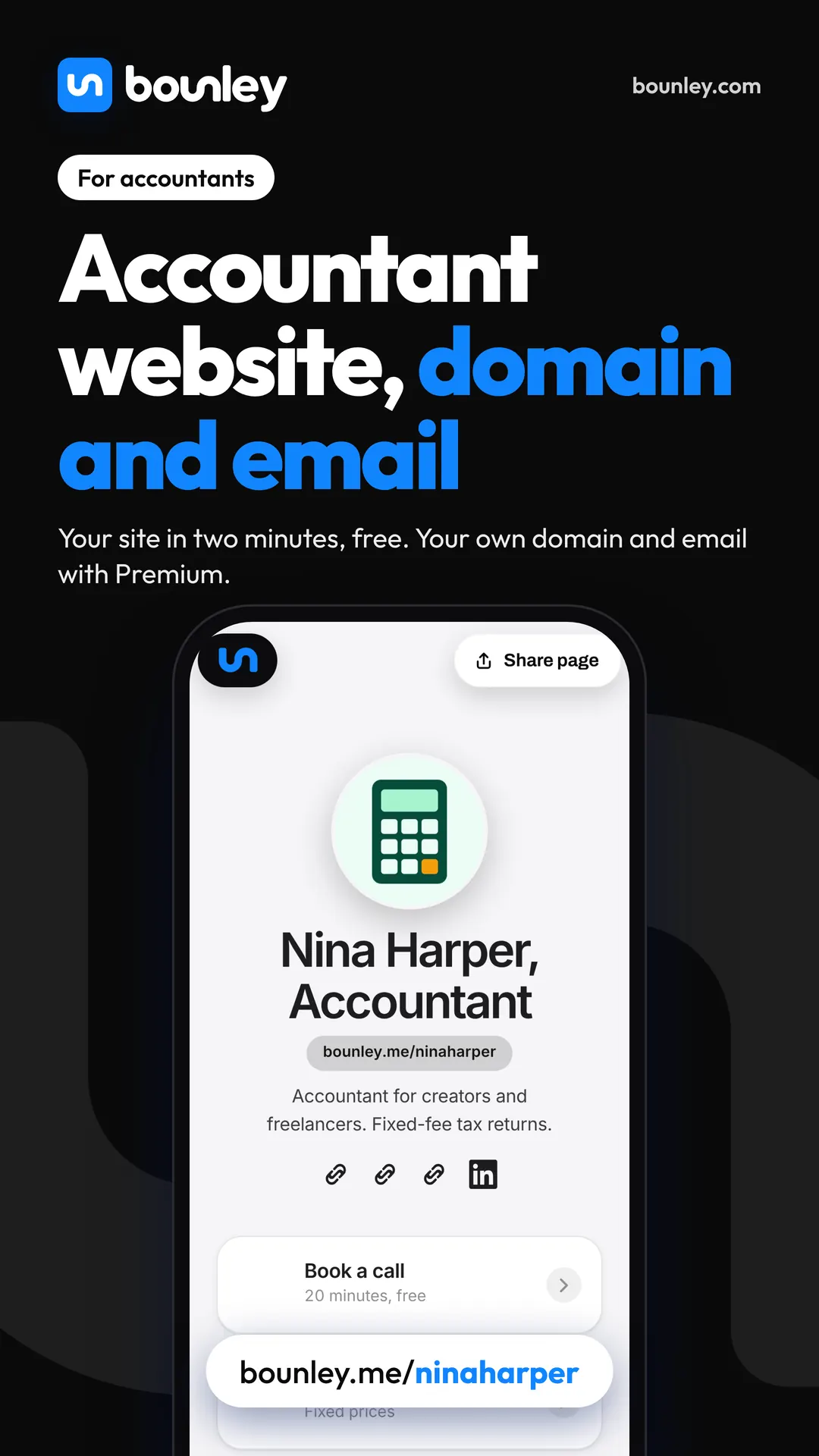
Bounley builds a clear one-page site from your details in about two minutes, with your booking calendar, a services and fees page, a link to your client portal, and a business card and email signature made from it. Its forms and inbox are for general enquiries, not for clients’ financial documents. With Premium it runs on your own domain, with your email in the same place.
Questions
Should accountants publish fees?
Fixed or starting fees for standard work bring better enquiries and fewer of them that go nowhere. Quote complex work individually.
Should I specialise in one kind of client?
It makes referrals easier: “she does accounts for restaurants” travels further than “she’s an accountant”. You can still take others.
Do I need to write articles?
A few evergreen answers to the questions you’re asked every January are worth having. Don’t start a blog you won’t keep up to date.
My name or a practice name?
Your name if you’re staying a sole practitioner. A practice name if you plan to hire or sell one day. Own the domain yourself either way.
Related: a personal brand for consultants and for lawyers, and email forwarding, mailbox or alias?