Why it matters for tutors
Agencies and tutoring platforms find you students and keep a large share of the fee. Your best students come from word of mouth, and word of mouth needs somewhere to land: a page that confirms what the other parent said and makes booking easy.
What a tutor’s site needs
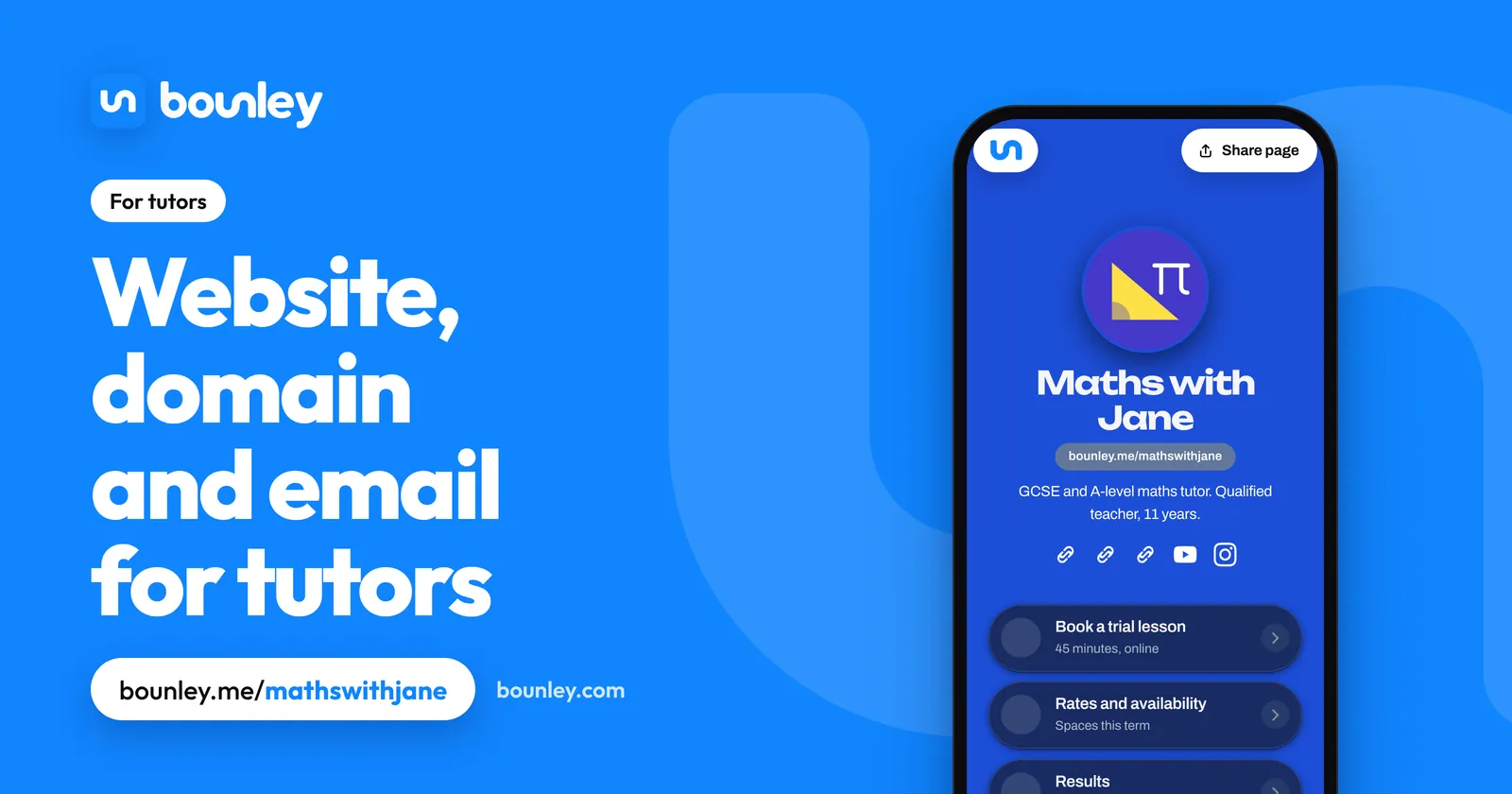
- Subjects, levels and exam boards or curricula, stated exactly: “GCSE and A-level maths, AQA and Edexcel”, “SAT and ACT maths”.
- Your qualifications and teaching experience.
- Results, honestly: grade improvements, pass rates, places won.
- How lessons work: online or in person, where, how long, what’s provided.
- Rates, and any block-booking price.
- Background check or safeguarding certificate, if you hold one, and its date.
- Book a trial lesson, and when you have space.
Bio examples for tutors
- “Maths tutor, GCSE and A-level. Qualified teacher, 11 years. Online and in Bristol.”
- “SAT and ACT tutor. Average student gain: 140 points.”
- “Spanish for adult beginners. Conversation first.”
Working with children: what to show, what to keep off
Parents look for a current background check, and for references they can ask for. Offer both. Keep students off the site: no names, no photos, no screenshots of their work without a parent’s written permission, and never a child’s full name beside a result. Quotes from parents are safer than quotes from children, and a first name or initial is enough.
Your domain and email
Parents will be sending you school reports and paying you by bank transfer. hello@yourname.com looks like a business they can trust with both. Your name, or your name and subject (janesmithmaths.com), is easy to pass on at the school gate. Email address ideas.
What to put first
- What you teach, to whom, and where.
- Book a trial lesson.
- Results and what parents say.
- Rates and availability.
- Your qualifications and checks.
What loses the booking
- “All subjects, all ages.”
- No mention of the exam board the student is sitting.
- No rates, so parents assume they can’t afford you.
- No way to see whether you have any space this term.
How Bounley fits
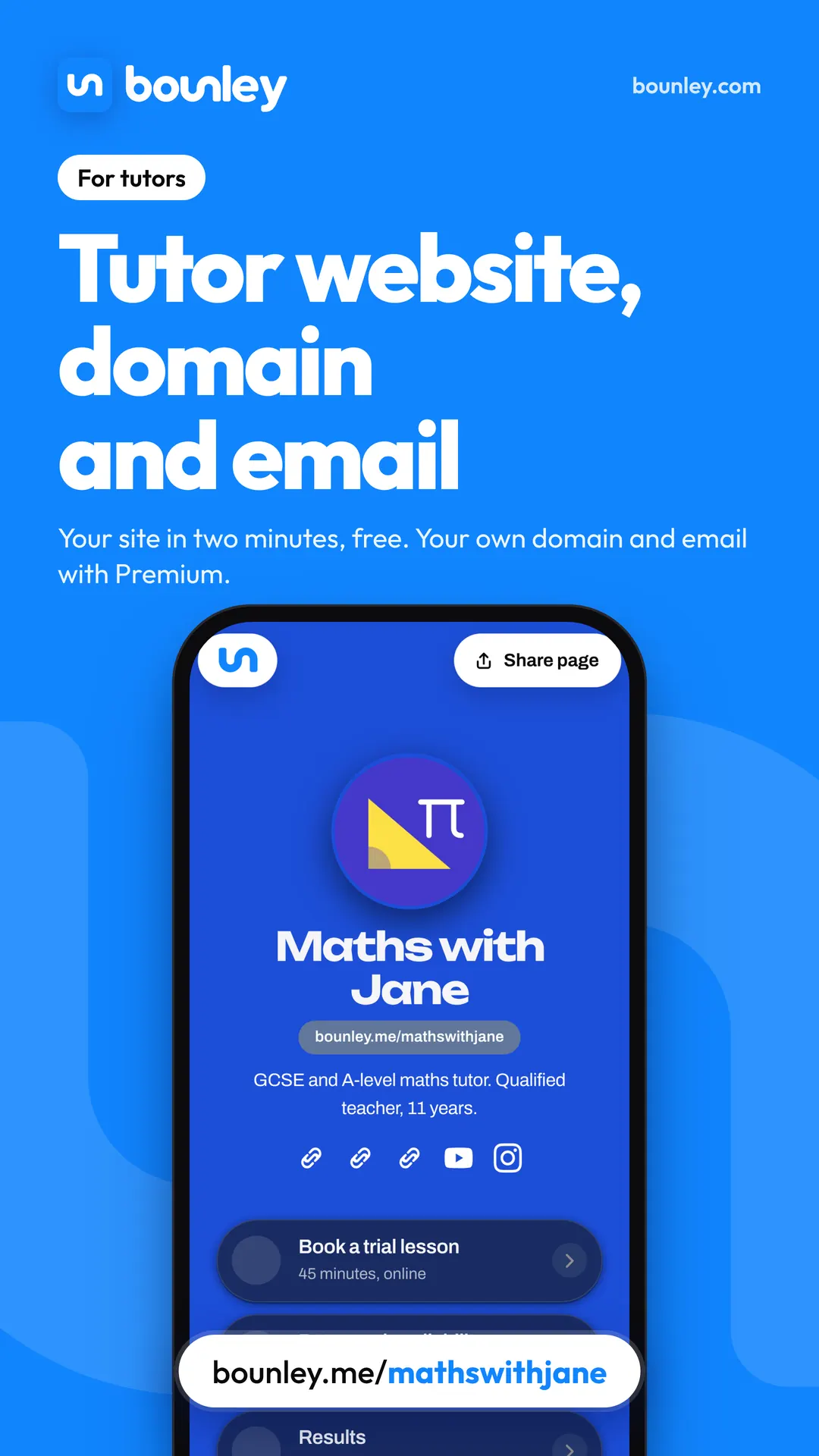
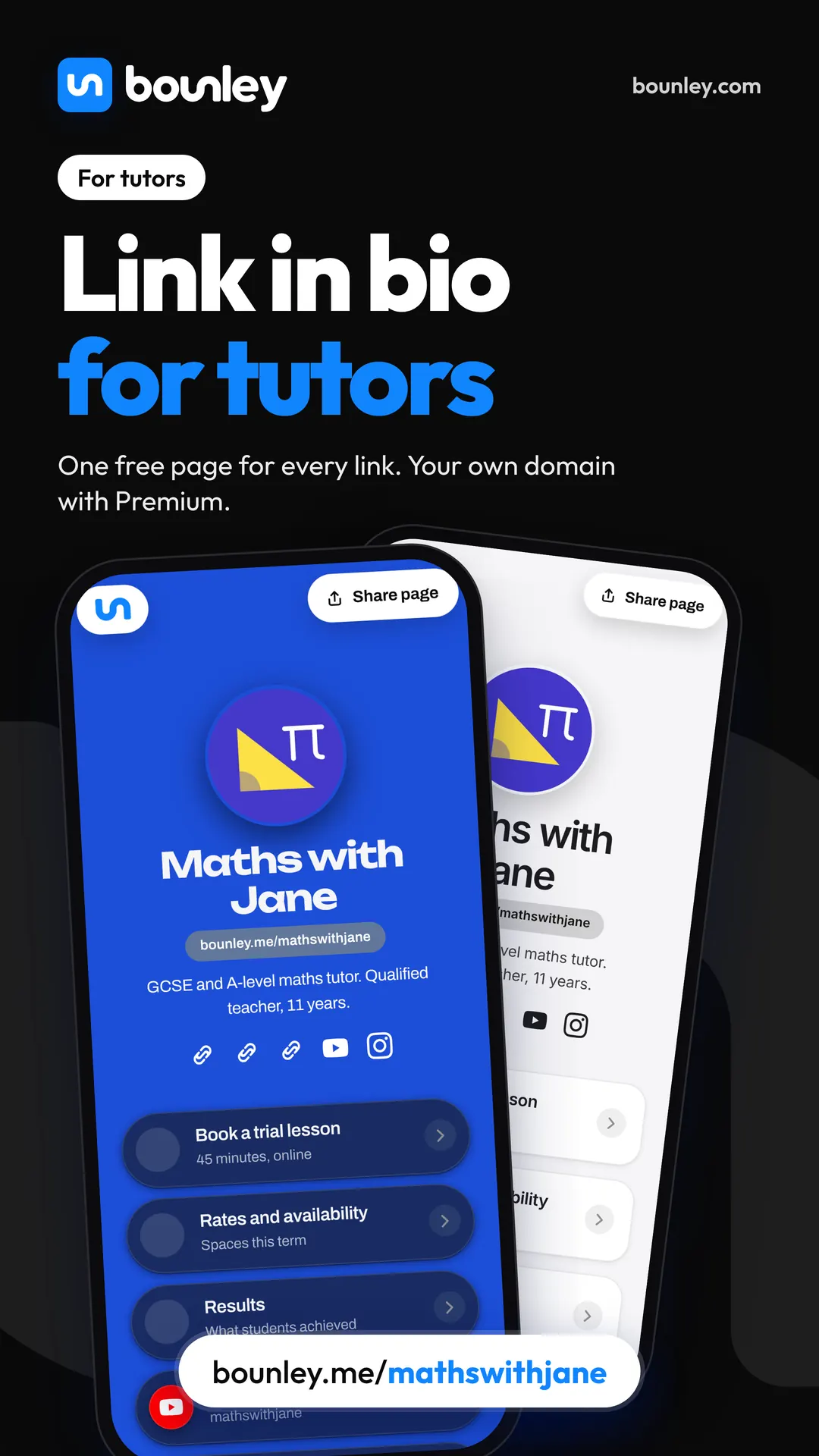
Bounley makes your site from your details in about two minutes, with your booking calendar, a trial-lesson form, links to any videos you make, and a QR code for flyers and noticeboards. With Premium it runs on your own domain, with your email in the same place.
Questions
Should I still use tutoring platforms?
They’re useful for finding first students. Send everyone who asks about you to your own site, so referrals and repeat bookings come to you directly, within the terms you agreed with the platform.
Should tutors show their rates?
Yes. Parents compare, and a clear price with what’s included is easier to say yes to than “contact me for rates”.
Can I promise a grade?
No. Show what past students achieved and be clear that results depend on the student’s work too.
Does an online tutor need a local presence?
Not a local one, but say your time zone and which curricula you teach, since those decide who you can help.
Related: a personal brand for coaches and for yoga teachers, and what a personal website costs.