Why it matters for massage therapists
A clinic’s or spa’s website promotes the clinic. If your regulars know you only as “the therapist on Thursdays”, they can’t follow you when you go independent. A site with your name on it makes the relationship yours, and it sets the professional tone this work depends on.
What a massage therapist’s site needs
- What you offer and who it helps: sports, deep tissue, pregnancy, relaxation, remedial.
- Session lengths and prices.
- Book online.
- Your qualification, licence or registration number, and your insurance.
- Where you work, access and parking, or the area you cover if you’re mobile.
- What to expect at a first session.
- Policies: cancellations, lateness, health conditions to tell you about beforehand.
Bio examples for massage therapists
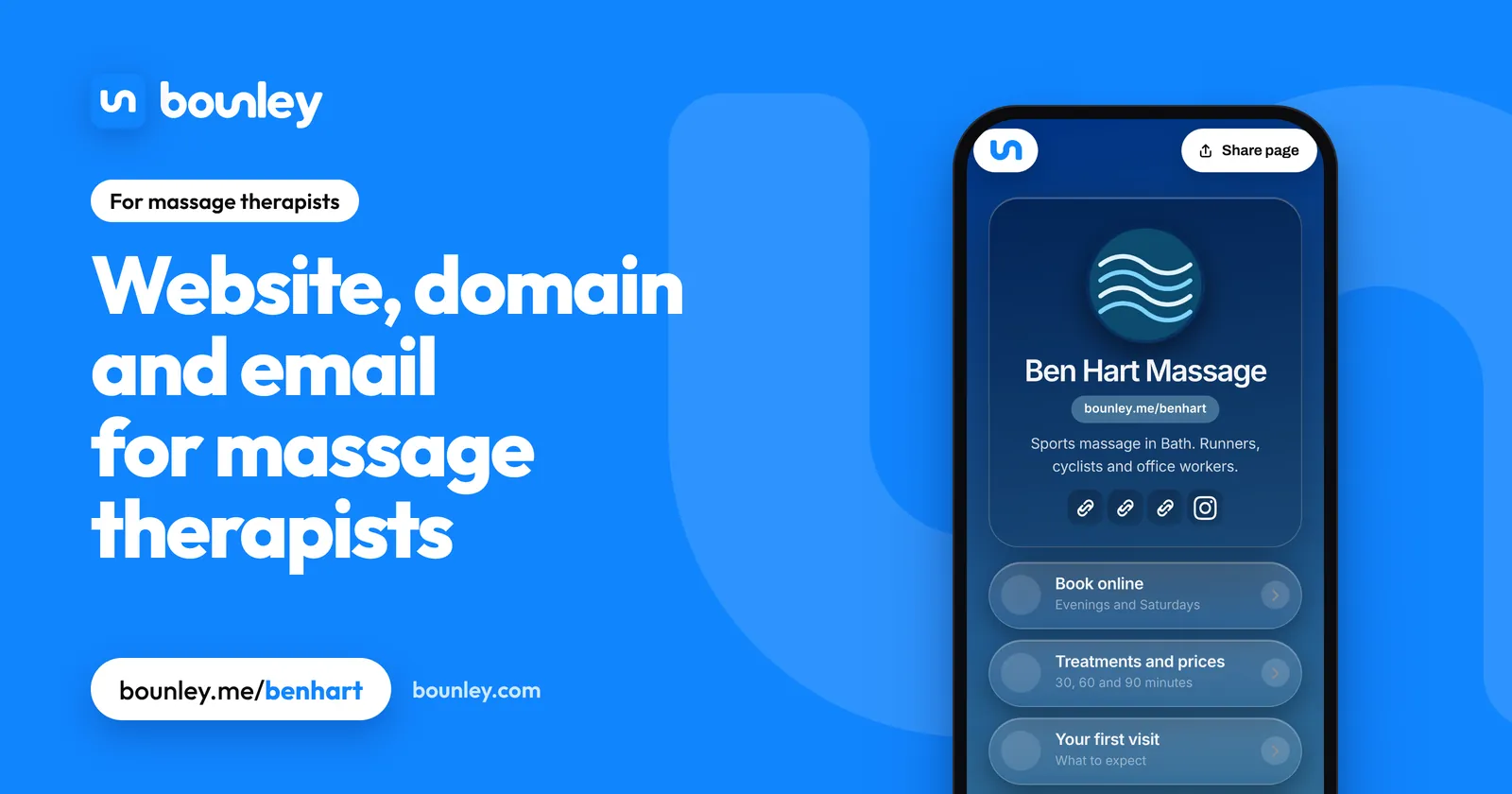
- “Sports massage therapist in Bath. Runners, cyclists and office workers.”
- “Licensed massage therapist. Pregnancy and postnatal massage, home visits.”
- “Deep tissue and remedial massage. Evenings and Saturdays.”
Setting the professional tone
Lead with your qualification and the clinical or therapeutic purpose of your work, and say plainly that treatments are professional and non-sexual; it screens out the enquiries you don’t want. Use a booking system that takes a name and a card. If you work from home or visit clients, give an area only, and keep your address for confirmed bookings. Don’t claim to diagnose or cure: describe what clients come for and how a session helps.
Your domain and email
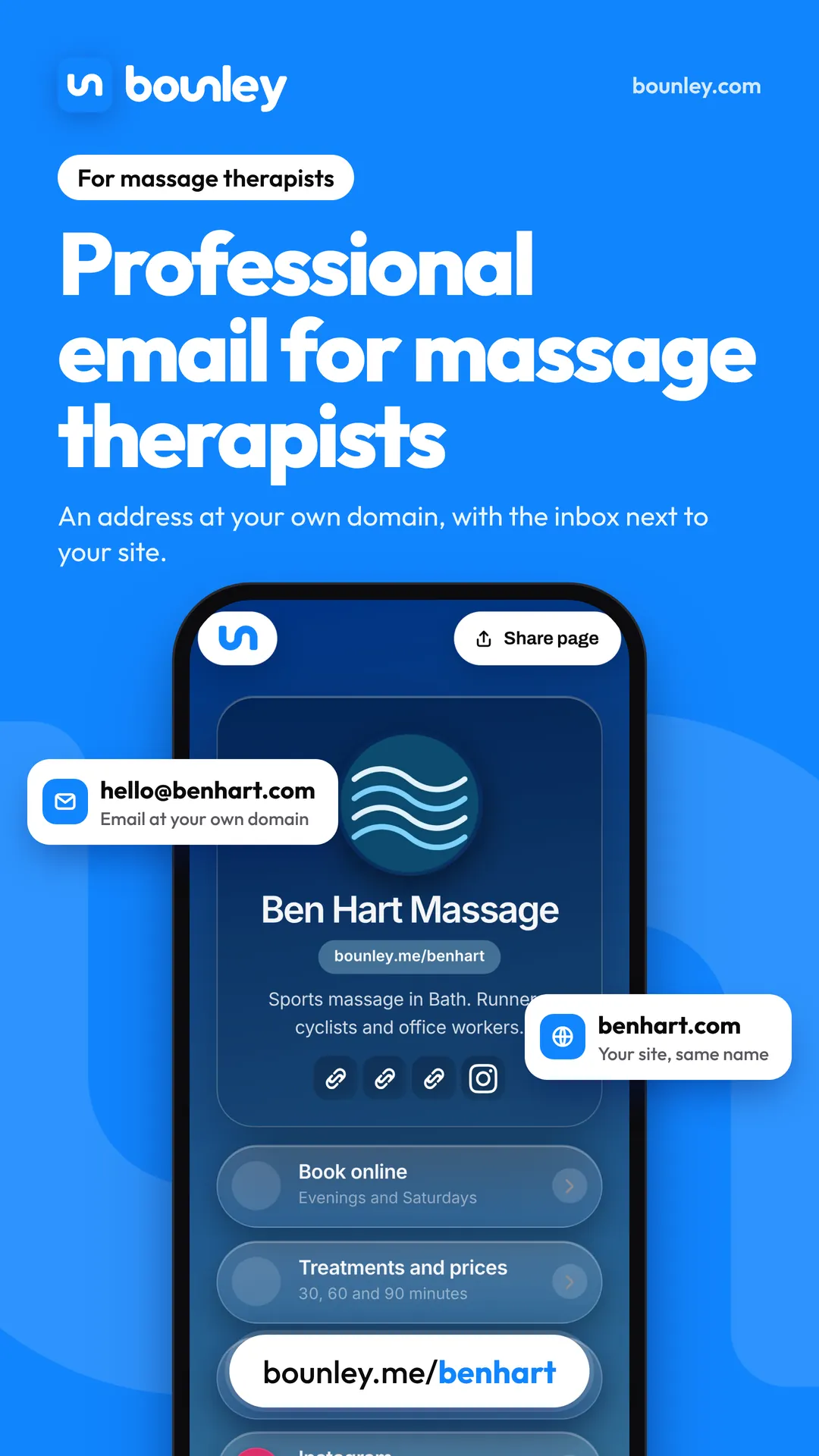
hello@yourname.com on a card left at a gym or a physio’s desk reads as a practice. Your name with “massage” or “therapy” makes a clear domain and helps people who search that with your town. Choosing a domain name.
What to put first
- What you do, who for, and where.
- Book online.
- Treatments and prices.
- Your qualifications.
- First visit and policies.
What loses the booking
- No qualification anywhere on the page.
- “Call to book”, when most people book at 10pm.
- Stock photos, and no picture of you or your treatment room.
- No prices.
How Bounley fits
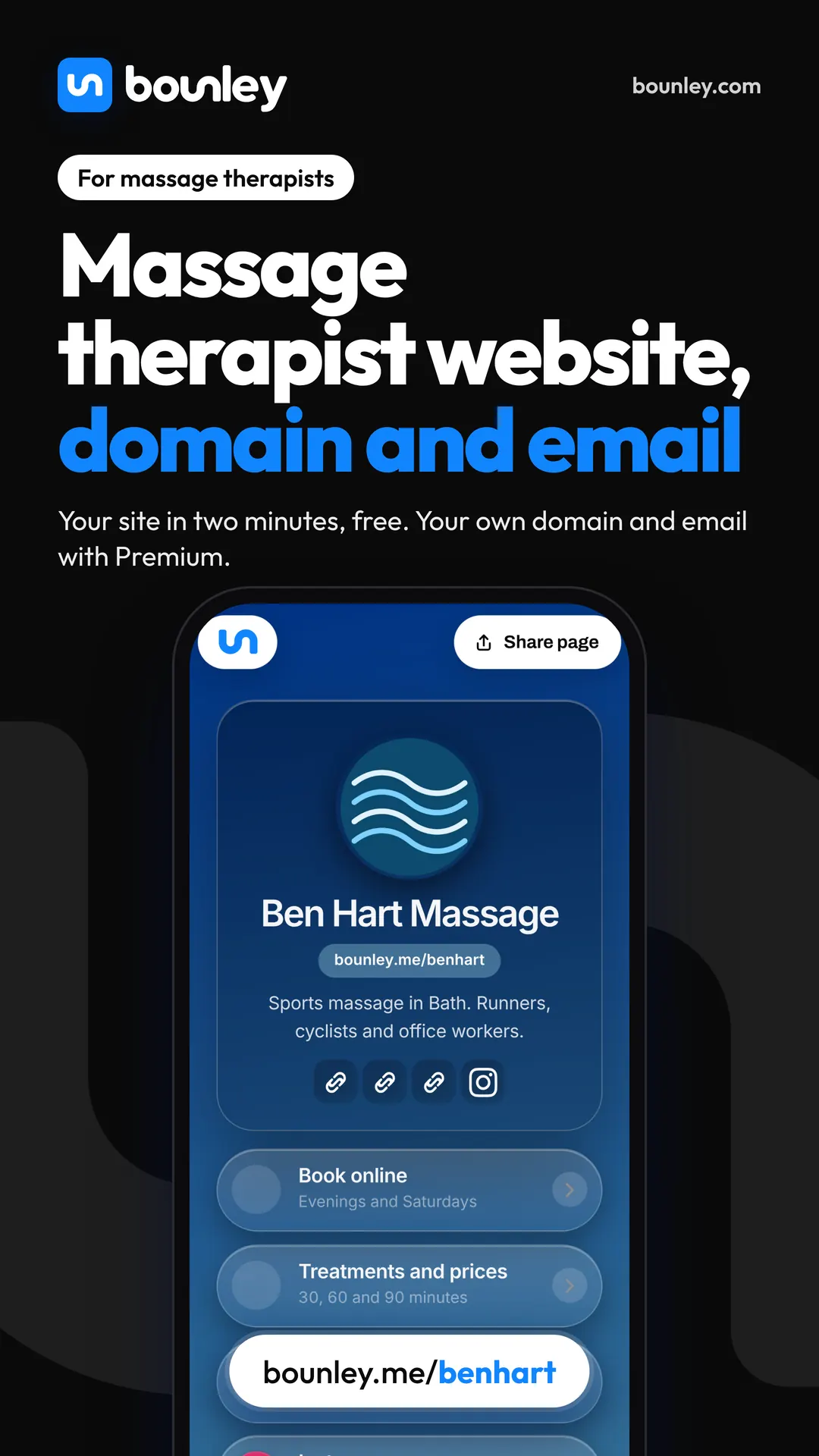
Bounley builds a clear one-page site from your details in about two minutes, with your booking calendar at the top, a treatments page, and a business card and QR code to leave with gyms and clinics that refer to you. Its forms are for bookings and general enquiries, not health records. With Premium it runs on your own domain, with your email in the same place.
Questions
Does a massage therapist need a website?
Yes, even a single page. It’s where referrals check you, where your booking link lives, and what appears when someone searches your name and town.
Should I show prices?
Yes, by session length. It’s the first thing people look for.
Can I put my health intake form on the site?
Take health details through the system your practice uses for client records, not an ordinary website form or email. The site should handle booking and general questions.
I’m mobile. What do I put for location?
The towns or postcodes you cover, your travel fee if there is one, and what the client needs to provide.
Related: a personal brand for personal trainers and for yoga teachers, and the one-page website.